


Kiki Liu
Market Operations Specialist at China Highlights
Travel used to be my way of releasing emotions. Later, I came to understand that it's more like a quiet conversation with the world. Those unplanned detours, strangers who walked alongside me for a while, sudden rain, and laughter that came out of nowhere—all of them have become the lightest yet heaviest treasures in my pack.
Over the past few years, we have noticed a growing interest among travelers in wellness and healing experiences.
Many travelers today are looking for more than famous attractions and busy itineraries. They want places where they can slow down, reconnect with nature, and find moments of balance in their journeys.
This shift made us explore new possibilities for wellness travel in China.
Wudang Mountain quickly became one of the destinations we wanted to explore further.
Its pristine mountain environment, rich biodiversity, and more than a thousand years of Taoist health philosophy create a natural foundation for wellness experiences.
Together with our product team, I visited Wudang to explore how its natural resources and Taoist culture could become meaningful wellness experiences for travelers. The question we wanted to answer was:
How can we transform Wudang's natural environment and cultural heritage into an experience that truly connects with modern travelers?
We Met the People Who Bring Taoism to Life
Before this trip, my understanding of Taoism mostly came from books.
Ancient philosophy.
Traditional practices.
Stories about masters who seemed distant from everyday life.
I wondered whether Taoist culture, with its deep philosophy and traditions, could be translated into an experience that modern travelers could truly connect with.
Six days in Wudang changed my perspective.
During our journey, one thing became increasingly clear:
The most meaningful part of Wudang was not something we simply observed. It was something we experienced through the people who continue to carry this culture every day.
One of the biggest surprises was how often our most valuable moments happened around a simple cup of tea.
In Wudang, serving tea to guests is a traditional way of showing respect and hospitality.
At first, I saw it as just another cultural custom.
But after many conversations with Taoist practitioners, researchers, and volunteers over tea, I began to understand its deeper meaning.
The conversations were rarely about complicated theories.
Instead, people shared ordinary stories.
They talked about their personal journeys, their challenges, their daily practices, and their understanding of Taoist principles.
Slowly, the distance between "visitor" and "culture" disappeared.
I realized that perhaps the best way to understand a tradition is not by standing outside and observing it. It is by sitting down with the people who live it.
This became even clearer when we visited the dean of The Wudang Taoist Wellness Academy.
Before meeting him, I imagined someone representing such a long tradition would feel serious and difficult to approach.
Instead, he invited us to share a meal together.
After lunch, we continued our conversation over tea.
He told us about his journey from being an English teacher to becoming a promoter of Taoist culture.
Then he picked up an English translation of the Tao Te Ching from the table.
With excitement, he explained that he had translated the book because he wanted international visitors to access Taoist wisdom in a way that felt meaningful and understandable.
What impressed me most was not only his dedication, but also his humility.
After years of teaching, he still felt some parts of the translation could be improved. He was already working on a revised edition.
At that moment, he no longer felt like a distant figure from an ancient tradition.
He was simply a teacher who cared deeply about sharing something meaningful with others.
And that was when I understood:
Culture survives not because it remains untouched. It survives because someone continues to care for it.
Later, we visited a remote mountain temple hidden deep in the hills.
Life there was very different from the modern world below.
The practitioners lived simply, followed daily routines, practiced movement and meditation, and spent time away from constant digital distractions.
Some had once lived completely different lives before coming here.
But what interested me was not that they had abandoned the modern world.
It was how they had found a different rhythm.
They carried supplies up mountain paths.
They shared simple meals.
They paid attention to their bodies, their surroundings, and the people around them.
What impressed me was that this was not a wellness activity created for visitors. It was a way of living that had existed for generations.
Watching them, I began to see another side of Taoist wellness.
It was not a performance created for visitors.
It was a way of living.
This journey changed how we thought about developing Wudang experiences.
A meaningful wellness experience is not simply about learning a traditional practice or visiting an ancient temple.
It is about meeting the people who continue to live this tradition, understanding their relationship with nature, and discovering the wisdom behind their way of life.
These insights became the foundation for the wellness experiences we later developed.
Rather than creating activities that simply showcase Taoist culture, we wanted to help travelers experience the living culture behind it.
-
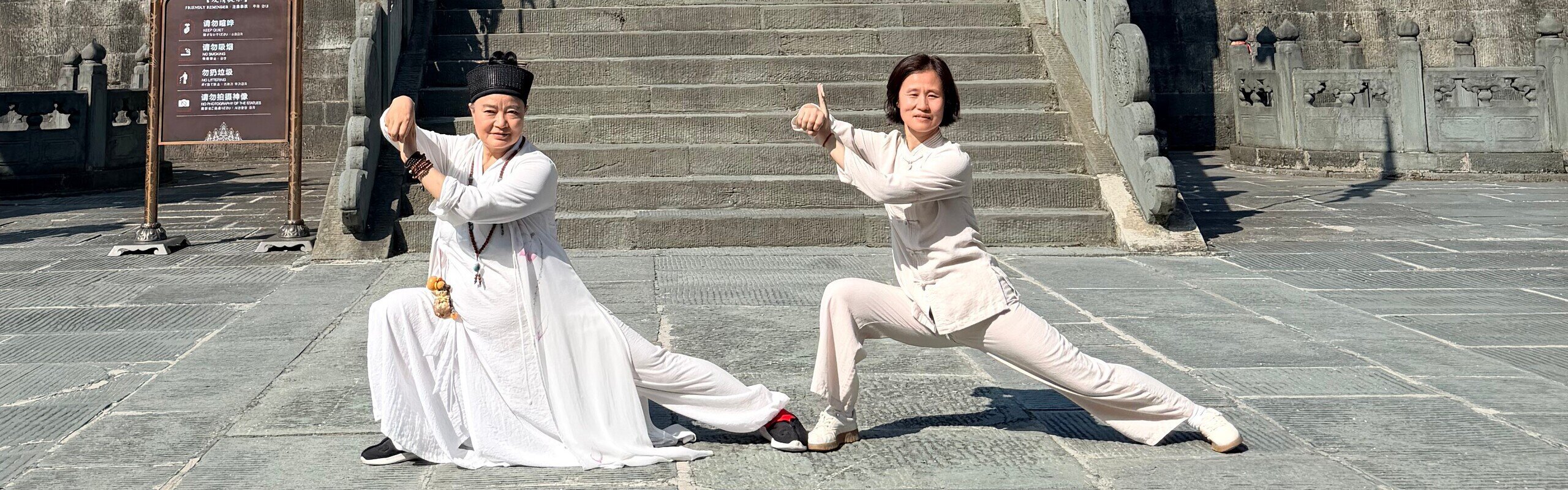
Wudang Taoist Reset Day: Leave Your Stress at the Mountain Gate. You can experience how Taoist ideas of balance, movement, and mindfulness are practiced in daily life. -
Forest to Apothecary: Wudang Herbal Discovery & Bespoke Aromatic Sachet Crafting. You can explore the relationship between local plants, traditional knowledge, and the people who continue to preserve this connection.
For us, the goal is not to recreate an ancient lifestyle.
It is to help modern travelers understand how an ancient wisdom continues to find meaning in today's world.
Because the true value of cultural travel is not finding a place frozen in the past. It is meeting the people, traditions, and landscapes that continue to evolve while staying connected to their roots.