
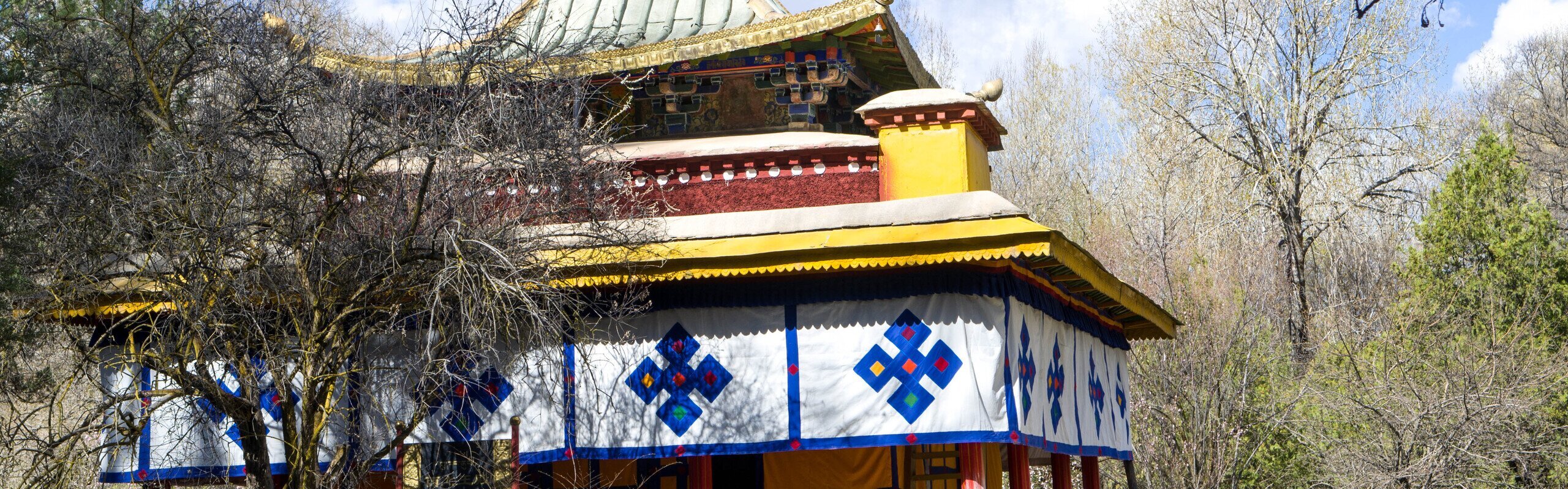

If the Potala Palace shows you Tibet's grand imperial side, Norbulingka reveals the more intimate, personal world of the Dalai Lamas. It's an ideal destination for your Lhasa itinerary, especially if you want a mix of culture and relaxation.
Norbulingka, meaning "Treasure Garden" in Tibetan, was the traditional summer residence of the Dalai Lamas for over 200 years. Here, you can step into their former summer retreat, admire stunning Tibetan murals and artworks, and relax in a peaceful, lush garden.
Facts:
- Chinese name: 罗布林卡 Luóbù Línkǎ
- Location: 2 kilometers (1.2 miles) west of the Potala Palace
- History: built in 1755
- Altitude: 3,650 meters (11,975 feet)
- Entrance Fee: RMB 60/ USD 8 per adult
- Opening Hours: 9:30 am – 7:00 pm
- Duration: 1-3h
- Suitable for: Architecture, history, and culture lovers; travelers who are seeking leisure and relaxation
What to Do at Norbulingka
Most visitors enter Norbulingka from the east gate and follow a natural route: first exploring the palace complex at the center, then relaxing in the gardens, and optionally visiting the small zoo in the northeast corner if traveling with children or with extra time.
 Norbulingka Palace
Explore the Palace Complex
Start your visit at the palace complex in the center of Norbulingka, where successive Dalai Lamas lived and worked during the summer months. Walking through these spaces gives you a rare glimpse into their daily routines and personal tastes.
If you're interested in Tibetan Buddhist art, don't miss it. As you move through the palaces, you'll encounter thangkas (traditional Tibetan scroll paintings), intricate woodwork, and religious statues. The vivid colors and delicate details will amaze you. See our 5-Day Lhasa Classics and Lake Yamdrok Tour.
Norbulingka PalaceThe highlight is the New Summer Palace (Takten Migyur Podrang), built in 1954 for the 14th Dalai Lama. You'll walk through his reception rooms, meditation chambers, and reading rooms. The palace's golden roof symbolizes Buddhist teachings, while inside, the rooms reveal a more human side of Tibet's spiritual leader—a space designed for comfort, contemplation, and welcoming guests.
The New Summer Palace houses over 300 murals displayed in well-lit, intimate spaces where you can witness almost every detail. The most striking is in the Tantric Hall—a large mural of Buddha and his disciples. Each figure is so detailed that you can see the folds in their robes and the expressions on their faces.
Another must-see is Kelsang Podrang, the first palace built at Norbulingka in the 18th century. Here you'll find rare murals of children playing, this theme is hard to find in most Tibetan temples.
Relax in the Garden
NorbulingkaAfter exploring the palaces, take time to relax in Norbulingka's gardens. At over 3,600 meters above sea level, this is one of the world's highest gardens, yet it's surprisingly lush and filled with mature trees, soft lawns, and seasonal flowers.
You can follow tree-lined paths, sit by small ponds, and enjoy the peaceful atmosphere. The highlight is Tsokyil Podrang (Lake Pavilion), set on an island in the middle of a small lake. The pavilion is surrounded by stone railings and decorated with murals of Green Tara. It's one of the most photogenic spots in the park.
Many locals come to Norbulingka for picnics, especially on weekends and holidays. You'll see Tibetan families sitting on blankets under the trees, sharing food and enjoying the shade. If you have time, you can grab a spot under the trees and soak it in just like the locals. Check our 4-Day Lhasa Highlights Private Tour.
Visit the Small Zoo (Optional)
If you're traveling with children or have extra time, you can head to the small zoo in the northeast corner of Norbulingka. This is the world's highest zoo, and it houses over 30 species of animals—including snow leopards, Tibetan wolves, black bears, camels, alpacas, and monkeys.
The zoo has been part of Norbulingka for over 240 years, making it one of Tibet's oldest attractions. It's a nice addition if you want a break from cultural sites, especially for younger travelers.
Tip: the entrance fee for the zoo is RMB 20 (USD 3) for adults, RMB 10 (USD 1.4) for children. This is not included in the main Norbulingka ticket and must be purchased separately at the zoo entrance.
Join the Shoton Festival (If You're Visiting in August)
If experiencing local festivals and Tibetan daily life appeals to you, visiting Norbulingka during the Shoton Festival (usually held in late August) is a good opportunity. This is one of Tibet's most important celebrations, and Norbulingka becomes one of the main venues.
During the festival, Tibetan opera troupes from across the region perform traditional stories on outdoor stages in the park. You'll see performers in elaborate costumes acting out ancient Buddhist tales.
At the same time, thousands of locals dress in their finest traditional clothing and come to Norbulingka for "Lingka"—the Tibetan tradition of outdoor picnicking. Families spread out blankets under the trees, share homemade food and drinks, and spend the day socializing. It's a perfect chance to delve into the local culture and celebrations, rather than simply sightseeing superficially.
Visiting Tips
Time Needed: Most visitors spend 2–3 hours here. It's enough time to visit the main palaces, stroll the gardens, and take a break. If you're short on time, you can see the highlights in about 1 hour by taking the sightseeing bus.
Sightseeing Shuttle Bus: An electric bus runs through the park and stops at the main attractions, including the New Palace. The bus costs RMB 20/ USD 3 per person and takes about 1 hour to complete the circuit. It's a good option if you want to cover more ground without too much walking.
Best Time to Visit: Summer (June to August) is when the gardens are greenest, and flowers are in bloom. Summer is also peak season, so expect more crowds. Late October to early November is also beautiful, when the autumn leaves create a stunning contrast against the red palace walls.
Combine Norbulingka with Other Lhasa Sights
You might be wondering, if I want to visit Norbulingka, how should I plan my day in Lhasa?
Norbulingka is located on the western outskirts of Lhasa, about 2 kilometers from the Potala Palace. A popular combination is to visit the Potala Palace in the morning (which has stricter time slots and requires more energy), then spend the afternoon relaxing at Norbulingka. The two sites complement each other perfectly—one grand and ceremonial, the other intimate and peaceful.
You can also pair Norbulingka with other nearby attractions like Drepung Monastery or the Tibet Museum, depending on your interests and schedule.
Visit Norbulingka with Us
Want to explore Norbulingka and other highlights of Lhasa without the hassle? Our private tours include a local guide, comfortable transport, and flexible itineraries designed around your interests.
Contact us to plan your personalized Tibet adventure, or explore our popular Tibet tours: