







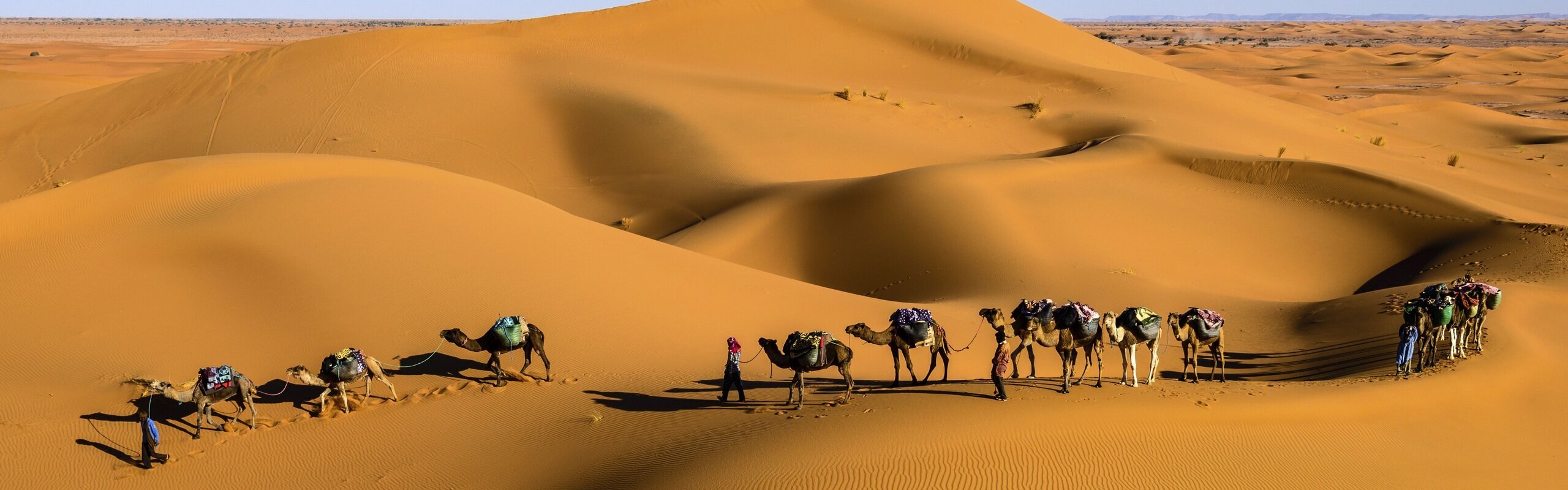

Here are the important things you need to know about the Silk Road's history, China's new Silk Road trade, and Silk Road tourism.
Content Preview
- 1. The Silk Road began over 2,100 years ago.
- 2. The total length of the Silk Road was about 9,000 kilometers.
- 3. It began to trade silk for horses.
- 4. There were 5 "Silk Roads" from China.
- 5. The Silk Road was the longest ancient overland trade route.
- 6. Marco Polo was the most famous Silk Road trader/explorer.
- 7. The Silk Road was severed around 1368.
- 8. The Silk Road changed the world radically.
- 9. Buddhism entered China by the Silk Road.
- 10. The "Silk Road" only got it's name in the 19th century.
- 11. "Silk Road trade" is booming again!
- 12. China has opened major new Silk Road transport routes.
- 13. Silk Road travel is booming too.
1. The Silk Road began over 2,100 years ago.
In 139 BC, in a search for allies in the far west, Emperor Wudi (156–87 BC) of the Han Empire sent Zhang Qian (200–114 BC) as an embassy to Central Asia, and they realized that trade and travel would be profitable and beneficial.
2. The total length of the Silk Road was about 9,000 kilometers (5,500 miles).
In 119 BC, the Silk Road started from Chang'an (now called Xi'an), China's ancient capital, which was moved further east (and with it the Silk Road's start) to Luoyang during the Later Han Dynasty (25–220 AD). The Silk Road ended in Rome.
The total length of the Silk Road was about 9,000 kilometers (5,500 miles), and the total length of the northern Silk Road routes in China was about 4,000 kilometers (2,500 miles).
Recommended tour: 1-Day Xi'an Highlights Tour
3. It began to trade silk for horses.
The Han Empire was locked in a major war with the nomadic Xiongnu people, and the Han Dynasty wanted big Fergana Valley war horses for their cavalry to ride to defeat their enemies.
Recommended tour: 5-Day Dunhuang Desert Culture Journey

4. There were 5 "Silk Roads" from China.
The main Silk Road branched at Dunhuang. Click for more Silk Road maps.- The main Silk Road went from China's capital through Central Asia to Europe,
- a southern branch went through the Karakorum mountains,
- a northern branch went into Russia and then west,
- the Tea Horse Road went through Tibet to India, and
- the "Maritime Silk Road" went via seas to the Middle East and Europe.
5. The Silk Road was the longest ancient overland trade route.
From Xi'an/Luoyang, through Central Asia, and to Constantinople on the eastern edge of Europe, the Silk Road covered about 6,000 kilometers or 4,000 miles.
6. Marco Polo was the most famous Silk Road trader/explorer.
Marco Polo (1254–1324) is famous for traveling to China's Yuan Empire when he was 17 with two relatives, becoming part of the government of Kublai Khan, returning with great wealth, and spreading accurate information about China.
7. The Silk Road was severed around 1368.
At the fall of the Yuan Empire (1279–1368) Mongol trade routes were severed, and sailing ships began replacing trade by road. The Ming Empire (1368–1644) also turned officially isolationist in 1371 and banned almost all sea trade. See more on The History of the Silk Road in China.
Recommended Silk Road tours:
- 11-Day Along the Great Silk Road
- 7-Day When Silk Road Culture Meets Fabulous Fall Colors
- More Silk Road tours
8. The Silk Road changed the world radically.
The Chinese inventions of paper and printing enabled the scientific and industrial revolution in Europe.Revolutionary world changes ensued due the opening of the Silk Road: major continental invasions, the spread of vast empires, vast regions destroyed by plagues, and crop and technology dissemination that led to the Renaissance, the scientific revolution, and the great growth of world population!
9. Buddhism entered China by the Silk Road.
The transmission of Buddhism to China from India and Central Asia to the Han Empire via the Silk Road is thought to have mainly begun after 68 AD partly through the efforts of Emperor Ming (58–75).
10. The "Silk Road" only got it's name in the 19th century.
Silk fabrics were very valuable, light and easy to transport on the Silk Road.In 1877, Ferdinand Van Richthoten, a prominent geographer who worked in China from 1868 to 1872, coined the term "Silk Route" while making a Silk Road map, because the Chinese mainly traded silk. See What Was Traded on the Silk Road and Why.
11. "Silk Road trade" is booming again!
The Chinese government believes it can greatly spur China's growth and influence by constructing land and sea transportation facilities to make trade and travel more economical and quicker and is announcing plans for this trillion dollar project.
12. China has opened major new Silk Road transport routes.
The first freight trains from Europe to China began running in 2011 and have cut transit time from Germany to China from 50 days by sea to 18 days, and a major 5,400 kilometer highway to St. Petersburg from the Yellow Sea opened in 2018 that allows vehicles to travel the distance in 10 days.
13. Silk Road travel is booming too.
In 2018, compared to the year before, there were 38 percent more tourists in Altai in Xinjiang and 24 percent more in Uzbekistan than last year, and there was double the number of Chinese in Albania than in previous years.
All our tours are customizable. Contact us to create a Silk Road trip according to your group size, time, budget, interests, and other requirements.
Silk Road Travel with China Highlights
Many modern day adventurers peg this as one of the key things they want to do. At China Highlights, we have Silk Road experts who can create the perfect trip for you for you for a rich experience and memories.
Silk Road- Along the Great Silk Road — Our 11-Day Xi'an, Zhangye, Dunhuang, Turpan, Urumqi, and Kashgar tour is the most selected Silk Road itinerary.
- 7-Day Xinjiang Silk Road Highlights Tour — See Urumqi, Turpan, Kashgar and other places.
- More Silk Road tours
Further Reading
- Silk Road Maps
- Why China's Silk Road Is So Significant — 10 Reasons that Changed the World
- Silk Road Travel Tips (a China Silk Road Travel Guide)
- Top Things to Do Along the Silk Road
- Top 10 China Silk Road Food You Must Try