
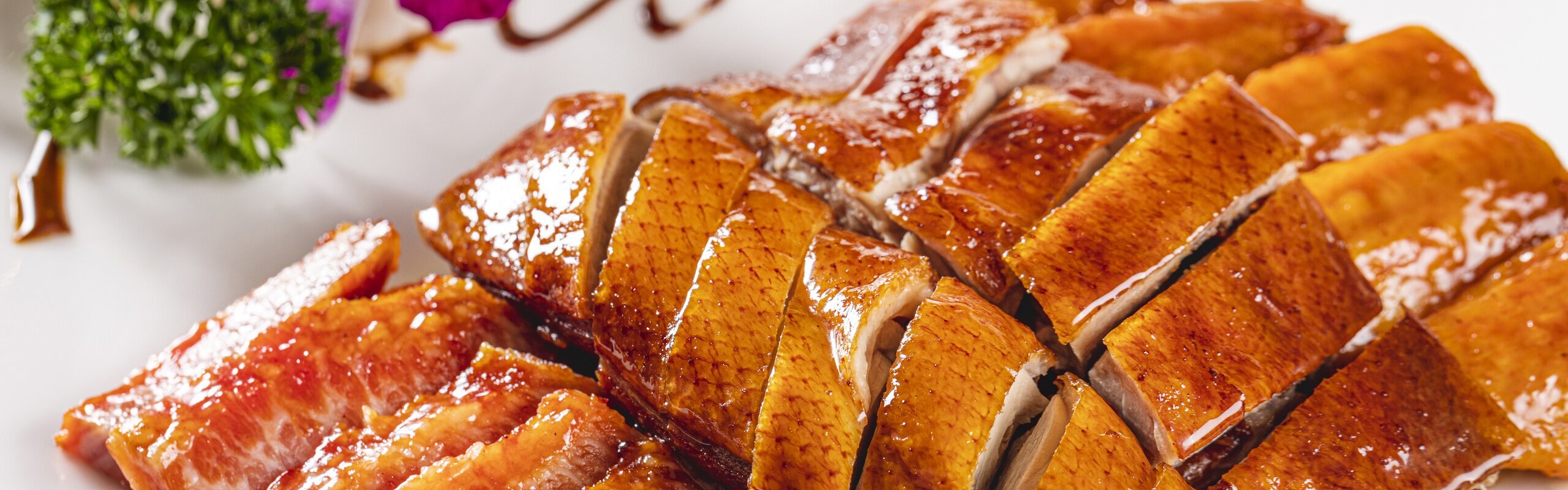

Fujian Cuisine originates from the southeastern province of Fujian on the Pacific. The history of the cuisine dates back 5,000 years. Great seafood soups and the precise use of scintillating, but not tongue numbing, spices are the highlights.
- Names: Fujian food, Min cuisine (闽菜 Mǐncài /min-tseye/)
- Location: Southeast China, Fujian Province, Xiamen, Quanzhou
- Distinctives: lighter, with a sweet and sour taste, using ingredients from the sea and the mountains.
The Three Styles of Fujian Cuisine
There are three regional styles: Fuzhou style that is light fare compared with other styles and is often sweet and sour to the taste; western Fujian style that features a slightly spicy flavoring from mustard and pepper; and southern Fujian style that usually tastes spicy and sweet.
The Four Notable Features — Unusual Ingredients, Soups, Decoration, Seasonings
 Min Cuisine is one of the eight famous cuisines in China
Their cuisine is known for the use of exotic delicacies from the mountains and sea as the main ingredients, an emphasis on soup eating, precisely applying various kinds of seasonings, and an emphasis on artistically cutting and decorating food.
Fujian's abundant natural resources mean that their cuisine is rich in quality nutritious ingredients. They'll use somewhat exotic ingredients such as wild foods, wild herbs, varieties of mushrooms, bamboo, and many kinds of seafoods. So it is nutritious, and it is good for dieters since it isn't high calorie.
Flavors of Fujian Cuisine — Sweet and Sour, Many Flavors of the Sea
A wide variety of seafoods are used to make Fujian dishes. Unlike most Western seafood restaurants where the main dishes include a few varieties of fish and oysters, the people of Fujian eat all these and things from the sea most people have never seen. There are various kinds of mussels including big ones, sea cucumbers, sea worms, kinds of snails and slugs, and varieties of sea vegetables that you can explore.
Condiments and Seasonings
Spices used: The Fujianese are distinguished for applying a wide variety of herbs and seasonings to flavor the food. They apply them to make the food taste good and make it aromatic. They also want to make it different and interesting, something new. When applied artistically, the various colors and herbs can also make a beautiful presentation.
- Salty seasonings: sea salt, shrimp sauce, shrimp oil, and soy sauce.
- Sour seasonings: white vinegar and qiaotou (a vegetable similar to green onion.
- Sweet seasonings: brown sugar, anise, and cassia cinnamon.
- Hot seasonings: pepper, mustard, and shacha sauce.
Their Favorite Cooking Methods
Their chefs have developed numerous ways to cook food perhaps reflecting the history of the province. The region was a haven for refugees from the large Western Xia Empire and the Tang Empire. They brought with them their cooking styles. The position on the coast meant they had contact with Japanese and people from Southeast Asia too.
They use numerous methods to cook: pan-frying, deep-frying, boiling, baking, stewing, mixing, sautéing with wine, stewing in gravy, grilling, cooking with red rice wine, simmering, stir-frying, smoking, braising and salting.
Red rice wine: Their most peculiar method of cooking is cooking with red rice wine. This includes stir-frying with red rice wine, baking with red rice wine, quick-frying with red rice wine and deep-frying with red rice wine. The "drunken" (cooked in wine) dishes that are prevalent in Fujian Province are famous throughout China.
Soup making: The people of Fujian love soup more than most of the rest of the Chinese. A common saying about their food is "不汤不行" (bù tāng bù xíng). It literally means: "No soup is not OK." Or, a meal without soup isn't a good meal. Soup will often mean the main beverage or only beverage at a meal.
Their Daily Staple Food
Daily staples: The area is in the subtropical rice growing area of China, so white rice is the main staple cereal. They also eat red yeast rice that is a type of rice that is coated with a red mold. This mold is slightly sweet, and it is thought of as having medicinal effects.
Best Places to Eat Authentic Fujian Cuisine in Xiamen
Xiamen is the biggest city in Fujian, and it is on the coast. There are good seafood restaurants and is also the best place for authentic sweet and sour dishes. Recommendations:
Shuyou Seafood Grand Restaurant
The restaurant is known for the wide variety of seafood.
- Chinese name: 舒友海鲜大酒楼 Shuyou Haixian Da Jiulou /shu-yoh heye-sshyen daa jyoh-loh/
- Average price per person: 153 yuan
- Address: 97 Hubin North Road, Siming District (思明区湖滨北路97)
Little Glass Food Stall
The prices are affordable, and the restaurant is popular. The food is delicious, and there is a variety of seafood. Selections include: Sleeve-fish cooked with soy sauce (酱油水鱿鱼), solen (竹蛭), clam (花蛤), sea cucumber (海瓜子), steamed crab (清蒸蟹), fried rice-flour noodles (炒米粉), shrimps (沙虾) and steamed sleeve-fish (清蒸鱿鱼).
- Chinese name:: 小眼镜大排档 Xiao Yanjing Da Paidang /sshaoww yen-jing daa peye-dung/
- Average price per person: 62 yuan
- Open: 11am–2pm and 4:30pm–10pm (from Monday to Friday); 10:30am–2:30pm and 4:30pm–11:30pm (during weekends)
- Address: 7 Hubin Middle Road, Siming District (思明区湖滨中路7号)
Min Cuisine Menu
| English | Chinese | Pronunciation | Characters |
|---|---|---|---|
| Stewed Chicken with Three Cups Sauce | sān bēi jī | Sann bay jee | 三杯鸡 |
| Steamed Chicken in Red Fermented Rice | zuì zāo jī | Dzway dzaoww jee | 醉糟鸡 |
| Sliced Chicken in Red Fermented Rice | shāo piàn zāo jī | Shaoww pyen dzaoww jee | 烧片糟鸡 |
| Buddha Jumping Wall (Sea Food and Poultry Casserole) | fú tiào qiáng | For tyaoww chyang | 佛跳墙 |
| Steamed Strengthening Fish | qīngzhēng jiā lì yú | Ching-jnng jyaa lee yoo | 清蒸加力鱼 |
| Tai Chi Prawns | tàijí míng xiā | Teye-jee ming sshyaa | 太极明虾 |
| Hot and Sour Squid | suān là làn yóuyú | Swann laa lan yoh-yoo | 酸辣烂鱿鱼 |
| Sweet and Sour Litchis | lìzhī ròu | Lee-jrr roh | 荔枝肉 |
Travel with China Highlights and Taste Authentic Fujian Cuisine
Our customers are enjoying their dinner with our colleague Kim at a restaurant in Guilin.If you want to try authentic Fujian Cuisine, our tours can take you to authentic local restaurants. Our Xiamen tours combine seeing attractions around Xiamen with meals in carefully selected restaurants.
To taste delicious Chinese foods when traveling in China, have a look at our Chinese Food Tours.
Recommended Chinese Food Tours
12-Day Beijing, Xi'an, Chengdu, Guilin, and Hong Kong Cuisine tour — This tour explores the most popular destinations in China and savors five different regional cuisines, and could be extended to Fujian.