
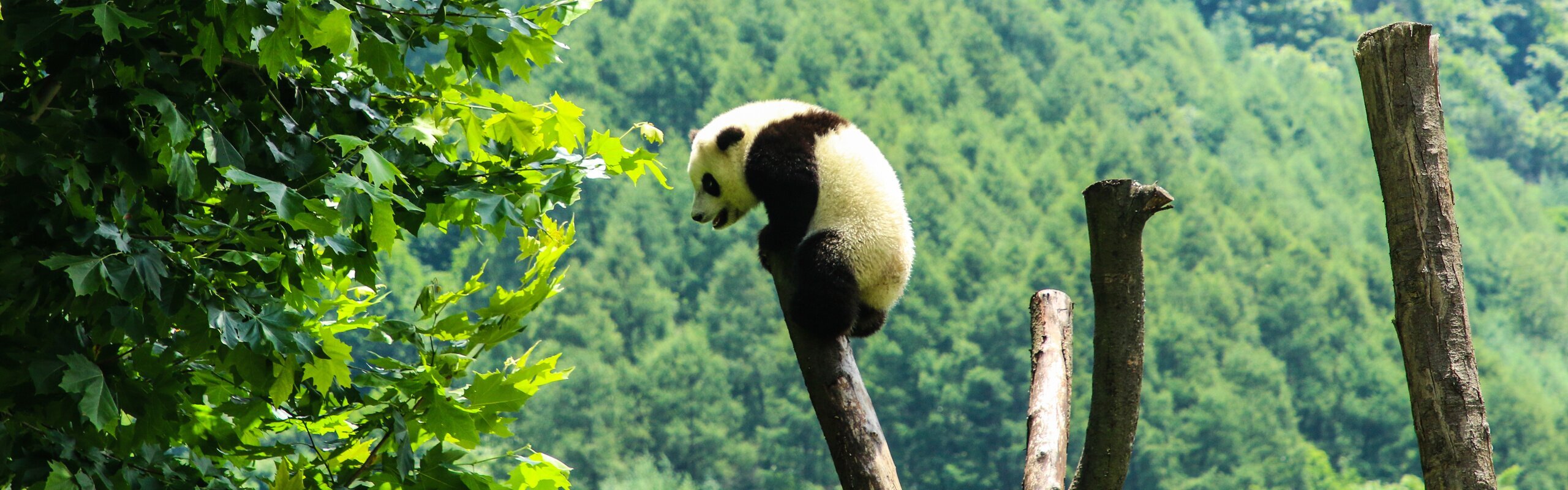

Giant pandas usually live in forests and prefer a solitary lifestyle. They do not hibernate, love climbing trees, and are also surprisingly good swimmers.
Their life is simple and low-stress. Most of the day is spent eating or sleeping, and only several hours are left for play and other activities. So what do they usually do all day? Let's explore more about their daily life.
Eating Habits — Spend 10-14 Hours to Eat
 A panda is eating the bamboo leaves
Eating is the most time-consuming activity in a panda's day.
About 99% of a giant panda's diet is bamboo, but bamboo is very low in energy. To get enough nutrition, pandas need to eat 12 to 38 kilograms of food every day, which is approximately 40% of their own body weight.
The giant pandas prefer eating tender stems, shoots, and leaves of bamboo, but they may also eat small amounts of fruit, insects, and grass. You can read more about What do Giant Pandas Eat.
Sleeping Habits — 8 to 12 Hours a Day
Panda Qizai is sleepingIn addition to eating for about half a day, the giant pandas spend the rest of their time sleeping.
Usually, they sleep for 2 to 4 hours between their two meals.
Their favorite sleeping poses include:
- Lying flat on their backs
- Sleeping on their sides or stomachs
- Stretching their paws
- Curling up into a ball
- Or even covering their eyes with their paws
The keepers feed giant pandas twice a day at regular times in the zoo, therefore, the giant pandas spend most of their spare time resting, and they seem very lovely even during their sleeping time.
Do you want to be a one-day "panda keeper"? Why not join a panda volunteer program, and you'll help clean panda's enclosures, chop bamboo, and make panda cakes for them by yourself.
What Do Pandas Do Besides Eating and Sleeping?
Although pandas only have a few active hours each day, they still manage to do quite a lot.
1. Climbing Trees
Panda is climbing the treeGiant pandas are actually very agile and love climbing trees. They climb to play, exercise, sleep, escape danger, or even look for a mate.
Sometimes they climb too high, and the tree branches cannot support their weight, so they may accidentally fall down and even get hurt.
2. Playing
Pandas in Chongqing ZooPandas have many ways to play. Besides climbing trees, they will also roll on the ground, take slow walks, play in the pools, swim, and even play in the snow on snowy days.
In panda bases and zoos, pandas are provided with many toys, such as basins, swings, tires, balls, and wooden horses, just like children's toys.
This environmental enrichment helps prevent boredom and repetitive behaviors in captive pandas.
3. Communicating
Although giant pandas are solitary animals, they still interact with others from time to time. These interactions can be friendly greetings or, occasionally, fights.
Pandas use scent marking to communicate and mark territory. In panda bases or zoos, pandas living near each other may even mark their friends, mothers, or cubs.
4. Patrolling Their Territory
Pandas often explore and patrol their surroundings by smelling scents, touching objects with their paws, or repeatedly walking along the same routes.
This helps them remember where to find food, water, and safe resting spots.
Other Panda Behaviors
1. Do Pandas Make Sounds?
Yes. Giant pandas make a wide range of sounds, some of which sound like sheep or cows. Different sounds express different emotions.
Such as, high-pitched squeaks are often made by cubs to get their mother's attention when they are hungry, uncomfortable, or need to poop.
Loud roars or growls show anger or warning
Soft bleats and humming sounds usually mean the panda feels relaxed or comfortable
2. How Do Pandas Mate and Courtship
Female pandas usually go into heat in spring. During this time, they may become restless, walk around frequently, and bleat loudly.
Male pandas may compete for attention, scent-mark frequently, and sometimes even do handstands to mark higher areas and impress females.
3. How Mother Panda Raise their Cubs
Mother Pandaand her babyPanda mothers take excellent care of their babies. They hold cubs in their arms to keep them warm, lick them clean, help them poop, and feed them milk.
As the cubs grow older, the mother teaches them how to climb trees, find and eat bamboo, and recognize their environment
This stage is full of interaction and is often considered the most heart-warming part of a panda's life.
Start Your Panda Tours with Us
If you are interested in a panda tour, we can help you tailor-make your own unique tour. If you have no idea, please see our popular tours below for inspiration: