
The Mausoleum of Qin Shihuang is about 1.6 kilometres (1 mile) from the Terrracotta Warriors Museum. It is an artificial hill constructed as a part of a 98-square-kilometer (38-square-mile) necropolis complex that was built by Qin Shihuang and his court.
- Chinese: 秦始皇陵 Qín Shǐhuáng Líng /chin shrr-hwung ling/ 'Qin First Emperor Tomb'
- Built: Approximately between 246 to 210 BC.
- TripAdvisor Rank: 3.5/5 — People don't recommend it except as a place to walk in a garden.
- Main highlight of interest: The mound itself and the garden is the highlight; there is a model tomb mock-up that tourists ignore.
- Time for visit: 15 minutes.
- Suited to: People who are really interested in his life or the Qin era. Otherwise, it will just be a hill to look at.
The First Emperor of Imperial China
This authoritarian emperor, Qin Shihuang (~259 to 210 BC) left the world with a legacy of great achievements. The mysterious royal mausoleum and necropolis stands out as a wonder of his imperial reign.
Learn more: Amazing Facts about the First Emperor
The First Emperor's Burial Mound
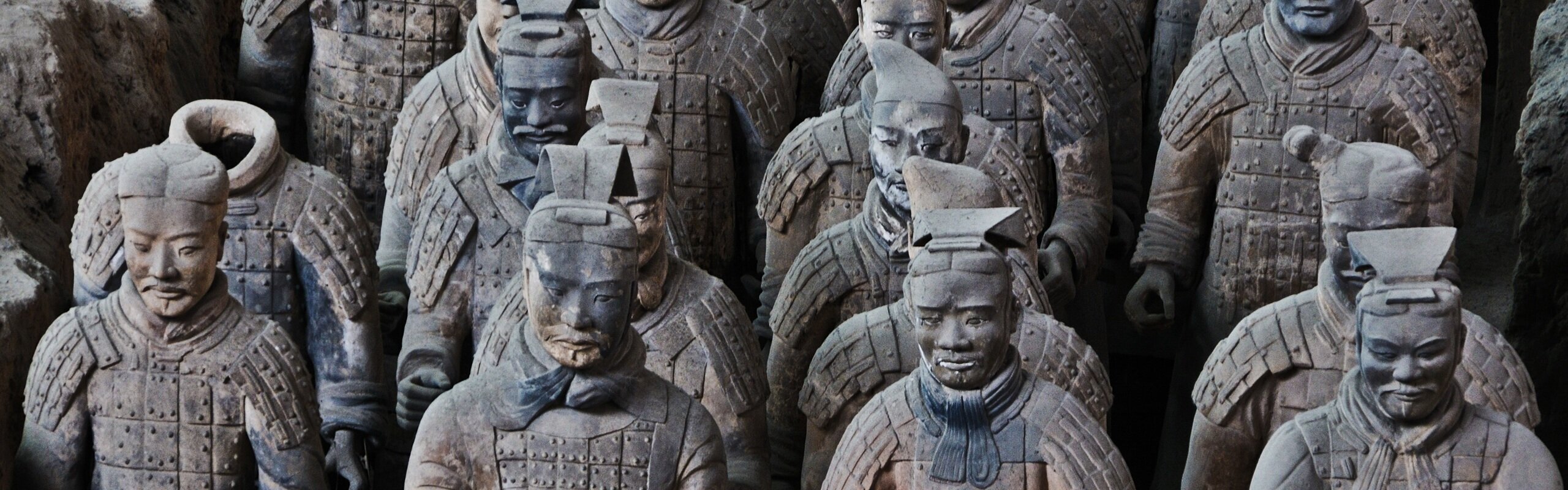
 Qin Shihuang's necropolis included about 8,000 of these army statues that have been discovered to date.
Recently, archeologists have found a huge palatial burial chamber underneath the mound that they think is the actual tomb. This isn't yet certain however because the mound hasn't been officially excavated
It measures 690 by 250 meters (2,263 by 820 feet) — for just one tomb! This is 17 US Midwest-sized blocks! The burial mound is 76 meters (249 feet tall).
Modern surveys of the site show that the mausoleum is divided into an inner sanctuary and an outer city.
It stands at the foot of Lishan. It is about 30 km east of Xi'an. The big tomb mound and what is in it lies on the Lishan mountains and offers a unique landscape for sightseeing. Trees and bushes cover the mound.
The Model Tomb
There is a model of the tomb that was constructed there, but few tourists find the mock-up interesting. The only "Tomb of the First Emperor" that tourists can see is a mock-up.
Nearby Attraction
Around the mausoleum, there are many accompanying tombs scattered over a 56 square km tomb area. In addition to the discovered vaults seen in the famous museum of the Terracotta Warriors and Bronze Horses, some more vaults have been discovered recently that contain other artifacts. As time goes by, archeologists are sure to discover more treasures.
Travel Essentials
- Location: 35 kilometers (22 miles) east of Xi'an
- Transport: Buses there include Tourism Bus #5 from Xi'an Train Station and Bus #307. The fare is only 7 or 8 RMB.
- Admission: About 150 RMB from March to November and 120 RMB other months. The ticket also includes seeing the Terracotta Army Museum.
Popular Terracotta Army Tours
China Highlights private tour customers at the Terracotta Army Museum can access archeological discoveries that are not seen by the large crowds.For many tourists, a trip to China isn't complete without a visit to the the Terracotta Army. Here are our more popular tours to explore this ancient wonder:
- THE GOLDEN TRIANGLE (Beijing, Xi'an, and Shanghai) — Visit China's classic sights in this 8-day tour — our BEST-SELLER.
- 3-Day Xi'an Foodie Adventure: Discover more of Xi'an — the capital of 13 ancient dynasties — to explore China's ancient culture with cuisine.
We'll modify these to tailor-make your personal tour to meet your requirements.
To be better prepared for a visit — read An Insider's Guide to the Terracotta Army Museum.
 (10,000+ reviews)