

The Ming Dynasty
Overview
During the final thirty years of the Yuan era (1279-1368), there were famines and natural disasters. There were also revolts and rebellions that the Yuan troops tried to quell. But the rebellions grew in size, and rebel armies started holding cities and large tracts of territory. One of these rebel armies called the Red Turbans was led by Zhu Yuanzhang (1328-1398) who gained control of the important city of Nanjing in 1358 and made it his capital. He defeated rival armies and gained control of Beijing in 1368 and ended Yuan Dynasty rule. Like the Yuan Empire, the Ming Empire had strong leaders at the beginning and was prosperous. But like the Yuan Empire, at the end there were rebellions and natural disasters, the economy was in shambles, and the ruling clan were ineffectual. The Ming Dynasty ruled their empire for almost 300 years, prospered from freer private internal trade and industry and with trade with Europeans, and fell from internal rebellions and the attack of the Manchus.
Historical Relics of the Ming Dynasty
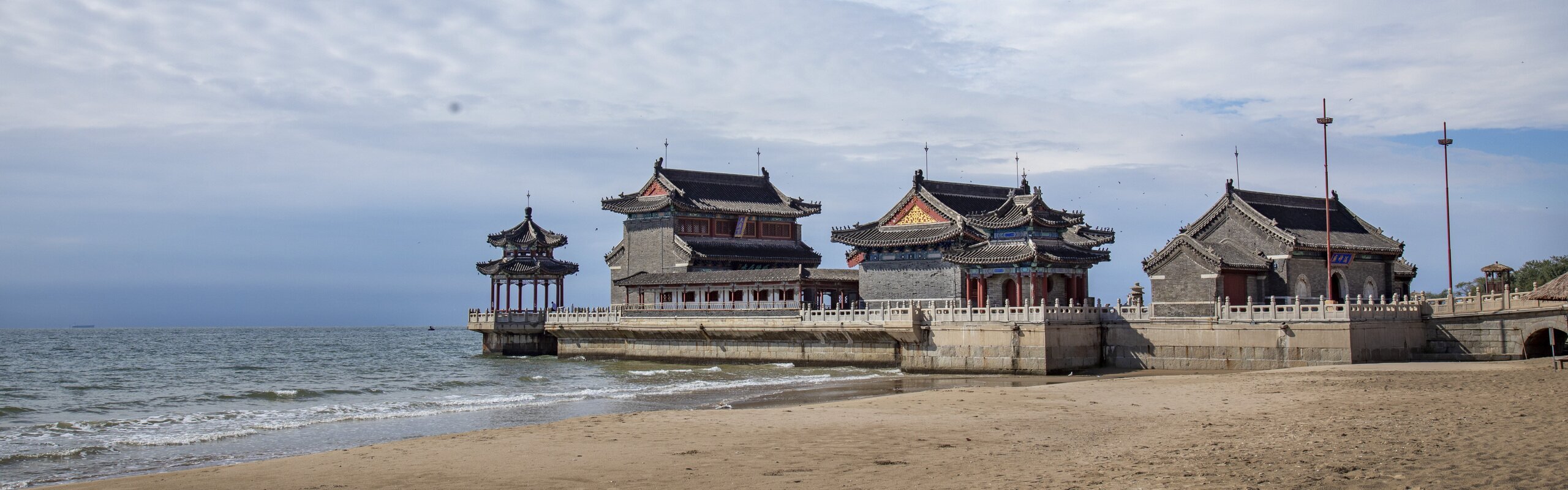
Most of the cultural relices of the Ming Dynasty are scattered in Beijing and Nanjing.The reason is that these two places served as capital of the dynasty.
- The Forbidden City, the imperial palace of the Ming and Qing dynasties.
- The Great Wall of China. Most of the existing parts of walls were built during the Ming Dynasty.
- Temple of Heaven. The Temple of Heaven was where the emperor came every winter solstice to worship Heaven and to solemnly pray for a good harvest
- Ming Tombs. The imperial cemetery covers an area of 120 square kilometers and there are 13 Ming Dynasty emperors buried there.
- Ming Xiaoling Mausoleum, tomb of Zhu Yuan Zhang, the founder of the dynasty.
- Zhonghua Gate in Nanjing.
- Mausoleum of Jin Jiang, tombs of generations of Ming princes who were dispatched by the emperor to govern today’s Guilin region
Like the Yuan Dynasty, the Ming Empire underwent big changes of policy. The Ming Dynasty first promoted trade and exploration of the outside world, and then it become somewhat isolationist later. At first the powerful emperors tried to strictly manage the economy to the point where rulers were dictating where merchants could live and operate and how far they could travel. They heavily taxed the merchants so that many merchants simply gave up their businesses. They also resettled hundreds of thousands of people to try to form the empire. However, by the middle of the dynastic era, the merchant class became powerful and rich, and people had more freedom to work as they wished. A belief that was current among the bureaucrats and ruling court later in the dynastic era was that the merchants knew the best about how to manage their resources. The empire became more of a free market, and the merchant class that was considered to be the bottom social tier at the beginning of the Ming Empire became prosperous and powerful. There was a blurring of social class lines because both merchant class and farmer class clans prospered, became literate and cultured, and their members passed the Imperial Examination and entered the government.
However, natural disasters, rebellions and wars consumed the Ming Empire. There was also inflation of the value of silver currency so that farmers found that paying their taxes in silver as they were required to do was a great burden. Imperial income fell. It is interesting that the Yuan, Ming, and Qing Empires all ended the same way. Unusually severe periods of natural calamities along with wars and internal rebellions weakened the ruling courts, and they were brought down. There is an ancient political idea called "The Mandate of Heaven." It was thought that heaven's displeasure with a dynasty was marked by large-scale natural disasters. By naming himself to be the Emperor, according to the traditional thinking, a powerful ruler was announcing that he had the Mandate of Heaven to rule – essentially that Heaven picked him to be the ruler.
History
A powerful and long-lived emperor named Zhu Yuanzhang (1328-1398) became the first emperor of the Ming Dynasty by leading a rebellion, capturing Beijing, and defeating his rivals. The Mongols established a very large East Asian empire that included the area of Tibet that was a large and powerful adversary of earlier empires. But there was inflation from the printing of too much paper money, high taxes, natural calamities, and rebellions. There were four classes in the social hierarchy. The indigenous people were at the bottom. Though the Mongols brought Muslims from Central and Western Asia to help them administrate the Yuan Empire, they were second-class servants of the Mongols. In the 1330s and afterwards, the climate was harsher. There was drought, crop failure, famine and flooding of the Yellow River. Uprisings occurred in many places during the 1340s, and in the 1350s several major rebel leaders emerged. Muslims revolted and Zhu Yuanzhang was a part of a rebel group led by a Muslim. In 1371, Zhu Yuanzhang marched north and seized Beijing when the Mongols were divided by rivalries. The Mongols withdrew to Mongolia and from there continued to harass the Chinese throughout the reign of the Ming Dynasty. The Ming Empire experienced growth and world exploration at the beginning; free trade and prosperity at the middle of the dynastic era; and war, famine, natural disasters and bad government at the end.
Beginning of the Ming Dynasty
Zhu Yuanzhang
Zhu Yuanzhang was a poor peasant who was born in 1328. Perhaps typical of a poor peasant at the end of the Yuan era, he saw a lot of death, starvation, and fighting. It is said that he was the youngest of seven or eight brothers. Due to poverty, several of his older brothers were given away. In 1344 when he was 16, the Yellow River flooded, and his family died. He took shelter in a Buddhist monastery that also ran out of money, and he was forced to leave and beg for food. But he returned to the monastery when he was 24, and he learned to read and write there. But the Mongol army destroyed the monastery as part of their campaign against rebellion.
Zhu Yuanzhang joined a rebel group. Then they joined a large Red Turban army that had Zoroastrian and Buddhist beliefs, and he became their leader before he was 30. Zoroastrianism was a Western religion that had spread through Central Asia before Islam spread. They believed in a supreme deity. What he believed personally at that time or when he was older isn't clear. He was thought to be a defender of Confucianism. But he also built mosques and wrote eulogies about Muhammad. He relied on the support of Muslims. Zoroastrians tend to syncretize religions, so maybe he had a mixture of religious beliefs.
In 1356, Zhu's army conquered Nanjing that was an important city that was strategically located so that he could control part of the Yangtze River and the region south of it. He made Nanjing his capital. After defeating rebel rivals, he proclaimed himself Emperor of the Ming Dynasty in 1368. He adopted "Hongwu" as his title. His name means "Vast Magnificent Military." Later that year, his army entered Beijing as the Mongols fled northwards. Yunnan remained under Yuan rule until 1380.
The Hongwu Emperor staffed his bureaucracy with officials who passed the Neo-Confucian Imperial Examinations. He wanted to protect the peasants and helped them prosper. So he forced many to migrate to settle other places. He instituted public work projects. Hongwu tried to distribute land to peasants. During the middle part of his reign, Hongwu made an edict that those who brought fallow land under cultivation could keep it as their property without being taxed. By the end of his reign, cultivated land increased substantially. This made peasants prosper because they sold their produce to the growing cities. During his reign, the population increased quickly.
After he became the Emperor, he became fearful of rebellions and mutiny. It is said that he made it a capital offense for his court to criticize him. The dictum proved true: "Power corrupts, and absolute power corrupts absolutely." There were massacres, and people feared to speak against him. It is said that in 1380, a thunderbolt hit his palace, and he stopped the killings and massacres for some time because he was afraid that Heaven would punish him. It is thought that he or his secret police killed tens of thousands of officials and their families. He tortured many people and even killed many concubines, perhaps hundreds or thousands. However, he succeeded in maintaining power and consolidating control, and he stayed alive until old age. He reigned for thirty years. When he died, he had his physicians and concubines put to death.
Middle of the Ming Era (1398-1557)
Emperor Hongwu instituted some policy initiatives that his successors didn't follow. One policy was to make sure that eunuchs had no ruling power. He thought that court eunuchs were dangerous because eunuchs had involved themselves in internal politics in earlier dynasties. So he forbade them from having power in the court, and insisted that they be illiterate. However, later in the Ming era, eunuchs regained power and became like a parallel administration along with the Confucian officials.
The Confucian viewpoint was that merchants were parasitic in the empire. The Hongwu Emperor wanted agriculture to be the source of the empire's wealth instead of industry and trade as in the Song Empire. He also wanted peasants to live in self-supporting agricultural communities. He tried to weaken the merchant class and to force them to pay high taxes, and he even relocated a large number of them. However, after his reign the opposite happened. The merchant class prospered along with industry and trade. Chinese manufactured goods such as porcelain and silk were sold for high prices around the world. The farmers sold their produce to the urban population and so became dependent on this source of income.
The Hongwu Emperor also issued paper currency. Paper currency was the main currency in the Yuan Empire. However, due to inflation, by 1425 paper currency was worth only a few percent of the printed value. So silver and bronze coins became the main currency of the empire.
Another big change was a change of capital to Beijing and an insurrection against Hongwu's grandson. Hongwu's grandson Zhu Yunwen became the ruler when Hongwu died in 1398. He only ruled for four years because his uncle led an insurrection against him. His uncle was named Zhu Di. He burned down the palace in Nanjing, and he made himself the emperor in 1402. He moved the capital to Beijing and reversed many of Hongwu's policies.
The Ming army destroyed the Yuan Dynasty's palace in Beijing when they first captured the city. Construction of a new capital city there for Zhu Di lasted from 1407 to 1420. It is said that the court employed hundreds of thousands of workers to build it. The famous Forbidden City was built as the palace for Zhu Di. In order to provide quick transportation to the capital city, the Grand Canal was rebuilt from 1411-1415. This increased commerce in the north. More than a hundred thousand people worked on this project as well.
Also, Zhu Di built a big fleet built and made Zheng He (1371-1433) who was a Muslim eunuch the leader of it. He reversed Hongwu's policy of barring eunuchs from power. The fleet was sent on expeditions to gather tribute and to go to the West to trade. The fleet sailed as far as Arabia where Zheng He and his Muslim sailors made the Hajj. It may have also reached Africa. It is said that seven missions were sent out and that 2,000 ships were constructed for these missions. The first voyage from 1405 to 1407 is said to have involved 317 vessels and a total of 26,800 men.
The Voyage of Zheng He's Fleet
However, the Confucian bureaucrats, fearing the power of eunuchs in the court, canceled these court-sponsored missions after Zheng He died in 1433. Also, the Mongols became more of a threat during the middle and late 1400s. The missions were very expensive, and a huge amount of money was needed to reconstruct the Great Wall. Much of the modern Great Wall was built during the Ming era. In 1479, a court official burned the court records of Zheng He's voyages. Perhaps he wanted to rid the empire of interest in foreign countries or in traveling overseas. Because of this, it isn't clear exactly where the fleets of Zheng He went. Some people claim that the ships went to the Americas. Perhaps to stop long-distance voyages, laws were promulgated that limited the size of ships to keep them small.
In 1449, a Mongol leader named Esen Tayisi launched an invasion of the Ming Empire. The Mongols captured the emperor. But the emperor's brother became the emperor. After the Mongols returned the emperor, there was a coup and the original emperor retook his throne. The Mongol leader Altan Khan (1507–1582) invaded again and raided as far as the outskirts of Beijing.
About the year 1500, the dynasty had an isolationist policy towards trade. Private foreign trade was outlawed, so a lot of illegal trading was carried out. The officially sanctioned trading was only allowed in three ports. Japanese were allowed in one designated port only once every ten years.
In the early 1500s, the Europeans arrived to trade. Rafael Perestrello who was a cousin of Christopher Columbus arrived in Guangzhou in 1516 to trade. Then a large Portuguese expedition came to Guangzhou in 1517, but the landing party was put in jail. After this, there were naval battles that the Portuguese generally lost. But in 1557, the Portuguese convinced the Ming court to agree to a treaty that made Macau a legal trading port of the Portuguese.
Latter Ming Dynasty (1557-1644)
In the late 1500s, the Ming court and merchants prospered from foreign trade, and they also received Catholic monks into their court. So the government had increased contact with Europeans. Though the Ming Empire stopped sending out fleets to the West, Western Europeans came to them both to trade and to teach Christianity. There was a high demand for manufactured products such as porcelain and silk. The Portuguese, Spanish, and the Dutch vied for profit. The Europeans also acted as middlemen in trade with Japan because the Japanese also highly valued Ming products. Both the Japanese and the Spanish had silver mines, and they sent a very large amount of silver for the products. Silver coins replaced copper coins and paper banknotes as the common medium of exchange. But during the last decades of the Ming era, the flow of silver was greatly diminished due to fighting between Spain and the Dutch and English and because the Spanish rulers tried to have the silver of the Americas brought directly to Spain instead of being exported to the Ming Empire. This raised the price of silver sharply. Then in 1639, a Japanese Shogun limited foreign imports as part of his isolationist policy. This further limited the empire's trade and contributed to the empire's monetary crisis.
Because of the inflation of the price of silver and natural disasters, the farmers had more difficulty to pay their taxes in silver as they were required to do. This damaged Ming court revenues. This financial crisis was compounded by epidemics, wars, bad government, and rebellions. Bad weather of the Little Ice Age damaged the Yuan Empire earlier, and there was also unusually bad weather at the end of the Ming Empire. All these disasters caused a lot of suffering and helped to weaken the Ming Empire and the rule of the court.
One of the first big blows was an earthquake in Shaanxi in 1556 that is thought to be the deadliest earthquake in history. It is thought that about 800,000 people died then. It is estimated that it measured 8 on the Richter scale. The earthquake killed about 30 percent of the people in Xian. Then in the 1590s, a Japanese Shogun tried to conquer the region. Two Japanese campaigns failed, but the war was very costly for the court.
In the first half of the 1600s, famines became common in northern China because of unusually dry and cold weather that shortened the growing season. The change of climate was a part of the Little Ice Age that brought disaster to the Yuan Empire too. There were also large floods that were partly due to mismanagement of flood-control projects.
During the early 1600s, there were an unusually large number of earthquakes also. From 1621 to 1627 there were two earthquakes above 7 on the Richter scale. Many people saw these earthquakes and other natural disasters as a signal that the dynasty lost the Mandate of Heaven, and they rebelled. Finally, a great epidemic started in 1641. It isn't known how many died from the plague, but it is said that 90% of the people in one area died from the plague.
The court didn't have funds to either help the people or stop the rebellions. The court also didn't have cohesion or the ability to develop good policies since eunuchs took a lot of the power and terrorized people by torturing them. Though the first Ming Emperor banned eunuchs from having power, one of the last emperors secluded himself and surrounded himself with court eunuchs. Wei Zhongxian (1568-1627) who was a eunuch ruled in the emperor's stead. After he committed suicide, other eunuchs continued to cause chaos and weakened the court.
A peasant soldier named Li Zicheng (1606–1645) mutinied with his fellow soldiers in western Shaanxi in the early 1630s after the government failed to ship supplies there. His rebel troops had a base of power in Hubei. In the 1640s, another ex-soldier named Zhang Xianzhong (1606–1647) created a rival rebel base in Chengdu in Sichuan Province.
In the early 1640s, many peasants were starving and unable to pay their taxes, and they were no longer in fear of the Ming court. They began to form large rebel bands. The Ming troops were dispirited and perhaps underfed. In 1644, Li Zicheng's troops were allowed into the city when someone opened the gates for him to enter. The last Ming emperor hanged himself on a tree. But the rebel troops didn't enjoy this victory.
Facing the rebel army as well as a Manchu army across the border, a Ming general who guarded the Great Wall named Wu Sangui (1612–1678) sided with the Manchus and opened the gates of the Great Wall. The Manchus conquered Beijing. However, it took a while for them to conquer the rest of the empire because Nanjing, Fujian, Guangdong and other places had Ming strongholds. Koxinga (Zheng Chenggong) set up an anti-Qing base on the island of Taiwan. The Shunzhi Emperor (1644-1661) was proclaimed the ruler of the Qing Empire in 1644.
Society and Culture
The Ming Empire seems to have remained much like the Yuan and Song Empires. There wasn't much innovation of technology or religious or social change except that social divisions became blurred. In the end, the empire became isolationist, and the court seemed to be in a morass of divisions and court intrigues. The rulers and eunuchs used their funds for pleasures and luxuries. The biggest change in society and culture may be due to the direct contact with Europeans who had learned how to circumnavigate the world and sail directly to their ports. They brought with them New World crops that greatly benefited agriculture. They also brought with them post-Renaissance science and technology and Catholicism.
There was a "Reformation" of Christianity in Europe, and a group of highly educated Catholics called Jesuits sent missionaries to Asia. In 1582, a Jesuit named Ricci landed in Macau. He and some of his fellow Jesuits highly appreciated the philosophy and the culture of the Ming Empire to the point that they deeply studied the teachings of Confucianism and Daoism. Ricci in particular impressed the court by his Western education and knowledge of the Confucian Classics. The Jesuits went to Beijing, and by 1605, there were a thousand converts. By 1615, there were 10,000. Some of these converts were members of the Ming court. The Jesuits and Franciscans and others taught about Europe and Western sciences, and they also introduced the East and its philosophy and religion to the Europeans.
Science
The Ming court's science didn't advance much since the Yuan era except for what they learned about Western science from Jesuits. However one medical scholar outside the court independently wrote a comprehensive book on herbal and natural medicine that was an important advance in medical knowledge. The main advances in scientific knowledge during the Ming era were accomplished through the work of Jesuits in the imperial court and the medical scholar named Li Shizhen.
Jesuits started to enter the Ming court after 1601. Some of the Jesuits in the Ming court were very good scientists such as Johann Adam Schall and Mateo Ricci. They wrote texts about Euclidean geometry, astronomy, physics, and other subjects in Chinese. They helped to introduce Western science to the rulers and officials.
However, one scholar working alone with the help of his family produced what is considered the best natural medicine reference encyclopedia in pre-modern history. His name was Li Shizhen (1518–1593). He was his era's expert on traditional medicine and herbology. He spent most of his life laboring to collect information on herbs, healing techniques, herbal medicine prescriptions, and medicines derived from minerals and animals. He was also a practicing doctor. Because he was an official for a year in the Imperial Medical Institute in Beijing, he had access to old and rare medical treatises. He studied the medical books that were current in his era. He wrote a very long encyclopedia of natural medicine called the Bencao Gangmu (本草纲目, lit.: Herbal Essential Details). This long text is usually called Materia Medica in English.

China Highlights- Chinese Dynasties
- The Xia Dynasty
- The Shang Dynasty
- The Zhou Dynasty
- Spring and Autumn Period
- Warring States Period
- The Qin Dynasty
- The Han Dynasty
- Three Kingdoms
- The Jin Dynasty
- The Sui Dynasty
- The Tang Dynasty
- The Western Xia Dynasty
- The Song Dynasty
- The Yuan Dynasty
- The Ming Dynasty
- The Qing Dynasty
- The Kingdom of Dali


