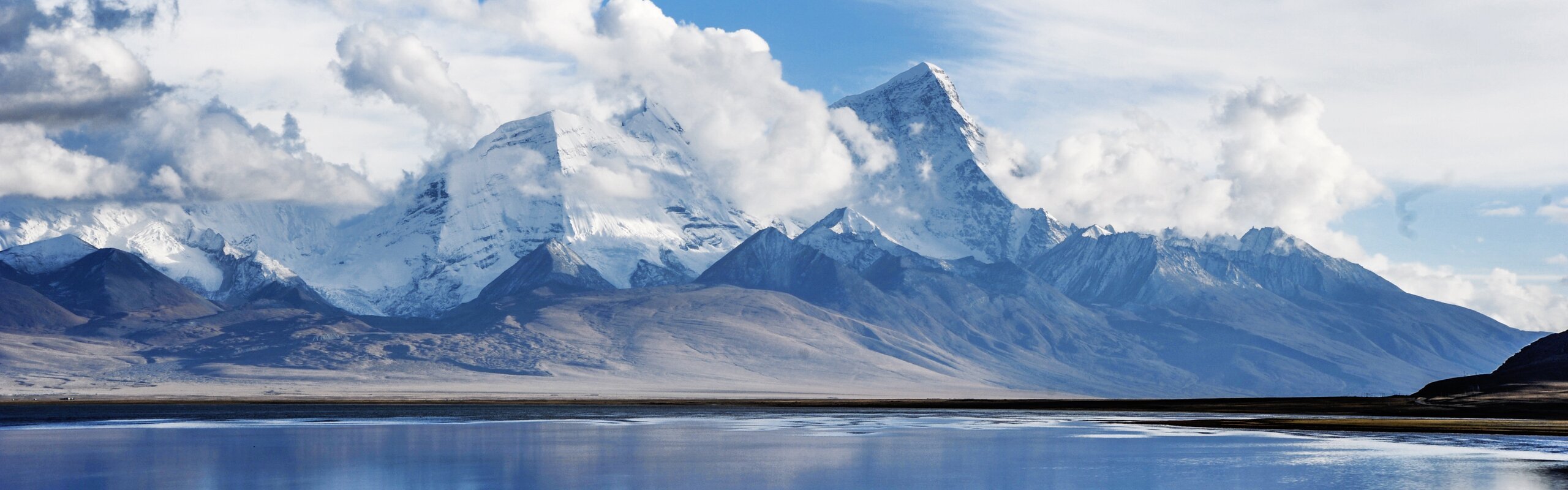
Choosing the perfect time to visit Tibet is essential to fully enjoy its mystique and charm, given its high-altitude location and vast landscape.
Generally, the best time to visit Tibet is from May to October. However, the ideal time can vary depending on your specific interests, whether you are seeking trekking, wishing to admire the plateau scenery, or yearning to immerse yourself in the mystical atmosphere of Tibetan festivals. For more specific details, check out our article.
Content Preview
The Best Time to Visit Tibet for Sightseeing
May to October is the best time for sightseeing in Tibet, when the weather is not very cold, averaging above 10°C (50°F). This is naturally the busiest travel time in Tibet when people go there for the warmer weather and higher oxygen content. See our 5-Day Lhasa Classics and Lake Yamdrok Tour.
October, in particular, offers the clearest skies and best visibility for seeing distant snow-capped mountains. You may even catch the golden glow of "sunset on snowy peaks" (known as Rizhao Jinshan in Chinese).
Another best time we recommend is the wintertime (November to January). Based on the Tibet travel experience of our advisors, visiting Tibet in winter provides a more enjoyable experience. With fewer tourists, you could avoid long queues, and obtaining tickets for attractions and trains is more easily achievable. Additionally, winter travel often comes with more discounts, making the overall trip more budget-friendly.
Located on a plateau, Tibet gets plenty of sunshine during the day in winter and is not very cold. The sunny weather is also suitable for sightseeing.
July and August are the rainy season months in Tibet. However, apart from in the southeast, there isn't a lot of rain.
The Best Times to Visit Mount Everest
If you plan to travel to Mount Everest, travel in April, May, September, or October when you are more likely to see the peak clearly. It is probably going to be hidden behind thick clouds during the rest of the year. Check our 8-Day Lhasa to Everest Base Camp Tour.
 Mount Everest
The Best Time for a Kailash-Manasarovar Yatra and Kora
A "yatra" is a pilgrimage to a sacred place and a "kora" is a religious walk around a sacred site.
The best time for a Mount Kailash yatra and kora is in summer (June to August). This is due to the warmer temperature and higher oxygen content.
If you are going to do a kora around Lake Manasarovar, autumn (September to November) is the best time as there is warmer weather and less chance of rainfall. See our 14-Day Tibet Tour with Mt. Kailash and Lake Manasarovar.
Mount Kailash
The Best Time to Enjoy Tibetan Festivals
If you are interested in Tibetan festivals, it is recommended to visit Tibet in August when the Shoton Festival, Nagqu Horse Racing Festival, and Ganden Thangka Festival are held. But expect to see huge crowds during the festivals.
Avoid Visiting Tibet at This Time
The worst time to visit Tibet for most travelers is during the winter months. Tibet will close to foreign travelers from mid-February to March each year. If you're planning a trip to Tibet, please be aware of and avoid this period.
If the main purpose of your trip to Tibet is to walk, then winter is not a good time either. Some trekking routes may be inaccessible or closed during the winter due to snow and ice, limiting your options for outdoor activities.
The Four Seasons in Tibet
Tibet has four seasons. Each season has its special seasonal experiences and scenery.
As Tibet tour experts, we will recommend the most suitable things to do in Tibet based on your interests and vacation time. Feel free to contact us.
Spring (April to May) — Best for Natural Scenery
- Temperature: 5–19°C (41–66°F)
- It's the best time to go to Nyingchi to see peach blossoms. Check 7-Day Lhasa, Nyingchi, and Bome Tour.
- There will be a relatively low risk of altitude sickness.
- Shoulder season
Summer (June to August) — Best for Active Adventures
- Temperature: 12–24°C (54–75°F)
- There will be the lowest risk of altitude sickness.
- All activities are suitable, such as hiking, sightseeing, and festival immersion.
- The busiest travel season
Autumn (September to October) — Best for Weather
- Temperature: 7–20°C (45–68°F)
- There will be a relatively low risk of altitude sickness.
- It is good for hiking, sightseeing, and photography.
- Busy travel season
Winter (November to March) — Budget Friendly
- Temperature: -5–11°C (23–52°F)
- There will be a relatively high risk of altitude sickness.
- Lhasa is still good to visit as there is adequate sunshine.
- Tibet is usually closed to foreign travelers in February and March for 5 or 6 weeks.
- Low season
Tibet Travel Guide by Month
- January
- February
- March
- April
- May
- June
- July
- August
- September
- October
- November
- December
Tibet in January
- Average daily temperature range: -8–8°C (18–46°F)
- Average snow days: 1
- Average cloudy days: 12
- Average sunny days: 18
January welcomes you to a serene Tibet adorned with a blanket of snow. Despite the cold, this off-peak season offers a peaceful experience with fewer tourists.
Lhasa is the most suitable city to visit in Tibet in winter. It still enjoys enough sunshine, leading to relatively warmer daytime sightseeing.
Explore the Potala Palace in its tranquil glory and many other monasteries. You could also take a walk along Barkhor Street to experience the city's atmosphere.
Discover a hidden lake with blue ice — you could lie on the blue ice to feel the warmth of the sunshine on your body.
Laigu Glacier
Tibet in February
- Average daily temperature range: -4–11°C (25–52°F)
- Average snow days: 1
- Average cloudy days: 15
- Average sunny days: 12
Tibet is usually closed to foreign travelers in February and March for 5 or 6 weeks. Tibet Entry Permits are normally not issued during this closed period. Some roads are closed due to the heavy snow.
The period before this closure is a good time to visit Tibet for low prices and very few tourists.
See more on Tibet Weather in February.
Tibet in March
- Average daily temperature range: -1–13°C (30–55°F)
- Average snow/rainy days: 4
- Average cloudy days: 19
- Average sunny days: 7
Tibet is routinely closed to foreign tourists in March. But, sometimes, it reopens in late March. If you would like to visit Tibet during this time, contact us with an inquiry and we will help you plan a trip as soon as Tibet reopens.
It's a good time to travel to lower altitude places, such as Lhasa and Nyingchi, as March is still chilly, with slightly warmer temperatures at lower elevations.
Peach blossoms bloom in Nyingchi in late March. In addition to enjoying the stunning view, you could also enjoy Tibetan song and dance performances to celebrate the Peach Flower Festival.
Peach blossoms and snow mountains in Nyingchi
See more on Tibet Weather in March.
Tibet in April
- Average daily temperature range: 3–17°C (37–63°F)
- Average snow/rainy days: 9
- Average cloudy days: 19
- Average sunny days: 2
Tibet reopens to tourism by early April. If you want to avoid large crowds, visiting Tibet in spring is a good option.
In April, Nyingchi's peach blossoms are at their best, the snow begins to melt, and the grassland views and lakesides burst with vibrant colors.
The Potala Palace and monasteries are not yet flooded with tourists at this time of year. You could observe the monks in their daily lives and watch a unique monks' debate at Sera Monastery.
Monks debating at Sera Monastery
See more on Tibet Weather in April.
Tibet in May
- Average daily temperature range: 7–21°C (45–70°F)
- Average rainy days: 13
- Average cloudy days: 16
- Average sunny days: 3
May is a fantastic time to experience Tibet's natural beauty. It is also a time to enjoy a quieter Tibet before the peak tourist season.
The lush greenery and blooming flowers make for stunning landscapes. It is also one of the best times to visit Mount Everest with clear skies and mild temperatures.
Mount Everest
See more on Tibet Weather in May.
Tibet in June
- Average daily temperature range: 12–25°C (54–77°F)
- Average rainy days: 17
- Average cloudy days: 10
- Average sunny days: 3
June brings warmer temperatures and frequent rainfall to Tibet. It's a lovely time to witness nature's rejuvenation.
In June, Yamdrok Lake's water is typically at its clearest and most vibrant shade of turquoise or deep blue. The contrast between the deep blue lake and the snowcapped peaks creates a breathtaking backdrop for photography and sightseeing.
Yamdrok Lake
You could also visit serene monasteries and engage in cultural experiences, such as making Tibetan incense and taking a Tibetan cooking class, to make the most of your trip.
See more on Tibet Weather in June.
Tibet in July
- Average daily temperature range: 12–24°C (54–75°F)
- Average rainy days: 23
- Average cloudy days: 8
July continues the rainy season. But it sometimes showers at night or for about an hour in the afternoon, so rain is not a big issue even in the rainy season.
The air has a higher oxygen content than in other seasons. So it could be a good time for kids and seniors to travel to Tibet in this period.
If you are traveling with kids, a highlight experience is to explore a farm where you could visit a Tibetan family and engage in their farming work. It is also a good option for avoiding the increased number of travelers in the city.
Tibetan family visiting
Summer is the busiest travel season of the year in Tibet. Book a tour with us at least 1 month before your journey and let us confirm all of the bookings for you.
See more on Tibet Weather in July.
Tibet in August
- Average daily temperature range: 12–23°C (54–73°F)
- Average rainy days: 19
- Average cloudy days: 12
August offers a mix of rain and sunshine. The monsoon season begins to subside and Tibet starts drying up.
Southern Tibet, where there is less rain, is a good choice. You could explore the ancient city of Shigatse and its monasteries. It's also a good idea to visit the first palace of Tibet — Yumbulakang Palace in Tsedang — and listen to stories of the first king of Tibet.
Yumbulakang Palace
You could also engage in cultural exploration and outdoor activities, such as producing handmade Tibetan incense.
See more on Tibet Weather in August.
Tibet in September
- Average daily temperature range: 10–22°C (50–72°F)
- Average rainy days: 10
- Average cloudy days: 18
- Average sunny days: 2
September is a fantastic time to visit Tibet. The monsoon retreats, leaving behind clear skies and pleasant temperatures.
The comfortable weather is good for walking and exploring historic and cultural sites, such as the Potala Palace, Jokhang Temple, and Barkhor Street.
It is also the best time to enjoy the view of snowcapped mountains from a distance. You would have better opportunities to see the peaks of Namcha Barwa or Mount Everest. If you have professional photography equipment, you could try to shoot the breathtaking starry sky.
Starry sky above Mount. Everst
See more on Tibet Weather in September.
Tibet in October
- Average daily temperature range: 4–18°C (39–64°F)
- Average rainy days: 3
- Average cloudy days: 16
- Average sunny days: 12
October offers crisp and cool weather, making it ideal for exploring Tibet, especially when hiking and trekking.
The autumn foliage adds a touch of magic to the landscapes. You could visit the sacred Yamdrok Lake with a lakeside picnic or go to Everest Base Camp and visit the world's highest monastery there.
The scenery along the Qinghai–Tibet Railway is also at its most beautiful at this time. You could consider a train trip to capture the stunning views.
Scenery along the Qinghai–Tibet Railway
See more on Tibet Weather in October.
Tibet in November
- Average daily temperature range: -3–13°C (27–55°F)
- Average snow days: 1
- Average cloudy days: 11
- Average sunny days: 18
November marks the onset of winter in Tibet. As the temperature drops, the region becomes quieter with fewer tourists and you could enjoy budget-friendly travel.
This would certainly be a good time for a quiet walking tour. Along the way, you would visit monasteries, follow in the footsteps of pilgrims in Barkhor Street, explore the markets, and, finally, enjoy a cup of sweet tea in a less-touristy nunnery.
Barkhor Street
See more on Tibet Weather in November.
Tibet in December
- Average daily temperature range: -7–10°C (19–50°F)
- Average snow days: 1
- Average cloudy days: 10
- Average sunny days: 20
December brings snow and a wintry chill to Tibet. It's a quiet and serene time to visit monasteries and engage in cultural experiences, such as making Tibetan incense.
Visiting a hidden lake could be a magical experience. Lakes in Tibet freeze into blue ice, creating a unique and photogenic landscape.
See more on Tibet Weather in December.
Recommended China Tours with Tibet
We are ready to solve the problems of planning a complex trip in an unfamiliar region for you, helping to save you time and effort while ensuring that your travel needs and desires are met. Just contact us to make your trip.
All of our tours, including those recommended below, can be adjusted/customized based on your requirements: