
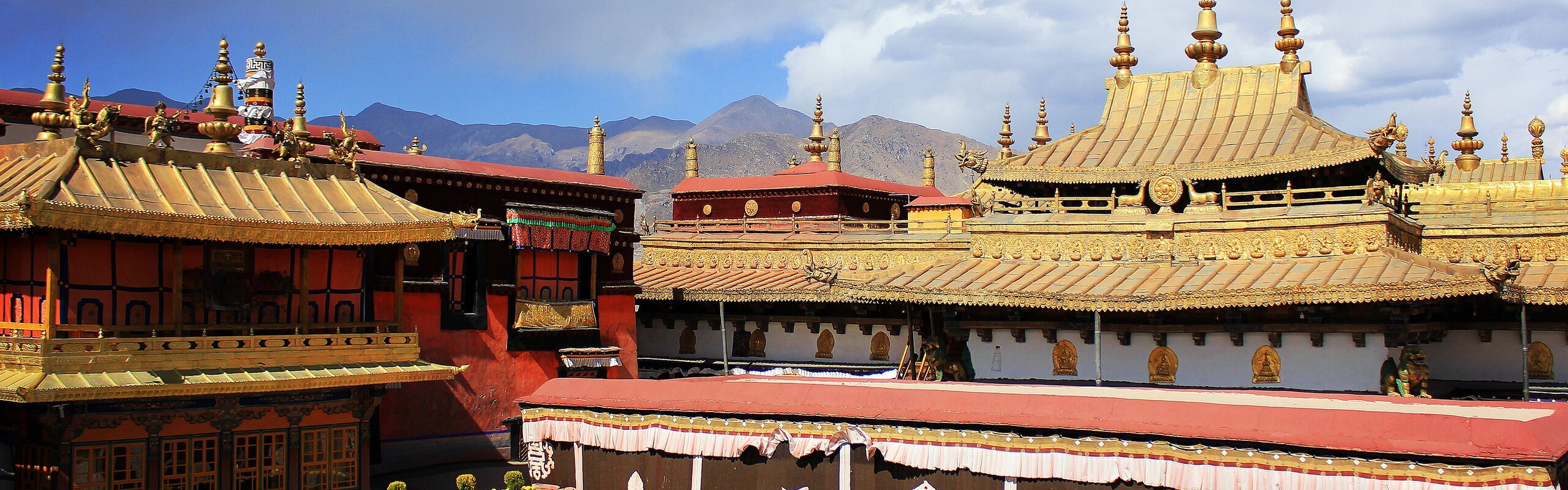

Tibet is home to some of the world's most sacred Buddhist monasteries. You may wonder: among all these temples, which ones should I visit?
This guide highlights 8 essential temples across Tibet, helping you choose which ones best fit your journey.
Content Preview
- Quick Comparison: Which Temples to Visit?
- Temples Around Lhasa
- Temples Around Shigatse
- Best Time to Visit Tibet Temples
- Temple Etiquette and Visiting Tips
- How to Plan Your Temple Visits
Quick Comparison: Which Temples to Visit?
The following 8 temples are the most representative Tibetan Buddhist temples in Tibet—not just because they are famous, but because together they offer a well-rounded understanding of Tibetan religion, culture, and monastic life.
Most of them are located around Lhasa and Shigatse, and we've organized them by region so you can easily combine them into a smooth and logical travel route, rather than visiting temples randomly.
For first-time travelers, we strongly recommend starting with three must-see temples: Jokhang Temple and Sera Monastery in Lhasa, and Tashilhunpo Monastery in Shigatse.
These three temples cover the most essential aspects of Tibetan Buddhism—devotion, learning, and monastic life. Visiting them already gives you a solid cultural foundation without feeling overwhelming, and helps you truly understand how religion shapes daily life in Tibet.
The remaining temples on our list each stand out for a specific reason. Some are known for their distinctive architectural styles, others for unique religious functions, historical significance, or important festivals and ceremonies. If you're especially interested in monastery architecture, ritual practices, or Tibetan festivals, you can choose additional temples based on your personal interests.
 Prayer wheels in Tibetan monasteries
Lhasa Area
| Temple | Highlights | Our Recommendation |
|---|---|---|
| Jokhang Temple | Most sacred site, spiritual heart of Tibet | ⭐⭐⭐ |
| Sera Monastery | Monk debates (3–5 pm, except Sundays) | ⭐⭐⭐ |
| Drepung Monastery | Giant thangka unveiling (Shoton Festival, August) | ⭐⭐ |
| Ganden Monastery | Mountain setting, unique building complex | ⭐ |
Shigatse Area
| Temple | Highlights | Our Recommendation |
|---|---|---|
| Tashilhunpo Monastery | 26-meter golden Buddha (world's largest) | ⭐⭐⭐ |
| Pelkor Chode (Baiju) | Pagoda with 100,000 Buddhas | ⭐⭐ |
| Rongbuk Monastery | World's highest (5,154 m), Everest views | ⭐⭐ |
| Sakya Monastery | Largest scripture wall in Tibet | ⭐ |
Temples Around Lhasa
Jokhang Temple (大昭寺) - The Spiritual Heart of Tibet
- Tickets: RMB 85 (USD 12.2)
- Opening hours: 8:30 am – 5:00 pm
- Time needed: 2–3 hours
Jokhang Temple is one of our top recommended temples in Lhasa, since it's the most revered site in Tibetan Buddhism. You'll have the most spiritual experience here. As you approach, you'll see pilgrims prostrating themselves on the ground in front of the entrance, and some have traveled for months to reach this sacred place. The best time to witness this is early morning (7:00–11:30 am) when the temple opens for worshippers.
There's a saying in Tibet: "First came Jokhang Temple, then came Lhasa city." The Jokhang Temple holds a profoundly revered status in the hearts of Tibetans, with many cherishing a pilgrimage there as their lifelong dream. Consequently, the scene outside the Jokhang Temple is rarely witnessed elsewhere.
Inside, you'll come face to face with the Jowo Shakyamuni statue, a life-sized image of Buddha at age 12. This 2,500-year-old statue was blessed by Buddha himself and brought to Tibet by Princess Wencheng in the 7th century. For Tibetan Buddhists, this is the holiest object in all of Tibet. You'll see devotees offering butter lamps and prayers throughout the temple halls.
A Family group of guests visited the Jokhang TempleAfter exploring the temple, join the pilgrims walking clockwise around Barkhor Street, the circular route that surrounds Jokhang. You'll pass local shops, tea houses, and more devotees spinning prayer wheels as they walk. See our 4-Day Lhasa Highlights Private Tour.
Sera Monastery (色拉寺) - Witness the Monk Debates
- Tickets: RMB 50 (USD 7)
- Opening hours: 9:00 am – 4:00 pm
- Monk debates: 3:00 pm – 5:00 pm daily (except Sundays and special holidays)
- Time needed: 3–4 hours (including debates)
You can visit Sera Monastery to witness one of Tibet's most theatrical experiences: the daily monk debates. While several Tibetan monasteries hold debate sessions, Sera Monastery's debates are the most famous and have the largest scale.
Even if you don't understand Tibetan, you can follow the debate through the monks' gestures and body language. The questioner stands, claps, and uses hand signals to challenge the defender, who responds while seated. The atmosphere is intense and exciting.
Monks at Sera Monastery are having a debateWe suggest arriving by 2:30 pm to secure a good spot in the debating courtyard. At 3:00 pm, monks in deep red robes gather to practice Buddhist philosophy through intellectual sparring. The debates run until 5:00 pm and are free to observe from the sidelines. Just stay quiet and keep a respectful distance.
Note that debates don't happen on Sundays or during special religious holidays, so check before you visit. Beyond the debates, you can explore the monastery's chapels and halls, though most visitors come specifically for this afternoon spectacle.
Drepung Monastery (哲蚌寺) - The Giant Thangka Unveiling
- Tickets: RMB 60 (USD 8.5)
- Opening hours: 9:00 am – 5:00 pm
- Shoton Festival: Usually early August
- Time needed: 2–3 hours
Drepung Monastery is especially recommended during the Shoton Festival (in August) for the giant thangka painting display event. Every year, on the 30th day of the sixth Tibetan lunar month (usually early August), a 30-meter-long Buddha image will be unfurled down the mountainside at 8:00 am. While you can visit year-round, at other times, this temple is less attractive.
Unfolded giant thangkaIf you visit during the festival, arrive early. Thousands of pilgrims and visitors gather to witness the unveiling, and the atmosphere is electric. Outside festival season, you can explore the monastery's main assembly hall, which houses an 8-year-old statue of Maitreya Buddha, and walk through the sprawling complex of chapels and monks' quarters.
Ganden Monastery (甘丹寺) - Mountain Monastery Complex
- Tickets: RMB 50 (USD 7)
- Opening hours: 9:00 am – 5:00 pm
- Time needed: 1–2 hours
Ganden Monastery is suitable for those who are interested in buildings or want to visit off-the-beaten-path temples. It sits high on the mountain, earning the name of "Temple in the Sky" because of its grand building complex.
The Complex of Ganden MonasteryThe entire monastery complex cascades down the mountainside, and its top meets the sky. Unlike the flat, courtyard-style layouts of Jokhang or Sera, Ganden's buildings are staggered at different elevations, following the natural contours of the mountain.
You'll walk through a series of chapels and assembly halls built into the mountainside. If you're up for it, there's a kora (pilgrimage circuit) around the monastery that takes about 45 minutes and offers a calm experience. The monastery is less crowded than Jokhang or Sera, giving you a quieter experience.
Temples Around Shigatse
Tashilhunpo Monastery (扎什伦布寺) - Home to the Giant Golden Buddha
- Tickets: RMB 100 (USD 14) in peak season (April–October), RMB 55 (USD 8) in low season (November–March)
- Opening hours: 9:00 am – 5:00 pm (chapels closed 12:00 pm – 2:00 pm)
- Time needed: 2–3 hours
Tashilhunpo MonasteryTashilhunpo Monastery is a must-visit temple because it houses the world's largest gilded bronze statue of Maitreya Buddha (the Future Buddha). The statue stands 26 meters tall, about the height of a nine-story building. You'll enter the Jampa Chapel to see this colossal figure up close, richly decorated with turquoise, pearls, and other precious stones.
Beyond this iconic statue, Tashilhunpo Monastery holds a very important position in Tibetan Buddhism. It is one of Tibet's most important monasteries and the traditional seat of the Panchen Lama. Here, you can visit the tomb of the 10th Panchen Lama, entirely covered in gold, and explore several other chapels filled with important religious artifacts.
If you visit in the afternoon, you may also catch monks debating in the courtyard, similar to what you see at Sera Monastery. The monastery also hosts the Buddha Unveiling Festival in mid-July, when a 32-meter-high thangka is displayed.
Pelkor Chode Monastery (白居寺) - The Pagoda of 100,000 Buddhas
- Tickets: RMB 60 (USD 8.5) in peak season, RMB 30 (USD 4) in low season
- Opening hours: 9:00 am – 6:00 pm
- Time needed: 2–3 hours
- Note: Extra fee required to bring cameras into the stupa
If you are interested in special buildings and Tibetan Buddhist arts, Pelkor Chode (also called Baiju Monastery) is very suitable for you. It's best known for its extraordinary Kumbum Stupa, and you'll see the only structure in Tibet where a monastery and a stupa are built as one single architectural complex. While most Tibetan monasteries belong to a single Buddhist school, Pelkor Chode houses three different sects under one roof: Sakya, Kagyu, and Gelug.
Pelkor Chode Monastery As you walk into the complex, you'll see the tall white pagoda rising from the center, surrounded by layers of monastery buildings. From the ground looking up, you'll find the whole structure feels like a giant lotus in bloom.
This nine-story stupa is the true highlight of your visit. Inside, you'll find more than 100,000 Buddha statues and nearly a thousand murals in total, which is why it's also called the "Pagoda of 100,000 Buddhas".
If you're traveling from Lhasa to Shigatse or continuing to Everest Base Camp, Gyantse sits right on the route, making this an easy and very rewarding stop. See our 8-Day Lhasa to Everest Base Camp Tour.
Rongbuk Monastery (绒布寺) - World's Highest Monastery
- Entrance fee: RMB 35 (USD 5)
- Opening hours: Open all day
- Time needed: 1–2 hours
At 5,154 meters above sea level, Rongbuk Monastery holds the record as the world's highest monastery. It sits just 20 kilometers from Mount Everest's peak, so it's a natural stop if you're visiting Everest Base Camp.
The monastery itself is small and simple, but the location is what matters. You'll have an unobstructed view of Everest's north face from the monastery grounds. There are actually two sites: the lower monastery (where most visitors go) and an upper monastery with a meditation cave used by Padmasambhava.
Rongbuk Monastery and Mount EverestBecause of the extreme altitude, take it slow and watch for signs of altitude sickness. You can spend 1–2 hours here before continuing to Base Camp or heading back.
Sakya Monastery (萨迦寺) - Largest Scripture Wall
- Entrance fee: RMB 60 (USD 8.5)
- Opening hours: 9:00 am – 6:00 pm
- Time needed: 1–2 hours
Sakya MonasteryIf you're especially interested in Tibetan Buddhist art and history, Sakya Monastery is a rewarding detour. Founded in the 11th century, it's famous for its vast collection of Buddhist scriptures and historical treasures, which has earned it the nickname "the Second Dunhuang".
You can see the world's largest wall of Buddhist scriptures in the temple and even touch the iron rings of the world's heaviest scripture, weighing more than a thousand pounds. The vast collection of scriptures is neatly stacked, creating a visually stunning spectacle.
Because Sakya Monastery is quite remote, visiting it requires a more flexible itinerary. A round trip from Shigatse alone takes at least 5 hours of driving, which means you'll need to add at least one extra day to your itinerary.
Best Time to Visit Tibet Temples
You can visit Tibetan temples year-round, but timing matters if you want to catch special festivals or prefer fewer crowds.
For festival events (May–August): Tibet's most important religious festivals happen during these months. The Shoton Festival in early August brings the spectacular thangka unveiling at Drepung Monastery, while the winter months see increased pilgrimage activity. You'll witness more religious ceremonies and cultural events, though popular temples will be busier.
For fewer crowds (December–February): Fewer tourists visit Tibet in winter, so you'll find temples more peaceful. This is when you'll see more local pilgrims at Jokhang and other sacred sites, giving you a more authentic glimpse of Tibetan spiritual life. The cold is manageable with proper clothing, and many hotels offer heating.
Avoid (late February to early March): Tibet is closed to foreign travelers during this month because of the Tibetan New Year.
Temple Etiquette and Visiting Tips
Tibetan temples are active religious sites, so respectful behavior is essential.
Basic Rules:
- Remove your hat before entering temple buildings
- Don't step on door thresholds when entering chapels
- Keep your voice low inside temple halls
- Don't touch Buddha statues, scriptures, or religious objects
Photography: Most temples don't allow photos inside chapels, especially of Buddha statues. Some temples charge extra fees for camera permits. Always ask permission before photographing monks.
Offerings: If you'd like to make an offering, you can place butter, white khata scarves, or small cash in donation boxes. Handle everything gently and respectfully.
Dress Code: While there's no strict dress code, avoid shorts and sleeveless tops. Modest clothing shows respect for the religious setting.
How to Plan Your Temple Visits
We had carefully designed a tour that concludes 6 in 8 of our recommended temples, see our 8-Day Lhasa to Everest Base Camp Tour.
In the first 3-4 days in Lhasa, you will visit Drepung Monastery, Sera Monastery and Jokhang Temple. This gives you a good mix of spiritual significance, cultural experience, and architectural variety.
After the acclimatization in Lhasa, you'll be traveling to Shigatse and Everest Base Camp. You'll stay a night at Shigatse and visit Tashilhunpo Monastery. It's right in the city center and features the impressive giant Buddha.
You will stop at Pelkor Chode in Gyantse (it's on the way) and visit Rongbuk Monastery near Base Camp. Both fit naturally into your route without adding extra travel time.
For the other 2 temples (Ganden and Sakya), if you're interested in them, you may need extra days in Lhasa and Shigatse to visit. You can contact us and tell us your interests.
Visit Tibet with Us
Planning temple visits in Tibet requires permits, transportation, and local knowledge. Travel with us, and we'll handle all the logistics and leave you with a hassle-free travel.
Our private tours are flexible and can be customized to match your interests. Whether you want to focus on the must-see temples or explore lesser-known monasteries, we'll create an itinerary that works for you. Contact us to start your travel, or see our popular Tibet tours: