
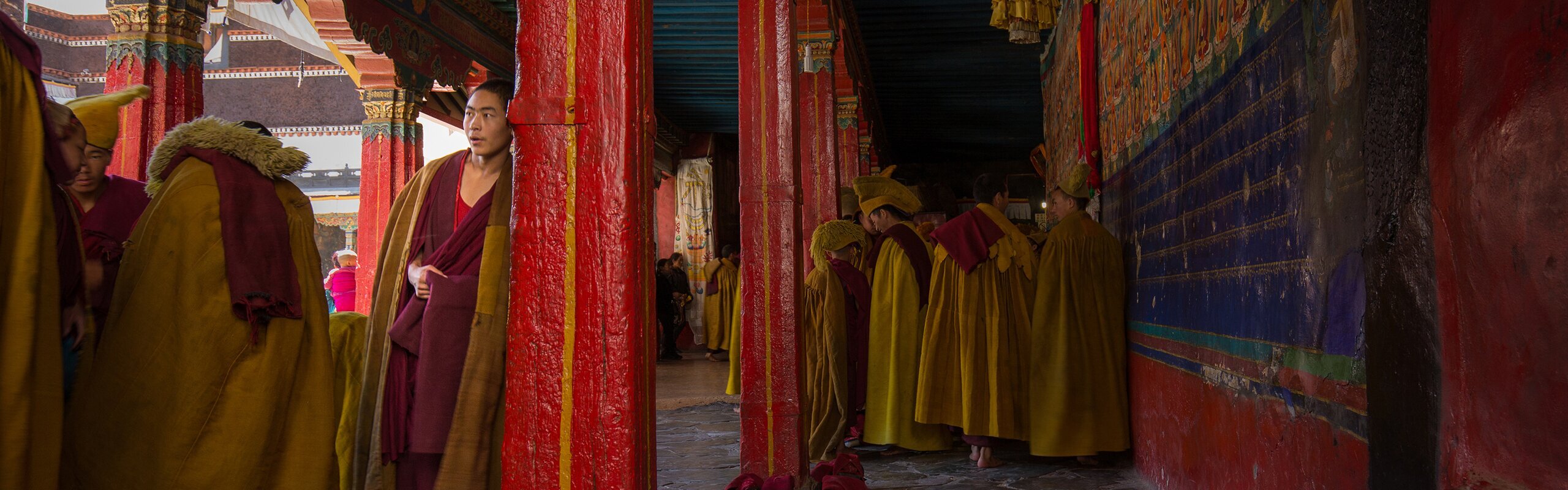

Planning your trip to China and torn between Tibet and the Silk Road? Both rank among China's most extraordinary destinations, but they offer completely different experiences.
The question isn't which one is better—it's which one fits you. Are you drawn to spiritual intensity and dramatic high-altitude landscapes, or fascinated by layers of history and cultural diversity?
In this guide, we'll walk you through what each destination offers and help you make the right choice.
Content Preview
- Tibet vs Silk Road: A Quick Comparison
- Which One Should I Choose?
- 1. Tibet vs Silk Road: The Altitude Challenge
- 2. Tibet vs Silk Road: Transportation
- 3. Tibet vs Silk Road: Landscapes & Scenery
- 4. Tibet vs Silk Road: Cultural Experience
- 5. Tibet vs Silk Road: Trip Length & Pacing
- 6. Tibet vs Silk Road: Travel Requirements
- 7. Tibet vs Silk Road: Infrastructure & Convenience
- 8. Tibet vs Silk Road: Food & Dining Experience
- 9. Tibet vs Silk Road: Budget & Costs
- Common Questions We Hear
Tibet vs Silk Road: A Quick Comparison
| Aspect | Tibet | China Silk Road |
|---|---|---|
| Main Focus | Spiritual pilgrimage, Tibetan Buddhism, high-altitude nature | Ancient trade history, cultural fusion, multi-ethnic heritage |
| Landscapes | Snow-capped peaks, sacred lakes, vast plateaus, alpine meadows | Deserts, oases, colorful mountains, grasslands, ancient ruins |
| Cultural Experience | Deep immersion in Tibetan Buddhism | Multi-layered Exotic cultures |
| Trip Length | Typically 7-8 days or more | Typically 12 days |
| Altitude | High altitude (3,650–5,200m) | Low altitude (most cities below 1,500m) |
| Best For | Nature lovers, adventure seekers, spiritual explorers | History enthusiasts, photographers, geology fans |
Which One Should I Choose?
The answer depends on what kind of traveler you are—and what you want from your China experience.
Choose Tibet if you...
- Thrive on physical challenges and want to test yourself at high altitude
- Seek spiritual experiences and are drawn to living Buddhist culture
- Prefer dramatic natural landscapes over historical sites
- Want focused, contemplative travel rather than rushing between multiple destinations
- Are reasonably fit and have no health conditions that altitude could aggravate
If you're the type who gets excited about pushing your limits—whether that's your body at 5,000 meters or your understanding of spirituality—Tibet delivers.
 Our guests in Tibet
Choose the Silk Road if you...
- Love history and archaeology—you want to stand where civilizations met and traded for centuries
- Prefer cultural and visual variety, want to experience as much as you can in one trip
- Are traveling with children or older family members worrying they can't handle high altitude
- Are a photographer or geology enthusiast fascinated by desert formations and layered rock
- Prefer a more comfortable physical experience without altitude concerns
- Want to see different and multiple facets of the country
Our guests are riding camels at Mingsha MountainThe Silk Road works for almost everyone. It's more forgiving physically, offers endless variety, and gives you stories from a dozen different places. See our 21-Day China Tour with Silk Road.
1. Tibet vs Silk Road: The Altitude Challenge
Tibet: Extreme High Altitude
Tibet sits at extreme elevations. You'll land in Lhasa at 3,650 meters and feel the thin air immediately—shortness of breath, slower movements, maybe a headache. You'll feel much better after you get a good rest or have oxygen supplies.
Most visitors need at least two days in Lhasa to acclimatize before venturing higher to places like Yamdrok Lake (4,441m), Namtso Lake (4,718m), or Everest Base Camp (5,200m).
Silk Road: Low Altitude
The Silk Road keeps you at comfortable, breathable elevations. Xi'an sits at 400 meters, Dunhuang at 1,100 meters, Kashgar at 1,200 meters. Your body won't struggle with oxygen levels at all.
If altitude worries you—or if you're traveling with older family members or anyone with health concerns—the Silk Road eliminates that anxiety completely.
2. Tibet vs Silk Road: Transportation
Tibet locks you into long car journeys with almost no alternatives, but it's part of the remote adventure. The Silk Road gives you more transportation choices and shorter travel segments, making the trip feel less exhausting despite covering more ground.
Tibet: Long drives
Tibet's high altitude limits transportation options. While Lhasa has a modern airport and decent roads, once you venture beyond the city, you're most likely to depend on private vehicles.
There are no trains connecting Lhasa to Yamdrok Lake, Namtso, or Everest Base Camp—just winding mountain roads. Most journeys take 2-7 hours by car. The drives are scenic but long. The altitude makes road construction difficult; you'll feel bumpy, especially in remote areas. We will arrange all vehicles that are comfortable and equipped with oxygen bottles.
Our vehicle is equipped with oxygen bottles and altitude sickness medicationSilk Road: Longer distance, shorter time
The Silk Road tour offers more convenience in transportation. You'll mix flights, trains, and private cars depending on the distance. All transportation will be within 5 hours. Although you'll travel across multiple provinces, the cities are all well-connected by flights or trains.
You also have flexibility: prefer trains over flights? Want to add a city? The infrastructure supports it.
3. Tibet vs Silk Road: Landscapes & Scenery
Both destinations are visually stunning, but in completely different ways.
Tibet: Dramatic Highland Landscape
Tibet's landscapes are defined by vertical drama. Towering snow peaks that pierce the sky, vast grasslands stretching to the horizon, lakes so turquoise they look unreal against barren brown hills. See our 8-Day Lhasa to Everest Base Camp Tour.
The scenery is consistent in its grandeur: high, open, and dominated by the raw power of the Himalayas. Whether you're gazing at Yamdrok Lake's sapphire waters or standing beneath Everest, you're always looking up at mountains or across endless plateaus. It's nature at its most imposing.
The towering Mount Namcha BarwaSilk Road: Landscape Diversity
The Silk Road changes its face every few hundred kilometers.
You'll shift from Xi'an's green plains to Zhangye's rainbow-striped Danxia mountains (red, yellow, and orange geological layers that look like nature's paint palette), then into the vast Gobi Desert where sand dunes meet the horizon.
Danxia mountains in ZhangyeIn Dunhuang, golden sand contrasts with the bright blue of Crescent Lake. Turpan gives you scorched red rock and lush grape valleys. Kashgar surrounds you with desert flatness punctuated by distant Pamir peaks. It's a visual journey through geological diversity—each region looks completely different from the last.
Which appeals to you? Consistent high-altitude grandeur, or constantly changing desert landscapes? Contact us to start your trip.
4. Tibet vs Silk Road: Cultural Experience
The cultural contrast is just as stark as the physical landscape. The difference? Tibet asks you to go deep. The Silk Road invites you to go wide.
Tibet: Tibetan Buddhism
Tibet offers singular cultural immersion. You'll spend a week diving deep into Tibetan Buddhist spirituality.
At Jokhang Temple, you'll watch pilgrims prostrate themselves on the ground, their devotion palpable in every movement. The surrounding Barkhor Street hums with Tibetans spinning prayer wheels and murmuring mantras. You'll witness monks debating philosophy at Sera Monastery, observe butter lamp offerings, and understand how faith shapes daily life.
Tibetan prayer wheelsIn Tibet, you can see how religion influences the lives of the local people in all sorts of subtle ways. See our 8-Day Tibet Tour including Tsedang, Shigatse, and Lhasa.
Silk Road: Exotic Cultural Integration
The Silk Road gives you variety. Your journey traces centuries of cultural exchange along the ancient trade route.
In Xi'an, you'll stand face-to-face with 6,000 terracotta warriors—row after row stretching 230 meters, an emperor's clay army frozen for 2,000 years. In Dunhuang, you'll step into the famous Mogao Caves, where 492 Buddhist grottoes hold vibrant murals painted over a thousand years.
In Kashgar's old town, you'll lose yourself in 20+ alleyways where copper smiths hammer vessels and the call to prayer echoes five times daily at Id Kah Mosque. It's a horizontal journey through cultures: Han imperial history, Buddhist art, and Islamic Central Asian traditions. Check our 12-Day China Silk Road Tour from Xi'an to Kashgar.
Kashgar5. Tibet vs Silk Road: Trip Length & Pacing
Both Tibet and the Silk Road offer itineraries of different lengths, depending on how deep you want to go.
For Tibet, most routes range from 4 to 14 days, with 7-8 days being the classic first-time itinerary.
For the China Silk Road, trips usually take 6 to 12 days, and the most complete and popular version is the 12-day classic route.
On the surface, the number of days looks similar. But the pace and rhythm of these two journeys could not be more different.
Tibet: Fewer Places, Slower Pace
Tibet's typical itineraries move slowly by necessity. Altitude forces you to rest and adapt.
You'll first spend 4 days around Lhasa (Potala Palace, Jokhang Temple, Yamdrok Lake), then choose either 3 days in Nyingchi (lower elevations, wild peach blossoms, forests) or 4 days head to Everest Base Camp. You visit fewer places but experience them more deeply with a slower pace. See our 7-Day Lhasa, Nyingchi, and Bome Tour.
Silk Road: Long Distances, Fast Moves
A classic 12-day Silk Road journey covers vast ground. You'll travel from Xi'an to Zhangye, Jiayuguan, Dunhuang, Turpan, Urumqi, and finally Kashgar, crossing nearly 3,000 kilometers of western China.
You'll spend less time in vehicles, and each stop offers something visually and culturally distinct. It's a more dynamic, varied pace. You see more, but each place gets less time, basically about 1.5 days for each destination.
6. Tibet vs Silk Road: Travel Requirements
If you prefer someone else handling logistics, Tibet's structured approach might actually be a relief. If you value flexibility and spontaneity, the Silk Road wins.
Traveling in Tibet involves much stricter arrangements. You need to apply for special travel permits in advance, and once your itinerary is confirmed and the permits are issued, the cities and route cannot be changed. You must travel with a licensed local guide the entire time and book everything through an authorized agency. Independent travel is not allowed.
These restrictions mean less flexibility, but they also mean less stress. Your agency handles everything.
Tibet Travel PermitIn contrast, traveling along the Silk Road is far more flexible. No special permits are needed beyond a standard China visa, and you can explore cities and sights freely, book hotels on your own, or adjust your route and pace based on your personal interests.
7. Tibet vs Silk Road: Infrastructure & Convenience
Beyond the landscapes and culture, daily comfort matters—and the two destinations differ significantly here.
If you prefer modern comforts and convenience, the Silk Road delivers. Tibet asks you to embrace rustic simplicity—part of the adventure, but worth knowing upfront.
Tibet: Basic facilities
Tibet's infrastructure is more basic, especially outside Lhasa. While Lhasa itself has decent hotels, restaurants, and shops, once you venture toward Namtso Lake, Mount Kailash, or Everest Base Camp, facilities become sparse.
Public toilets can be rudimentary (squat toilets without running water). Small towns may have limited food options and simple guesthouses. Roads are rougher, and supply points are farther apart. The high altitude also means construction is difficult and expensive, so development lags behind lowland regions.
Silk Road: Clean and more developed
The Silk Road feels more developed. Cities like Xi'an, Dunhuang, and Urumqi have modern infrastructure—clean public facilities, well-stocked supermarkets, shopping malls, and reliable internet.
Even smaller cities like Zhangye offer comfortable hotels and a range of dining options. The roads between cities are mostly paved highways. You'll find ATMs, pharmacies, and convenience stores easily. See our 13-Day Beijing–Xi'an–Dunhuang–Urumqi–Shanghai Tour.
8. Tibet vs Silk Road: Food & Dining Experience
For variety and flavor, the Silk Road wins decisively. Tibet offers cultural food experiences (butter tea ceremonies, yak yogurt), but limited options. The Silk Road delivers variety that keeps every meal interesting.
Tibet: Simple food, Sichuan cuisine
Tibet's cuisine is deeply influenced by Sichuan flavors. Most restaurants serve spicy Sichuan dishes alongside basic Tibetan staples.
You'll find delicious Tibetan sweet tea, or yogurt with various toppings in the street, but the real authentic experience comes from trying butter tea (a salty, creamy brew made with yak butter). It's a kind of savory hot drink, and the first sip will be challenging.
A traditional Tibetan meal is a cup of butter tea and some pieces of tsampa (roasted barley flour), which is filling but bland, you may need some time to get used to it.
In Lhasa or other major cities, you'll have a decent variety, but once you're in remote areas like Everest Base Camp, expect simple meals or instant noodles. The high altitude limits fresh produce, so vegetables are often limited.
Tibetan tsampa and momosSilk Road: Bold flavour, foodie's paradise
The Silk Road is a food lover's paradise. Every city brings new flavors.
In Xi'an, you'll bite into rou jia mo (Chinese hamburger) and slurp spicy biangbiang noodles. Lanzhou greets you with hand-pulled beef noodles that locals eat for breakfast.
In Turpan, you'll feast on a fruit platter—sweet grapes, juicy Hami melons, and dried fruits that taste better here than anywhere else. Kashgar's naan bread comes hot from clay ovens, and lamb kebabs sizzle on street corners seasoned with cumin.
Don't miss dapanji (big plate chicken with potatoes and hand-pulled noodles) or plov (hand-grabbed rice with lamb and carrots). The diversity is stunning. Along the route, you'll taste the flavour that blends the distinctive features of Han Chinese, Uyghur, Hui Muslim, and even Russian influences.
Dapanji9. Tibet vs Silk Road: Budget & Costs
Due to different trip lengths and accommodation levels, the total prices are hard to compare, but generally speaking, Tibet has a higher daily cost (USD 120-200) than the Silk Road (USD 120-180).
These two destinations are all more expensive than other major cities in China.
Tibet locks you into guided tours, you can't travel independently. Every foreign visitor must hire a guide and vehicle through an agency. The remoteness and harsh terrain drive up vehicle costs significantly.
The Silk Road is expensive because the trip is usually long and covers far more ground. However, you have more flexibility in trip length, food and hotel choices.
Common Questions We Hear
"I'm traveling with my teenage kids—which one?"
The Silk Road is the safer bet. Teenagers can absolutely handle Tibet's altitude, but the Silk Road offers more varied activities (camel rides, exploring markets, climbing sand dunes) that keep younger travelers engaged. Plus, no one has to worry about altitude sickness ruining the trip.
"This is my first trip in China—can I add one of these?"
Yes, you can—but only if your trip is at least three weeks long. Both Tibet and the Silk Road are long-distance, time-consuming journeys, and neither works well as a short add-on.
If this is your first time in China and you want to see multiple sides of the country, the Silk Road is the better choice. It gives you a broad and varied introduction to China, from ancient capitals and Buddhist caves to deserts, oasis towns, and Islamic culture.
If you're traveling to fulfill a personal dream, challenge yourself, or you're especially drawn to spiritual places and extreme landscapes, then Tibet is the better choice. Tibet is less about "seeing more places" and more about a deep, once-in-a-lifetime experience.
"I'm 60+ and reasonably active—can I do Tibet?"
Age matters less than fitness and how your body handles altitude. Some 65-year-olds breeze through Tibet; some 40-year-olds struggle. If you have any cardiovascular or respiratory concerns, consult your doctor first. The Silk Road eliminates this uncertainty entirely—it's physically accessible to almost any active senior.
"Can I combine both?"
Yes, but it's ambitious. You'd need more days (we suggest at least 17 days) and a high tolerance for travel fatigue. That said, if you have the time and energy, combining the two is totally doable. Check our 17-Day Silk Road and Tibet Cultural Tour.
Travel with Us
Whether you choose Tibet's spiritual heights or the Silk Road's cultural breadth, we handle the permits, tickets, and logistics so you can focus on the journey itself.
Contact us to start planning your Tibet or Silk Road adventure, or check our popular tours for inspiration: