
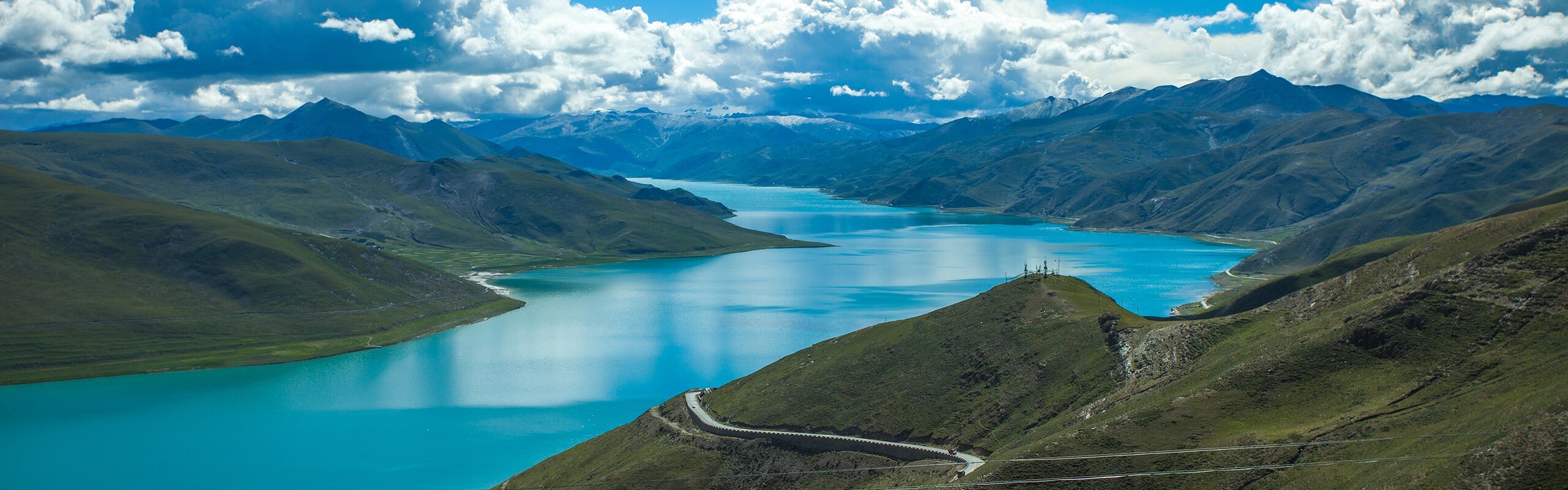

September is one of the best months to visit Tibet. The monsoon season ends, bringing stable weather with clear skies and less rainfall. September's stable weather and moderate temperatures also make acclimatization to high altitude a bit easier. This is when Tibet transitions from summer to autumn. Grasslands turn golden, snow-capped peaks stand sharp against blue skies, and lakes glow in vivid shades of turquoise.
With summer crowds gone, Tibet becomes quieter, giving you more space to explore and take in the landscapes. If you want to see Tibet's landscapes at their finest, this is the month to come.
Weather Averages in September
- Temperature range: 5 to 20℃ (41 to 68℉)
- Rainfall: 65 mm / 2.6″
- Rainfall days: 11 days
- Clear days: 19 days
- UV index: High
Climate Overview of Major Destinations
| Destination | Temperature range (℃/℉) | Rainy days | Rainfall (mm) |
|---|---|---|---|
| Lhasa | 10 to 22 / 50 to 72 | 11 | 66 |
| Shigatse | 8 to 20 / 46 to 68 | 7 | 35 |
| Everest Base Camp | -10 to 10 / 14 to 50 | 7 | 25 |
| Nyingchi | 13 to 24 / 55 to 75 | 19 | 109 |
| Ngari | -1 to 19/ 32 to 68 | 4 | 15 |
The stable weather and clear skies across most regions make September ideal for viewing snow-capped peaks and visiting sacred lakes.
Lhasa and Shigatse enjoy dry, mild, and comfortable weather throughout September, perfect for sightseeing and outdoor activities.
Nyingchi, located in the southeast, still sees more rainfall than other regions (around 20 rainy days), but the rain usually falls briefly, so the days are still clear for exploring autumn colors and forest trails.
Higher-altitude areas like Everest Base Camp and Ngari are colder and experience larger temperature swings between day and night, so bring warm layers for visiting these areas.
Best Things to Do in September
September doesn't offer the mass religious festivals like Saga Dawa, the spring peach blossoms, or winter's glacier spectacles. But it's one of the most balanced months for climate, scenery, accessibility, and overall experience. You can comfortably explore the popular sites this month.
Witness Tibet's Autumn Landscapes
September is when Tibet's natural scenery reaches its peak. If you want forests and valleys painted in autumn colors, head to Nyingchi. The region transforms into a palette of yellow, red, and green, with Mount Namcha Barwa providing a striking white backdrop.
For wide-open grasslands turning golden under endless skies, you can head to Nagqu and Chamdo. Bangda Grassland stretches as far as you can see, while lakes like Siling Tso and Rawok reflect the surrounding peaks in impossibly clear water.
For sacred lakes and snow peaks, Shannan and Ngari are your destinations. Yamdrok Lake shifts through countless shades of turquoise as light moves across the water, while Mount Kailash and Lake Manasarovar in Ngari offer pure, untouched beauty.
 Yamdrok Lake
And if you're after dramatic mountain views, September brings frequent "golden summit" moments at Mount Everest in Shigatse when the last sunlight turns the peak a fiery gold. See our 8-Day Lhasa to Everest Base Camp Tour.
Trek Around Mount Kailash
September brings ideal conditions for visiting Mount Kailash, which means stable weather, clear skies, and fewer crowds than in summer.
September's clear air gives you good road conditions and unobstructed views of Kailash's pyramid-shaped peak. You'll encounter Tibetan pilgrims circling one of the world's most sacred peaks, watching them prostrate and spin prayer wheels.
Mt. Kailash koraThe kora typically takes 3 to 4 days and requires good physical fitness. If you want to complete the full circuit, plan for at least 13 days total—this includes acclimatization time in Lhasa and travel days to reach Ngari.
If trekking isn't your focus, you can visit the base of the mountain for photos and explore the nearby sacred lakes instead. Lake Manasarovar and Lake Rakshastal sit side by side, offering a striking contrast between the "holy lake" and the "ghost lake." This shorter option works well in a 10-day itinerary.
Experience Highland Barley Harvest
September is harvest season across Tibet's farming valleys. In areas around Lhasa, Shigatse, and Shannan, fields of highland barley turn a rich golden color, and you'll see farmers working the land with the kind of satisfaction that comes with a good harvest.
This is not a staged event but a real rural life unfolding in front of you. You'll watch the cutting, drying, and threshing process. If you're interested, you can join in the harvest to experience authentic Tibetan life.
Barley Harvest in TibetAfter the harvest, you can share meals with local families, which feature tsampa (roasted barley flour) and butter tea. It's the kind of authentic moment that becomes a lasting memory. Check more in our 8-Day Tibet Tour including Tsedang, Shigatse, and Lhasa.
Join the Xiangxiong Culture Festival
Every two years, between August and September, the Ngari region comes alive with the Xiangxiong Culture Festival. It's a great chance for you to experience the local culture and the region's unique charm.
The highlight is the horse racing. Skilled Tibetan riders compete in races and displays of horsemanship that draw cheering crowds. You'll see horses decorated with colorful tassels and riders dressed in traditional clothing, racing across the high desert. Beyond the races, you can also enjoy folk performances, traditional music, fireworks, and drone displays.
Horse racingIf you're traveling to western Tibet in late September, it's worth timing your visit to catch the events. The latest Xiangxiong Culture Festival took place in 2025, and the next is expected in 2027.
If you miss it, you can still experience a similar lively festival atmosphere at events like the Nagqu Horse Racing Festival or the Shoton Festival in August. Simply let us know your interests, and we'll help tailor a trip around them.
Crowds & Costs
September falls into the shoulder season, meaning you'll encounter fewer tourists than during the July-August peak.
Popular sites like Potala Palace and Jokhang Temple are noticeably quieter, and you'll have more space to visit in your own pace.
Compared to the summer peak season, transport and hotel prices have returned to normal levels. Booking ahead is still recommended, especially for permits and popular hotels, but you'll generally find more availability and flexibility.
What to Pack
September weather varies widely depending on where you're going and what time of day it is. Layering is essential. While daytime temperatures in Lhasa can feel warm under direct sun, the cold sets in quickly in the early morning, after sunset, and at higher elevations.
If you're mainly staying around cities such as Lhasa, Nyingchi, or Shigatse, breathable long-sleeve clothing paired with a light jacket is usually enough. However, if your route includes high-altitude areas like Namtso Lake, Mount Kailash, or Everest Base Camp, warmer clothing becomes necessary. Thermal underwear and a down jacket are strongly recommended, along with insulating layers and a windproof or waterproof outer shell.
Pack sturdy, comfortable walking shoes with good ankle support. Bring a wide-brimmed hat and high-SPF sunscreen; UV levels are high across Tibet, and the sun is strong even when the air feels cool. Sunglasses are a must. If you're trekking or visiting remote areas, add warm gloves, a wool hat, and thick socks to your pack.
Tibet Weather by Month
| January | February | March | April |
|---|---|---|---|
| May | June | July | August |
| September | October | November | December |
For a summary, see The Best Times to Visit Tibet.