
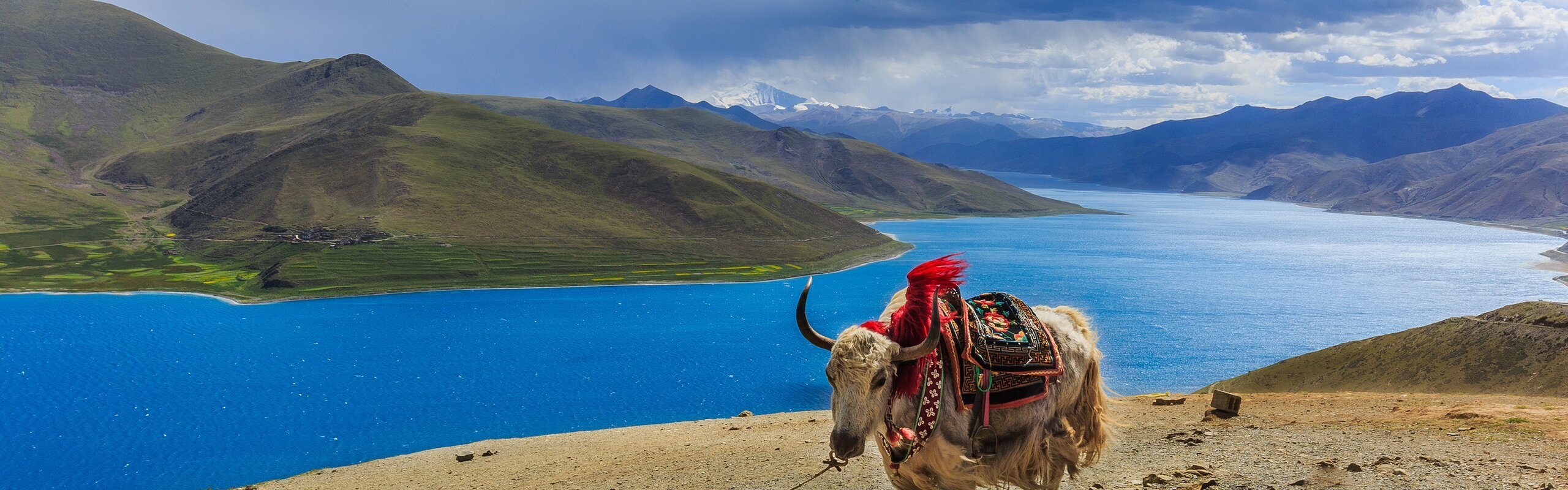

January is the coldest month in Tibet. The weather is dry, windy, and sunny, and nighttime temperatures fall well below freezing across most regions.
Lhasa and nearby spots such as Yamdrok Lake stay bright with strong sun, so daytime sightseeing feels comfortable. But mornings and evenings turn sharply cold, especially in exposed or windy areas.
Some northern and western roads may close briefly after snowfall, so we suggest avoiding visiting the Ngari area, Mount Kailash, and Namtso Lake in January.
Weather Averages in January
- Temperature range: –12 to 3℃ (10 to 37℉)
- Rainfall: 1 mm / 0.1"
- Snowfall days: 1
- Clear days: 25
- UV index: High
Climate Overview of Major Destinations

| Destination | Temperature range (°C/℉) | Clear days |
|---|---|---|
| Lhasa | −9 to 8 /16 to 46 | 26 |
| Shigatse | −13 to 6 /9 to 43 | 24 |
| Everest Base Camp | −20 to −5 /−4 to 23 | 15 |
| Nyingchi | −5 to 9 /23 to 48 | 14 |
| Ngari | −20 to −4 /−4 to 25 | 20 |
January is cold across Tibet, but sightseeing in major cities such as Lhasa, Shigatse, and Nyingchi stays comfortable and rarely affected by weather, because daytime is usually sunny.
Everest Base Camp is still open for visits, and it's better to visit EBC during the warmer, sunnier afternoon hours. We don't recommend staying overnight. Instead, we suggest staying Tashizong (altitude 4,200 m, often called "Everest Town"), about 50 km from the base camp, where rooms are warmer and more comfortable.
Roads leading to northern and western regions may face occasional closures after snowfall. Namtso stays fully frozen in January, and Ngari enters its harshest season with strong winds and frequent snow or frost.
Best Things to Do in January
Meet Mount Everest from Everest Base Camp
Despite the cold, January is one of the clearest months of the year to see Mount Everest. You'll get rare, wide-open views of the entire peak, which are much harder to catch in other seasons.
Mount EverestThe winter scenery at EBC feels especially dramatic. The snow-covered peaks glow under the strong sun, and the sky often turns a deep, flawless blue that makes Everest look even more towering. On clear days, you may catch the famous "golden summit" at sunrise or sunset, when the light sweeps across the peak and turns it into a fiery shade of gold. See our 8-Day Lhasa to Everest Base Camp Tour.
See Glaciers and Namcha Barwa in Nyingchi
Nyingchi is one of the best winter destinations in Tibet, not because of heavy snow, but because this is the season when two rare and breathtaking sights appear. At Laigu Glacier, the ice becomes a striking shade of deep blue in winter, creating mirror-like surfaces and glassy ice walls that look almost unreal. The cold, dry air of January gives the glacier its clearest, purest color of the year.
Laigu GlacierThis is also one of the best times to see Namcha Barwa. Winter brings stable weather and clearer skies, meaning the mountain—often hidden by clouds in summer—reveals its dramatic 7,782-meter peak more frequently. When the golden sunset hits its snow-covered slopes, the view is unforgettable.
Sunlit Golden MountainJanuary in Nyingchi stays comfortably mild during the day at around 9 to 13℃/ 48 to 55℉, making it easy to explore viewpoints for both Laigu Glacier and Namcha Barwa. Nights drop to around –5 to 0℃/ 23 to 32℉, so be sure to pack warm layers.
Catch the Blue-and-White Yamdrok Lake
Yamdrok Lake shows different scenery in Winter. Because its color changes with the weather, the dry, crystal-clear January skies make the lake appear an intense, almost surreal shade of blue. If you visit right after fresh snowfall, the contrast becomes even more dramatic. The surrounding mountains turn pure white, while the lake stays deep blue, creating a stunning blue-and-white landscape that looks like a sapphire set in snow. This breathtaking scenery is most likely to appear in January.
Yamdrok Lake after snowThe lake sits close to Lhasa, so the weather feels similar—sunny, dry, and bright—but the higher elevation means it's colder and the wind can feel sharper. Despite the chill, January is one of the best times to enjoy Yamdrok's sweeping views without crowds and with some of the clearest conditions of the year. Check our 5-Day Tibet Winter Tour.
Crowds and Costs
January is one of the quietest months in Tibet. Most domestic travelers stay home to prepare for the Chinese New Year, so tourist numbers remain low throughout the month, even during the holiday period.
With fewer visitors, you'll also experience a more authentic side of Tibetan life. Tibetan drokpas (nomads) come down to shelter in the winter, and Tibetans head for their temples to worship. When you walk through Lhasa in January, you'll notice that most people around you are locals. It's a chance to step away from the noise of big cities and feel the true rhythm, warmth, and human stories of everyday Tibetan life.
Travel costs are another advantage. Hotel rates drop noticeably, flights are usually cheaper, and train tickets are easier to secure. For travelers who enjoy quieter destinations, rich cultural encounters, and better value for money, January is one of the most rewarding months to explore Tibet. Let us help you arrange these by our experience.
What to Wear
Dress in layers so you can add or remove clothing as temperatures change.
Start with a moisture-wicking base layer. Add a fleece or wool mid layer. Top with a warm down jacket or insulated, windproof coat.
For legs, wear thermal or fleece-lined pants and a windproof outer pant if you expect snow. Bring warm, waterproof hiking boots and thick socks. A spare pair of socks helps.
Pack warm accessories: insulated gloves, a scarf, and a warm hat. Sunglasses and a wide-brim hat protect from strong UV. Carry sunscreen, lip balm, and a small tube of moisturizer. The air is very dry.
Bring waterproof outerwear for sudden snow or rain. Some places have limited supplies, so bring personal toiletries.
Use a small waist pouch for passports and permits. That keeps documents safe and handy.
Altitude Sickness Risk
Winter brings lower oxygen levels across the plateau, so the chance of altitude sickness is higher than in summer.
Give yourself time to acclimatize in Lhasa before going higher. Walk slowly, stay warm, and drink plenty of water. Heavy exercise, long hikes, or climbing stairs too fast can easily trigger symptoms.
If you feel dizziness, headache, or nausea, rest immediately and avoid further ascent. Consider carrying simple medication recommended by a doctor before your trip. Our experienced guide will also be there to help you.
Tibet Weather by Month
| January | February | March | April |
|---|---|---|---|
| May | June | July | August |
| September | October | November | December |
For a summary, see The Best Times to Visit Tibet.