
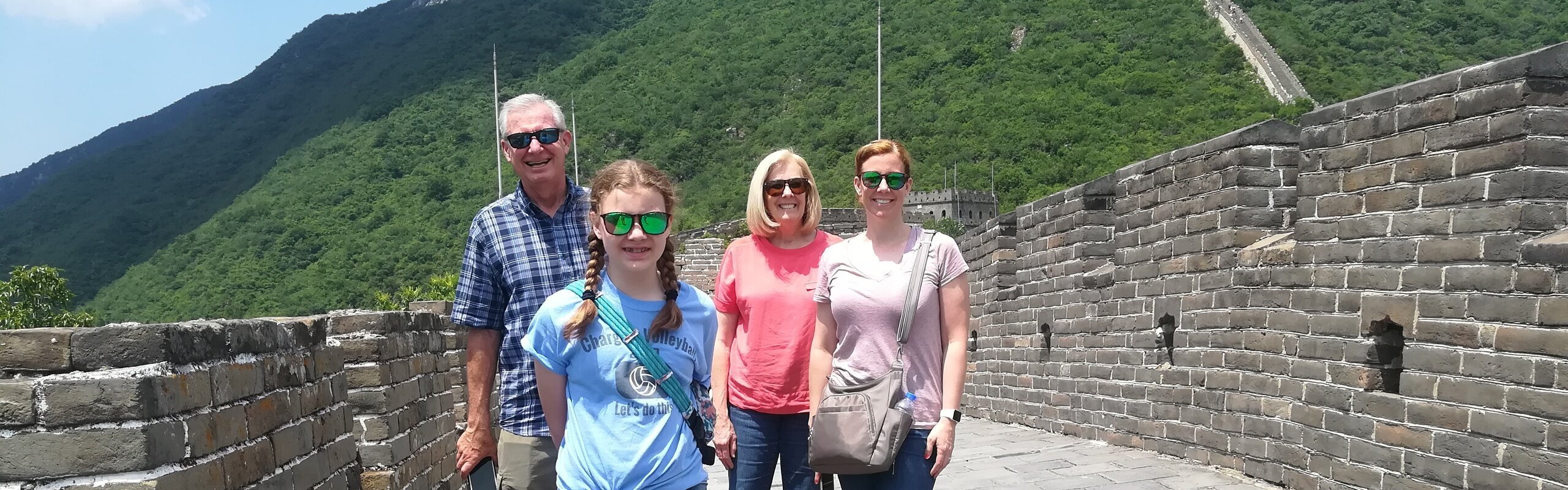

China is huge, but if it's your first time, two weeks is actually a pretty good amount of time. You can visit 4–5 major cities and enjoy a nice mix of culture, history, nature, and some outdoor fun.
It's also a relaxed pace that suits families well, without feeling too rushed.
Content Preview
- Where to Go
- The Classic Itinerary
- Itinerary with Pandas
- Itinerary with Tibet
- Costs
- How to Travel Around China
Where to Go for a 2-Week Itinerary in China
Beijing, Xi'an, and Shanghai: The Must-See Cities
Based on our guests' choices and insights from our local experts, we believe Beijing, Xi'an, and Shanghai should be included in your first-time trip to China.
These three cities are renowned for their iconic and well-known landmarks, including the Great Wall, the Forbidden City, the Terracotta Warriors, and the Bund.
They provide a perfect introduction to both China's ancient civilization and its modern development.
You'll need about one week to explore these core cities.
What Else to Add to Your 2-Week China Itinerary
Besides these three cities, you could choose one or two more cities based on your interests:
- If you love nature, choose Zhangjiajie and Guilin. They bring dramatic natural beauty to your itinerary, balancing out the culture and history.
- If you are traveling with seniors and prefer greater comfort, and like food and leisurely urban life, we recommend Chengdu and a Yangtze River Cruise.
- If you like culture and want to explore China's spiritual side, we recommend Tibet. You could also see the awe-inspiring plateau landscapes.
Of course, there are many other incredible places to explore, such as Yunnan, Northeast China (Harbin and Changbai Mountain), or Xinjiang. These can also be excellent additions to a two-week itinerary.
1. The Classic 2-Week Itinerary for First-Timers
| Days | Cities |
|---|---|
| Days 1–4 | Beijing |
| Days 5–6 | Xi'an |
| Days 7–9 | Zhangjiajie |
| Days 10–12 | Guilin |
| Days 13–14 | Shanghai |

For a first trip to China, this is the route I'd recommend most. You get the big historical sights in Beijing and Xi'an, then some of China's most iconic scenery in Zhangjiajie and Guilin, before finishing in modern Shanghai.
Day 1: Arrive in Beijing
I'd stay around Wangfujing for all four nights in Beijing. It's central, easy to get around, and you have plenty of restaurants and shops nearby. See more on Where to Stay in Beijing.
If you arrive early, settle into your hotel first, then take an easy walk around Wangfujing or Qianmen Street.
For dinner, try some Beijing roast duck. Quanjude and Siji Minfu are two well-known choices. See our guide to authentic Beijing roast duck restaurants for more options.
Day 2: Temple of Heaven + Forbidden City
Start with the Temple of Heaven in the morning, then visit the Forbidden City in the afternoon. The reason for this order is simple: early morning is when you can see locals doing tai chi, dancing, and exercising in the park.
It's a nice way to get a glimpse of everyday life in Beijing, rather than just visiting the city's famous sights.
If you enjoy this kind of experience, you can even join in or chat with the locals. They are usually happy to talk with visitors.
For dinner, we highly recommend an Imperial Banquet (Gong Yan) experience. You can dress in Hanfu, dine like royalty, and enjoy live performances during the meal.
Day 3: Great Wall Day
There are several sections of the Great Wall to choose from, but most are 1–2 hours from central Beijing.
We'd set aside a full day for the Great Wall rather than combine it with other major sights. It makes the day much more relaxed.
Mutianyu is our first choice. It's a good fit if you want an easier visit, impressive views, and fewer crowds.
Our guests tried a toboggan ride in Mutianyu.We also like to make the Great Wall more than just a sightseeing stop.
Why was it built like this? Where did the soldiers stay? How did they send a message when an enemy was coming?
We bring these questions to life by having you take on the role of an ancient sentry and try the old ways of guarding the Wall and passing messages.
And along the way, you'll understand the Great Wall much better.
If you're fit and enjoy hiking, Jinshanling to Simatai is another option. It's much quieter than Mutianyu, and you'll see longer stretches of the Wall in a more original, less restored condition.
Day 4: Summer Palace → Xi'an
Spend the morning at the Summer Palace, then take a high-speed train to Xi'an in the afternoon.
In Xi'an, we'd recommend staying near the Bell and Drum Towers. You'll be right in the center, with easy access to the main sights, restaurants, and public transport. See Where to Stay in Xi'an.
If you still have energy in the evening, head to the Great Tang All Day Mall. It's lively after dark, with lights, cultural performances, and plenty of street food.
Day 5: Terracotta Army + Ancient City Wall
Make the Terracotta Army the main focus today. It takes up most of the day.
If you're passionate about history and want to go beyond simply seeing the warriors, we can arrange a visit to a restoration lab. You can get up close to real Qin Dynasty relics and even try your hand at restoring an artifact. It's a completely different way to experience the Terracotta Army.
Warrior Restoration Experience (our guest)If you finish early and still have some energy, head back to the Ancient City Wall in the late afternoon. It's much more comfortable once the heat starts to ease.
And if you like photography, you could also dress up in traditional Hanfu for a photo session. With Xi'an's ancient buildings as a backdrop, the City Wall is a particularly good place for classical-style portraits.
Our guest is taking a photo at the Ancient City Wall.Day 6: Xi'an City → Zhangjiajie
Beyond the Terracotta Army, Xi'an has several great places to understand China's ancient history.
You can visit the Small Wild Goose Pagoda and Xi'an Museum for a quieter experience, and head to the Muslim Quarter to see local life and try some traditional snacks.
We usually skip the Shaanxi History Museum. Although it is famous, tickets can be difficult to get, and the museum is often crowded. The Xi'an Museum is a more relaxed alternative.
Take an evening flight to Zhangjiajie.
For accommodation in Zhangjiajie, we'd stay in Wulingyuan Town. It puts you closer to the national park entrance, gives you more hotel choices with Western-style breakfasts, and some hotels even have views of the surrounding mountains.
Day 7: Zhangjiajie National Forest Park
Zhangjiajie National Forest ParkZhangjiajie National Forest Park is vast and requires at least a full day to explore.
The park can get quite crowded. To minimize waiting, consider purchasing VIP access tickets, which allow you to skip the regular lines and save valuable time.
A good guide can also help you avoid the busiest routes, find better viewpoints, and discover quieter photo spots.
With the right route, you can enjoy just as much in 10,000 steps as someone rushing through 20,000 steps.
Like this itinerary, or have a better idea of your own?
You can follow our suggested route, change a few days, or start with a completely different plan. Tell us where you want to go, what you want to experience, and how fast or slow you like to travel.
Day 8: Tianmen Mountain
Tianmen Mountain is easier to manage than the national park because it has a more compact area and a simpler route, usually taking only half a day.
In the afternoon, visit the Zhangjiajie Grand Canyon Glass Bridge.
The glass bridge hangs about 300 meters above the canyon, but the fun does not stop there. If you enjoy a little adventure, try the high-altitude zipline across the canyon for a different view.
Day 9: Zhangjiajie → Guilin
Take the direct high-speed train from Zhangjiajie to Guilin. A morning train around 7:00 am arrives around 2:00 pm, making this mainly a travel day.
After checking in, if the weather is good and you still have energy, visit Chuanshan Park.
A short 10-minute climb takes you to a cave café on the hill, where you can enjoy a drink while watching the sunset over Guilin's karst landscape.
Day 10: Guilin
Spend the day exploring Guilin's city highlights, including the iconic Elephant Trunk Hill, Reed Flute Cave, and Daxu Ancient Town. Daxu was once an important trading port along the Li River and still retains a sense of local life without feeling overly commercialized.
Our take: If you prefer Guilin's countryside scenery and a more relaxed travel pace, we'd skip this day and spend the extra night in Yangshuo instead.
Day 11: Li River Cruise → Yangshuo
The Li River Cruise is one of the easiest ways to take in Guilin's karst scenery without spending the day hiking or driving.
We recommend a 4-star cruise, which includes a buffet lunch, better onboard facilities, and a less crowded experience.
The cruise arrives in Yangshuo around 2:00 pm, leaving the rest of the afternoon free to explore at your own pace.
Yangshuo is one of those places where the hotel can be part of the experience, so this is where we'd consider spending a little more. Yangshuo The Tong Resort and Yangshuo Sugar House are two good options if you want a more relaxing stay. See our guide to Where to Stay in Yangshuo.
Day 12: Yangshuo → Shanghai
Keep the morning relaxed. A Yulong River bamboo raft is a good choice if you want to get closer to the scenery than you did on the Li River cruise.
Or rent a bike and ride through Ten-Mile Gallery, passing rice fields and country roads. Stop for coffee whenever you like.
Our guests are biking in Yangshuo.Then head to the airport in the afternoon for your flight to Shanghai.
If you add another day in Yangshuo, this is the place to slow down properly. You could try tai chi in the countryside, a Yao-style foot bath, or a traditional Chinese medicine massage, or spend a morning on a farm picking seasonal vegetables and learning to make local stuffed dishes.
Day 13: Shanghai
For accommodation in Shanghai, staying near the Bund is a great choice. You'll have a central location, convenient transportation, plenty of nightlife, and easy access to the riverfront.
The Bund is a must for a first visit to Shanghai. But rather than simply stopping for skyline photos, we prefer a walking tour to explore the stories behind the historic buildings and see how Shanghai looked in the 1920s and 1930s. One side tells the story of Shanghai's colonial past, while the other shows the modern skyline that grew from it.
Step into the buildings to learn about the historyLeave the afternoon free. You can shop along Nanjing Road, walk through the French Concession, visit Shanghai Tower for the skyline, or simply relax with a spa treatment.
Day 14: Departure
If this pace works for you, see our 14-Day China Natural Wonders Discovery.
If traveling with elderly parents and want a slower pace, see our 14-Day China Itinerary for Traveling with Elderly Parents.
2. A 2-Week Itinerary Including Pandas
- Days 1–4: Beijing arrival and exploration with must-sees including the Great Wall and the Forbidden City
- Days 5–6: Xi'an sightseeing with a visit to the Terracotta Army and a clay-warrior-making experience
- Days 7–8: Chengdu panda tour with a keeper program — make panda cakes, see pandas being fed at close quarters, and clean the glass of their enclosures.
- Days 9–11: Yangtze River cruise with excursions
- Days 12–13: Shanghai exploration with a visit to the Bund and some free time
Meet Lovely Pandas in Chengdu
If you or your kids love pandas, you might be considering Beijing, Shanghai, and Xi'an plus Chengdu, the hometown of giant pandas.
See pandas in the Chengdu Panda Research BaseFor the best panda experience, we recommend a panda volunteer program, which would allow you to observe pandas more closely and understand them better.
We can arrange a convenient program for you: you would make panda cakes, clean the glass of their enclosures, watch them being fed, and get a volunteer certificate.
Chengdu is also famous for its cuisine. If you would like a food-hunting tour or a cooking class, we can also arrange these for you.
In Chengdu, it's best to stay around Chunxi Road. It is super convenient for shopping, nightlife, and getting around. You'll also find an iconic climbing panda statue at IFS.
Start a Leisurely Yangtze River Cruise
To add relaxation to the central China part of the trip, we recommend a Yangtze River cruise, which departs from nearby Chongqing. It offers stunning views of huge gorges and plenty of typical cruise activities for all ages.
Lying on the chairs on the deck3. A 2-Week China Tour with Tibet
- Days 1–4: Beijing arrival and exploration with must-sees including the Great Wall and the Forbidden City
- Days 5–6: Xi'an sightseeing with a visit to the Terracotta Army and clay-warrior-making experience and a food tour with dumpling making
- Days 7–11: Lhasa with must-sees and special monastery experiences plus a picnic visit to Yamdrok Lake.
- Days 12–14: Shanghai exploration with a visit to the Bund and some free time
Tibet, which is on many people's bucket list, can be visited during a two-week trip. If you have a passion for Tibet, we can arrange it for you.
On a 2-week itinerary, apart from the time spent in the golden triangle of Beijing, Xi'an, and Shanghai, you can spend about 5 days in Tibet, seeing Lhasa and serene Yamdrok Lake with a picnic.
Insider Tips:
Lhasa is at a high altitude of 3,650 meters (12,000 feet), therefore, your schedule in Lhasa is better arranged at a more relaxed pace, especially on the first day.
In Lhasa, staying near the Potala Palace or Barkhor Street is ideal, as it puts you close to the main attractions and offers a great atmosphere for sightseeing and local shopping.
Barkhor StreetTibet is usually closed to foreign travelers in February and March for 5 or 6 weeks. The best times to visit Tibet are from May to October.
Tibet Entry Permits, which are a must for foreign travelers, are best applied for 2 weeks in advance. We can handle it for you when booking a tour with us.
Interested in more destinations in China, like the Silk Road or Yunnan? You can get more itinerary ideas on our 14 Days in China: Top 10 Tours and Itineraries.
Costs for a 2-Week Tour in China
For a private tour of China, the average cost per day is about US$220–350 per person, including flights/trains within China, 4- or 5- star hotels, lunches, attractions, guides, and private transport. Kids under 10 usually get 30–50% off.
Thus, for a couple, a 2-week private tour may cost about US$6,000–10,000 in total. For a family of four, it may cost about US$11,000–15,000. (International airfares are not included.)
The cost of flights from the U.S. or Europe to China varies a lot depending on when you fly and which airline you use, from around US$1,200 to US$3,000 for an economy round trip.
The peak tourist times in China are in the first weeks of May and October (China's two golden weeks), summer holidays, and Christmas and New Year holidays.
The biggest price difference between the off and peak seasons is in the price of hotels and airfares. Prices can go up by 50 to 100% in peak seasons.
Our refund policy minimizes the monetary risk to you when booking: you'll receive a 100% refund of any payments made to China Highlights if you cancel up to three weeks before departure. (See more details)
How to Travel around China
High-speed trains and flights are the two main ways to travel between cities in China.
For shorter distances, typically when the journey is under 6–7 hours, taking a high-speed train is often the better choice.
Train stations are usually easier to access than airports, and the boarding process is less complicated, with fewer security and baggage procedures. High-speed trains also offer more spacious and comfortable seating, especially if you opt for First Class.
When the train ride exceeds 8–9 hours, flying may be more efficient. Flights usually take around 2 hours, allowing you to spend more time exploring your destination rather than in transit.
Touring China with Us
Our private tours are custom-designed to be the most convenient and fulfilling option for your trip to China. We would create an itinerary according to your flight times, interests, and any other requirements. Just contact us.
- 2-Week A Close Encounter with Pandas
- 2-Week China Nature Wonder Discovery
- 2-Week A Taste of China
- 11-Day Family Happiness