
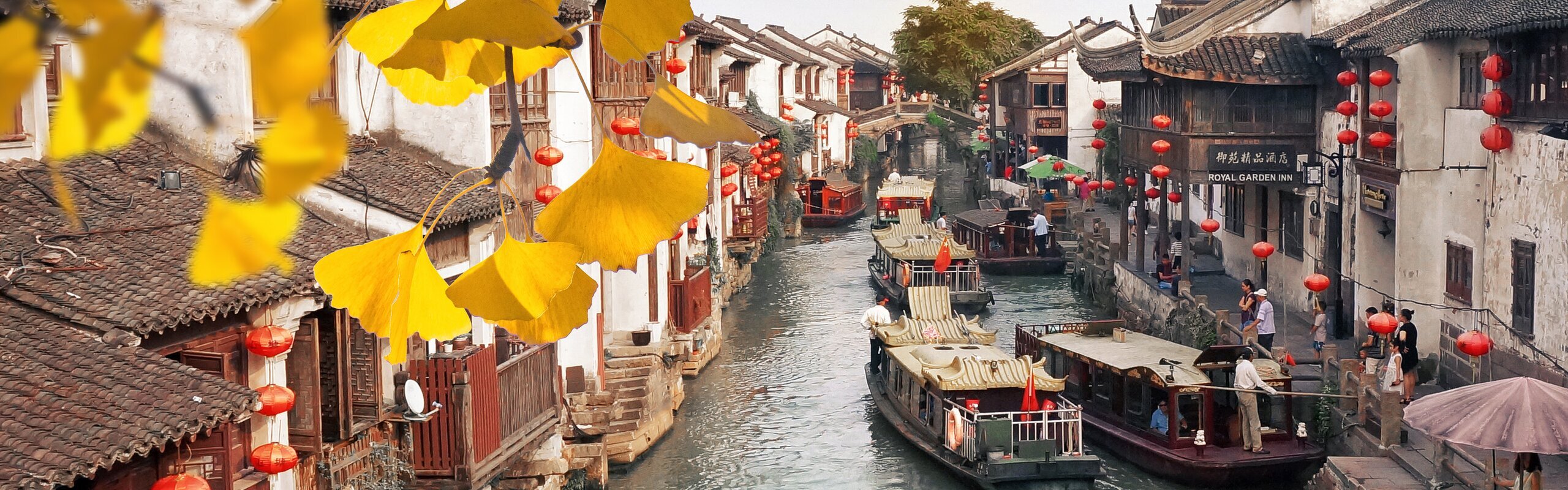

Many travelers come to Wuzhen expecting a quiet, traditional Chinese water town, then leave disappointed because they visited at the busiest time of day and rushed through it with thousands of other tourists.
Wuzhen is commercialized. It is carefully managed. But if you stay into the evening instead of rushing through it during the busiest hours of the day, it can still be one of the most atmospheric water town experiences in China.
If you're looking for an untouched village with very little tourism, Wuzhen may not be the right choice. But for first-time visitors wanting a comfortable and visually immersive introduction to China's water towns, it does that exceptionally well.
Content Preview
- What Makes Wuzhen Different from Other Water Towns?
- West Scenic Area (Xizha) Worth Your Time
- Staying overnight is the true way to experience Wuzhen
- How to Visit Wuzhen Without Feeling Rushed
- Wuzhen Theatre Festival (Mid-October)
- Where to Stay in Wuzhen
- How to Get to Wuzhen
- Best Time to Visit Wuzhen
What Makes Wuzhen Different from Other Water Towns?
| Water Town | What It Feels Like | Best Experience | Best For |
|---|---|---|---|
| Wuzhen | "An overnight immersive theater" – best night experience, unified management | Staying overnight, lantern-lit canals, modern art museum, annual theater festival | First-time visitors to China; Comfort-focused travelers |
| Zhouzhuang | "The classic postcard water town" – most famous name, many bridges, day-trip standard | Taking a small canal boat past old stone bridges |
Less recommended. Neither best in tranquility (Nanxun wins) nor in scenery (Wuzhen wins) |
| Nanxun Ancient Town | "A real small town with canals" – quieter, more local, less staged | Wandering through quiet residential canals and old family mansions | Visitors who hate crowds; Architecture & history lovers |
Many water towns near Shanghai and Hangzhou look similar at first glance, so it's common to wonder whether Wuzhen is really worth choosing over places like Zhouzhuang or Nanxun. The biggest difference is that Wuzhen is designed much more around the overall visitor experience, especially in the evening.
Compared with other water towns, Wuzhen feels more spacious, easier to navigate, and better suited for staying overnight. The canals are wider, the walking paths are clearer, and the night atmosphere is much stronger. After sunset, the lanterns reflected on the water become part of the experience itself, and the town slows down in a way many visitors remember more than the daytime sightseeing.

Wuzhen is not the best choice if you are looking for a quiet, untouched village with very little tourism. But for first-time visitors wanting a comfortable, visually immersive, and easy-to-experience introduction to China's Jiangnan water towns, it is usually the best option.
West Scenic Area (Xizha) Worth Your Time
Wuzhen has two ticketed scenic areas: Dongzha (East Zone) and Xizha (West Zone). For most international visitors, especially first-time visitors to China, we recommend focusing on Xizha only.
Dongzha feels smaller and more traditional, but it is mainly geared toward daytime sightseeing. Xizha offers the more complete experience that you may imagine about a Jiangnan water town: long canals, stone bridges, lantern-lit streets, waterside cafés, and a much stronger evening atmosphere.
Xizha is also where almost all overnight visitors stay. If you want to see the lanterns reflected on the canals at night or walk through the quiet stone lanes early the next morning, this is the area worth spending your time in.
Staying overnight is the true way to experience Wuzhen
A full day is enough to see Wuzhen's main sights, especially if you are travelling between Shanghai and Hangzhou. But the way you visit Wuzhen has a huge impact on how you feel about it.
Many visitors arrive around late morning, walk through the busiest streets during peak hours, and leave before sunset. That is usually when Wuzhen feels the most commercialized. If you only experience the town at that time of day, it can easily feel more like a crowded scenic area than a water town.
Staying overnight changes the atmosphere completely. After around 6:00 pm, many day-tour groups begin to leave, the lanterns slowly light up along the canals, and the town becomes much calmer and more enjoyable to walk through. Early the next morning, before most visitors arrive, the stone bridges and canal lanes are quiet enough to experience the slower side of Wuzhen that people often imagine before coming here.
If your China itinerary is flexible, especially on a trip longer than four or five days, spending one night inside Xizha is usually the version of Wuzhen most visitors remember most fondly.
Tips: If you do stay overnight, note that most restaurants inside the scenic area close by 8:30 pm. You can find restaurants outside the scenic area, and you don't need to buy tickets again when entering or exiting.
How to Visit Wuzhen Without Feeling Rushed
The way you visit Wuzhen has a huge impact on how you feel about it. We recommend arriving later in the day (after 2:00 pm) and staying into the evening. Xizha is compact and easy to walk, so there is no need to rush between attractions or try to see every museum. Wuzhen works best when you slow down and experience the atmosphere between the canals, bridges, and alleyways.
Around 2:00 pm–4:00 pm: Explore the Main Canal Area Slowly
After entering Xizha, spend your first few hours simply walking along the canals and getting familiar with the layout. The scenic area follows one long walkable loop, so navigation is straightforward and you do not need a strict route plan.
This is also a good time to visit a few of Wuzhen's cultural spots without feeling rushed. The Caomubense Dyehouse (草木本色染坊), with its hanging indigo cloth, is one of the most photogenic places in town. If you enjoy traditional architecture and literary history, Zhaoming Academy (昭明书院) and the Mao Dun Memorial (茅盾纪念馆) are both worthwhile stops.
Around 5:00 pm–7:00 pm: Stay for Sunset and Dinner Time
Late afternoon is the best time to slow down and simply enjoy Wuzhen itself. As the lanterns begin lighting up along the canals and many day-tour groups leave, the town becomes noticeably quieter and more atmospheric.
This is the time to wander without a plan. Cross the old stone bridges at dusk, explore the narrow back lanes, or sit at a riverside teahouse and watch the reflections appear on the water.
Dinner is also part of the experience here. Small private-kitchen restaurants inside guesthouses, such as "16甲", "2丙C" and "75幢" are known for delicious local dishes. You can also try classic Wuzhen snacks while walking around, including Dingsheng cake, shredded radish pancakes, black sticky rice, sesame crisps, and cong bao hui (crispy scallion wraps).
Nighttime: 7-9 pm: Night Show and Optional Boat Ride
From 6:30 p.m. to 9:00 p.m., head to Lingshuiju for the free "Dreaming of Wuzhen" light show. This small garden features numerous interactive light and sound installations, and it takes about 30 minutes to explore the entire circuit. The highlight is the light and sound show on the lake at the center of the garden, which lasts 5 minutes and repeats every 10 minutes.
The ripples cast on the ground will change as you walk, and touching the illuminated strings will produce sounds. Walking through it feels more immersive than watching a traditional stage show.
An evening boat ride is optional rather than essential, but for first-time visitors, drifting through the lantern-lit canals can still be a memorable experience. Rides last around 20 minutes and cost about RMB 60 (around USD 8 / SGD 11) per person.
The Next Morning Before 9:00 am: See the Quiet Side of Wuzhen
Staying overnight in Xizha gives you access to the best hours in Wuzhen. Before 9:00 a.m., the canals are still quiet, the stone lanes are mostly empty, and the town feels far more peaceful than it does during the busy daytime hours.
This is also the best time for photography. Morning light reflects softly on the water, and you can photograph bridges, boats, and old wooden houses without large tour groups in the background.
Popular photo spots include Qiaoliqiao Teahouse and the Caomubense Dyehouse, though in the early morning, almost every canal corner feels photogenic. If photography is a big part of your trip, you may also like our 8-Day Wangxian Valley, Wuzhen, Hangzhou and Shanghai Photo-Worthy Tour.
Do not miss the morning breakfast market along the canal, usually open from around 7:30 to 9:30 a.m. Small food stalls line the riverside selling local breakfast dishes, for just 30 yuan (USD 4.4/ SGD 5.7) per person on average and you'll be stuffed. Steamed dumplings, wontons and sesame pancakes are all worth trying. Note that you can only choose between this market and the hotel breakfast.
Tips: Tickets for Xizha are RMB 150 (USD 22/ SGD 28) per person. The scenic area is open from 9:00 am to 10:00 pm. If you're visiting on a weekend or during a Chinese public holiday, arriving early in the morning or late in the afternoon can avoid the peak crowds.
Wuzhen Theatre Festival (Mid-October)
If you visit Wuzhen in October, the Wuzhen Theatre Festival can completely change the atmosphere of the town. In 2026, the festival runs from October 15 to October 25, bringing experimental theatre, street performances, music, parades, and outdoor art installations into the canals and old lanes of Xizha.
Even visitors who do not normally watch theatre often enjoy the festival because much of the experience happens outdoors. You may suddenly encounter performers dressed as characters from well-known stories such as Pinocchio, The Little Prince, or the Scarecrow from The Wizard of Oz, wandering through the streets or interacting with crowds beside the canals.
For a better experience, we recommend visiting between Tuesday and Friday, when the town is noticeably less crowded than on weekends. Performances are easier to watch, restaurants are less busy, and the overall atmosphere feels more relaxed.
Hotels inside Wuzhen sell out very quickly during the festival period. If you plan to visit, it is best to book hotels and theatre tickets at least four months in advance.
Where to Stay in Wuzhen
Staying inside Xizha matters more than the hotel itself. The biggest advantage is being able to walk the canals after most day visitors leave, and experience the town again early the next morning before the crowds arrive.
When booking recommendations in Wuzhen, you may see options listed as "Wuzhen guesthouses" or "民宿" on booking platforms, but these are not independently run B&Bs. They're part of a pool system where the specific room location is assigned at random. If location and quality matter to you, book one of the four independent boutique hotels below instead.
If you want a vacation vibe at a luxury hotel, Yiyuan Eden Club House (宜园精品酒店) is the most private and upscale option. It's best for couples looking for a romantic or celebratory stay. With only 36 rooms, all of them facing the water, it feels genuinely secluded.
The property is surrounded by water on three sides and has its own private lake. Rooms start from around RMB 3,380 (USD 497/ SGD 632) per night, and guests can arrive by private boat directly into the property.
If you're traveling with a big family or other big groups, Waterside Resort (枕水度假酒店) is the best choice. It has the largest property in Xizha, with 345 rooms and 10 room types including family suites and a presidential villa, and has the most facilities on-site that can meet the needs of different groups, including a spa.
If you're looking for a cultural atmosphere, the scholarly-looking Zhaoming Academy Inn (昭明书舍) is perfect. Sits next to the historic Zhaoming Academy, it's located in a central location within the scenic area, and leans into that literary, scholarly atmosphere. It also has a good and standard service, and the hotel is rated highest among the four hotels on Booking.
If you prefer a traditional Chinese-style room with open water views and a quieter setting, Dockside Boutique Hotel (望津里精品酒店) is worth considering. It occupies the site of a Ming Dynasty inn that once served merchants travelling the Grand Canal. Unlike the other hotels, whose waterfront rooms line the narrow canals, Dockside's most popular rooms are standalone cottages sitting directly on the open waters of Feicui Lake.
How to Get to Wuzhen
Wuzhen sits roughly halfway between Shanghai and Hangzhou, which makes it an easy add-on to either city.
From Shanghai, the drive takes about 2 to 2.5 hours by private car, depending on traffic. There's no direct train to Wuzhen — the nearest high-speed rail station is Tongxiang, about 45 minutes away by taxi. For most visitors, the extra transfers aren't worth it.
From Hangzhou, it's even closer: around 1 to 1.5 hours by car. If you're already planning a Hangzhou visit, Wuzhen will be a convenient stop.
For international visitors, a private car is by far the best way to travel. It picks you up from your hotel and takes you everywhere you want to visit. No connections, no luggage hassle, no rushing. If you're travelling with families or have any elderly members in the group, the comfort difference is significant.
A popular route is to fly into Shanghai, spend a couple of days there, travel to Hangzhou, and then include Wuzhen as a day trip or overnight stop before Suzhou or flying home. You can see our 8-Day Shanghai, Hangzhou, Suzhou Family Tour.
Best Time to Visit Wuzhen
Spring (March to May) and autumn (September to November) are the best seasons to visit Wuzhen. The temperatures are comfortable for walking, the humidity is lower, and the atmosphere suits the town particularly well. In spring, the canals and trees feel lush and misty after light rain, while autumn usually brings clearer skies and cooler evenings that are ideal for staying out after dark.
Winter can also be surprisingly enjoyable if you do not mind the cold. From December to February, visitor numbers are lower and the town feels noticeably quieter, especially in the early morning. On cloudy days, the stone bridges and canals have a softer, more atmospheric look that many photographers love.
Summer (June to August) is the least comfortable season. Wuzhen becomes hot, humid, and crowded during the daytime, and walking through the narrow streets can feel tiring by midday. If you visit in summer, it is much better to explore early in the morning or stay until evening, when temperatures are lower and the lanterns begin lighting up along the canals.
The easiest time to feel disappointed by Wuzhen is during major Chinese public holidays, especially National Day Golden Week (the first week of October) and the Labor Day holiday (around May 1–5).
During these periods, the town becomes extremely crowded from late morning through the afternoon, and the peaceful water-town atmosphere many visitors expect can largely disappear. If your schedule is flexible, avoid these dates entirely or plan to stay overnight so you can experience the quieter evening and early morning hours instead.
Visit Wuzhen with Us
Wuzhen works best as part of a broader Jiangnan itinerary — paired with Hangzhou, Suzhou, or Shanghai, it makes for a natural and rewarding stop. We arrange private car transfers from wherever you're based, handle hotel bookings at the boutique properties above, and take care of the logistics so you can focus on enjoying the town.
If you're planning a trip to the region and want to include Wuzhen, get in touch, and we'll put together an itinerary around your schedule and interests. See our popular itineraries for more inspiration: