
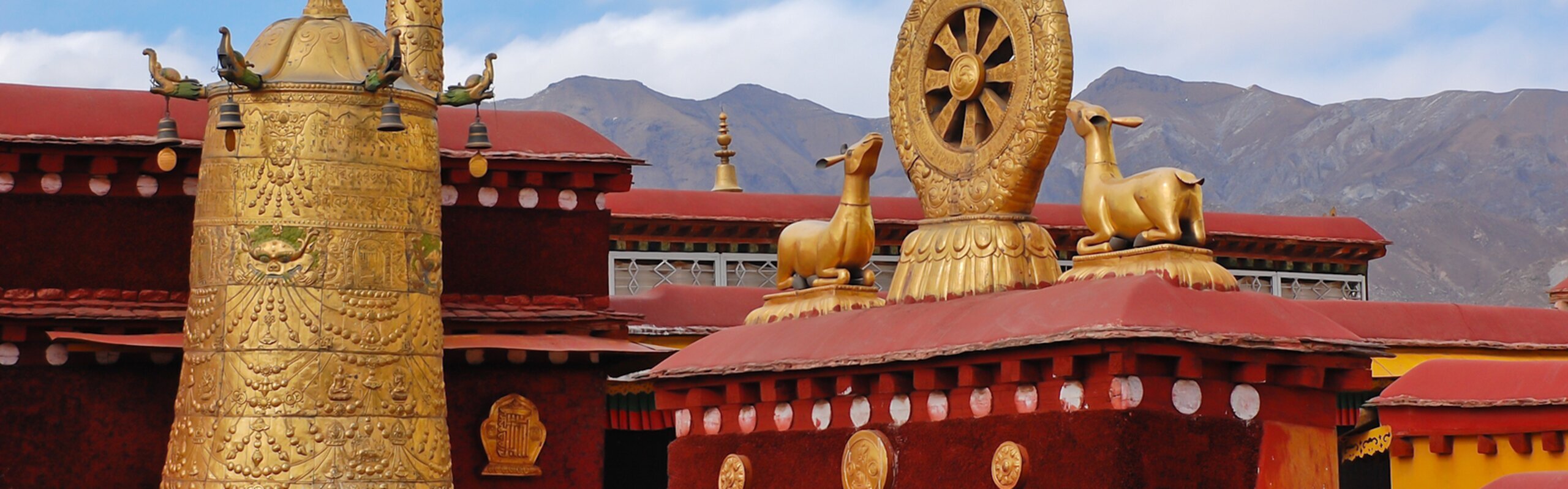

Jokhang Temple is the spiritual heart of Tibet and the most sacred site in Tibetan Buddhism.
Built in the 7th century by King Songtsen Gampo, this thousand-year-old temple has stood at the center of Tibetan Buddhism ever since. Pilgrims from across the Tibetan plateau travel here to prostrate themselves before its treasured Buddha statue.
For visitors to Lhasa, witnessing the devotion here—prostrating pilgrims, turning prayer wheels, flickering butter lamps—offers a profound glimpse into the living heart of Tibetan faith. In this guide, we'll show you what to expect when visiting, and how to work it into your Lhasa itinerary.
Facts
- Chinese name: 大昭寺, Dàzhāo Sì
- Location: central Lhasa, 2 km (1.5 miles) east of the Potala Palace, in the middle of the Barkhor Street circuit
- Open: 8:00 AM – 6:00 PM
- Ticket: RMB 85/ USD 12
- Time needed: 1-2 hours
- Suitable for: History, architecture, and Buddhist arts lovers; First-time visitors to Tibet
 Jokhang Temple
What to See in Jokhang Temple
Stand Before Tibet's Most Sacred Buddha Statue
The Jowo Shakyamuni statue is the spiritual heart of Jokhang Temple. Believed to be crafted during the Buddha's lifetime, it shows him at age 12, and it's one of only a handful of such statues in existence. According to the records, it was blessed by the Buddha himself and later brought to Tibet by Princess Wencheng in the 7th century.
What makes this statue truly unique is that you're not seeing it as it originally looked. Over centuries, devotees have ground pure gold into powder, dissolved it in water, and carefully applied it to the statue's surface as offerings. Layer upon layer, year after year. The statue has grown noticeably fuller—it's literally been transformed by faith. This living transformation, shaped by thousands of years of devotion, is what sets it apart from museum artifacts. You're witnessing belief made physical. See our 5-Day Lhasa Classics and Lake Yamdrok Tour.
Witness Tibetan Buddhism in Daily Life
Jokhang Temple is not only a museum, but also a living center of Tibetan Buddhist practice. From the moment you approach the temple, you'll see hundreds of pilgrims prostrating themselves on padded mats laid out in front of the entrance. Some people even walked for months to reach the Jokhang Temple for pilgrimage. They perform full-body prostrations over and over, some completing thousands in a single day.
Local people praying in Jokhang TempleInside the temple complex, you'll walk through dimly lit halls thick with juniper incense and the smell of melted yak butter. Elderly pilgrims circle the inner corridors with prayer wheels in hand, quietly chanting mantras. You'll see devotees placing butter offerings into massive lamps, adding to the glow that illuminates the gilded statues and intricate murals.
This is not a performance for tourists—it's real faith in action, happening every single day.
Explore a Thousand-Year-Old Architectural Wonder
Carvings in Jokhang TempleLocals say, "First came Jokhang Temple, then came Lhasa city." Built in 647 AD by King Songtsen Gampo for his bride Princess Wencheng, the temple predates the city itself and has stood at its spiritual center for over 1,300 years.
The temple's layout follows the Buddhist concept of the mandala—a symbolic map of the universe. As you move through its three floors, you're symbolically climbing from the earthly world toward enlightenment.
You'll walk through winding corridors lined with centuries-old murals depicting Buddhist stories, past rows of smaller chapels dedicated to various deities and protectors. The golden rooftop, visible from across Lhasa, gleams in the high-altitude sun and offers sweeping views of the city and the surrounding mountains.
One of the most visually stunning features is the Yamantaka Mandala on the first floor, a three-dimensional mandala exquisitely crafted entirely from pure gold. It's encrusted with turquoise, coral, amber, and other precious stones. It's the result of Buddhist Philosophy, pilgrims' devotion, and craftsmanship. Check our 8-Day Tibet Tour including Tsedang, Shigatse, and Lhasa.
Experience Tibet's Holiest Festival
If you visit during Saga Dawa (usually in May to June), you'll witness Jokhang Temple at its most vibrant. This month-long festival celebrates the birth, enlightenment, and death of the Buddha. If you're interested in Tibetan Buddhism and people's spiritual lives, this festival is one of the best times to visit.
During Saga Dawa, the temple fills with clouds of incense smoke as monks perform elaborate prayer ceremonies. Barkhor Street fills with pilgrims circling the temple with prayer wheels, and you'll see acts of devotion everywhere—people releasing animals, giving alms, doing koras, and performing countless prostrations. The atmosphere is intense, and visiting during this time provides a rare opportunity to gain a deeper understanding of Tibetan Buddhist beliefs and rituals.
How to Combine Jokhang Temple with Your Lhasa Itinerary
Jokhang Temple sits at the heart of Lhasa's old town, making it easy to combine with other nearby attractions for a half-day or full-day itinerary.
Half-Day Option: Jokhang Temple + Barkhor Street
After exploring the temple (about 1-2 hours), step outside and join the pilgrims circling Barkhor Street, the ancient pilgrimage path that loops around Jokhang. This bustling street is lined with market stalls selling prayer flags, handicrafts, jewelry, and traditional Tibetan goods. You can spend 1–2 hours walking the circuit, shopping, and soaking in the vibrant street life.
Full-Day Option: Potala Palace in the Morning, Jokhang Temple in the Afternoon
This is the most popular and practical itinerary for first-time visitors to Lhasa. Start your day at Potala Palace (allow 2–3 hours), then walk or we can drive you (about 15 minutes, 1 kilometer) to Jokhang Temple in the afternoon. After visiting the temple, explore Barkhor Street at your own pace. This pairing covers Lhasa's two most iconic landmarks in one day without feeling rushed. Check our 4-Day Lhasa Highlights Private Tour.
Add More Nearby Attractions
If you have extra time, consider adding:
- Zongjiaolukang Park – A short walk from Jokhang, this peaceful park offers stunning views of the Potala Palace reflected in a small lake. It's a perfect spot for photos and a quiet rest.
- Ramoche Temple – About 10 minutes on foot from Jokhang, this smaller temple is less crowded and houses another important Buddha statue brought to Tibet by Princess Wencheng.
Visiting Tips
Best Time to Visit: Mornings at Jokhang Temple before 11:30 AM are busiest with local worshippers. For a quieter experience, visit around 8:00 – 9:00 AM before tour groups arrive, or come after 11:30 AM.
Dress modestly: no shorts, sleeveless tops, or flip-flops. Remove hats and sunglasses before entering.
Photography: Most interior halls prohibit photography, especially near the sacred Buddha statue. Additionally, avoid taking close-up photos of pilgrims prostrating outside temples, as this may be considered disrespectful.
Visit Jokhang Temple with Us
Our private tours are designed around your interests and pace. Whether you want to spend extra time observing the pilgrims, explore the details of Tibetan Buddhist art, or combine Jokhang with other Lhasa highlights, we'll create a personalized itinerary that makes the most of your time in Tibet.
Ready to experience Tibet's spiritual heart? Contact us to start planning your journey, or explore our recommended Lhasa itineraries: