
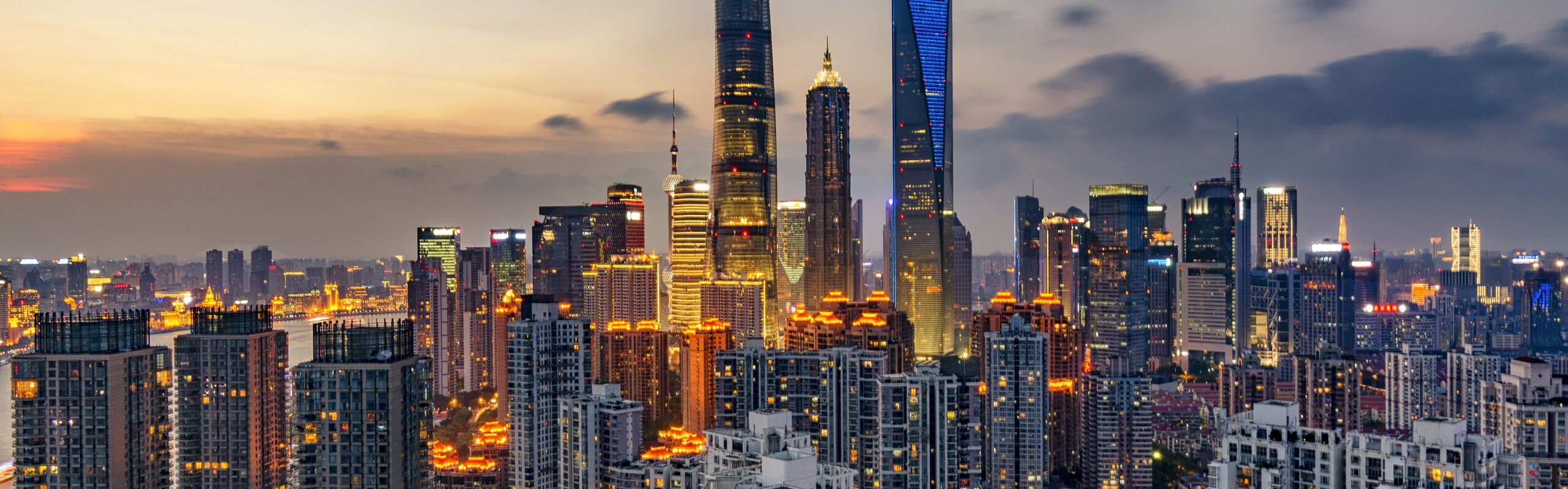

For a first trip to Beijing and Shanghai, we recommend a 7-day itinerary, with 4 nights in Beijing and 3 nights in Shanghai.
At China Highlights, our staff conducts annual on-site inspections of travel routes in Beijing and Shanghai. Based on our experience, this duration is ideal.
The itinerary below assumes you land in Beijing and fly home from Shanghai, which is also reversible. Please note that some of the attractions included are closed on Mondays, so the order of visits may need to be adjusted accordingly.
| Trip length | Beijing | Shanghai | What actually changes |
|---|---|---|---|
| 6 days | 3 days | 3 days | You either drop a Beijing sight or get ready for a rushed Shanghai trip. |
| 7 days | 4 days | 3 days | The version we recommend. Shanghai gets a more relaxed pace. |
| 8 days | 4 days | 3+1 days | Adds a water town day or a side trip to nearby cities without changing hotels. |
| 10 days | 5 days | 3+2 days | Too long for two cities. Add Xi'an for the Terracotta Army rather than stretching Beijing. |
Content Preview
- Days 1–4 in Beijing: A Glimpse into Chinese History
- Where to Stay in Beijing
- Days 5–7 in Shanghai: Wander Through the Energetic Modern City
- Where to Stay in Shanghai
- Train or Plane?
- FAQs
Days 1–4 in Beijing: A Glimpse into Chinese History
We hope to present Beijing to you as a window through which you can explore China's history.
For your trip to Beijing, three sights are non-negotiable on a first visit: the Forbidden City, the Great Wall, and the Temple of Heaven. The Summer Palace is a strong fourth, which is worth 3 hours of walking if your energy holds, and the first thing to drop if it does not.
We are often asked about Gubei Water Town during the first visit.
Well, Gubei needs at least a night. Your highlight in Gubei should be visiting Simatai after dark, and you cannot see that and be back in Beijing the same evening. Leave it out since you have so much to see in Beijing on a first trip.
Day 1: Beijing arrival

Check in and rest for the next day. Wangfujing and Qianmen are our top recommendations, and we suggest staying inside the Second Ring Road for better transportation.
If you enjoy exploring the area around the hotel, Tiananmen Square is usually the top choice. You may make a reservation 1–7 days in advance via the “天安门广场预约参观” WeChat mini-program, then start a 30-minute walk from the hotel.
Even if you decide to go on a whim, it's no problem: simply scan a QR code, hop on a shared bike, and ride through the square. While you won't be able to enter the square itself or stop along the way, it's still a great way to get a quick glimpse of the landmark.
When strolling around in the evening, I highly recommend trying the *naipizi* (奶皮子, milk-skin) yogurt from Ziguangyuan. This is one of my favorites, and it tastes like solid cheese ice cream that melts in your mouth.
Day 2: Explore the Forbidden City and the Summer Palace
- 8:30–11:30: Explore the Forbidden City (reserve via the "故宫博物院" WeChat mini-program at 20:00, seven days in advance).
- 11:30–13:30: Sample traditional Beijing snacks at Huguo Temple Snack.
- 13:30–16:30: Walk the Summer Palace. Feel free to skip it and opt for hutongs if the day is too much for you.
- 16:30–17:30: Back to your hotel and rest.
This day will inevitably involve a great deal of walking.
If you find that visiting the Forbidden City in the morning and the Summer Palace in the afternoon is too exhausting, you could opt instead to explore the *hutongs* (胡同, traditional alleyways) around Nanluoguxiang, then take a ride in a traditional rickshaw to experience the old Beijing.
Drawing on our experience from organizing countless itineraries over the years, we have a few tips for you:
- For a visit to the Forbidden City, we would like you to arrive before 8:30 AM for a shorter line, or you should be ready for hours of queuing up.
- Following our standard tour route, walk along the central axis from south to north if you only want to see the highlights, which is 2 to 3 hours needed. Allow at least 3 hours or more if you want to have a visit in-depth.
- If you don't mind a 10-minute hike, the Wanchun Pavilion in Jingshan Park is a must-visit. You can have an excellent vantage point from which to take in the layout of the Forbidden City.
- As for your visit to the Summer Palace, you don't need to walk the whole lake. Follow our route for first-timers along the shore, and you can take in the park's highlights in 2 to 3 hours without retracing your steps.
- Keep in mind that the Forbidden City and some sights within the Summer Palace are closed on Mondays, except on public holidays. If it falls on a Monday, simply move the day-3 for visiting the Great Wall to this day.
Day 3: Visit Yonghe Temple in the morning, and the Great Wall after lunch
- 9:00–10:30: Visit Yonghe Temple for Tibetan Buddhist culture.
- 10:30–11:30: Have a proper lunch early, or bring some food with you before leaving for Mutianyu.
- 11:30–16:00: Drive to Mutianyu, then walk this stretch of the Great Wall.
- 16:00–18:00: Slide and shuttle down, then drive back to your hotel and rest.
Yonghe Temple (Lama Temple) can be easily covered in 90 minutes to see the city's largest Tibetan Buddhist monastery.
You should pay more attention to planning for Mutianyu. Choose Mutianyu over Badaling, which is closer to the city and more famous, and therefore much busier.
The drive from Yonghe Temple to Mutianyu takes roughly 90 minutes to the lower car park. Then, you can take a 10-minute shuttle to cover the last 3km of mountain road to the ticket gate, which equals the effort of a 40-minute walk.
Adding it up, you reach the wall around 13:15, and that timing is the whole point of the day.
Mutianyu's crush is in the morning and on weekends. By early afternoon, the coaches have turned back, and you get the wall with room on it.
To go up the Mutianyu Great Wall, we highly recommend choosing the chairlift leading to Watchtower 6 to take in the view from there. Then you can slide down on the toboggan from there effortlessly, which is enjoyable for all of our clients who have tried it.
Is it okay to skip the Yonghe Temple?
If Tibetan Buddhist culture does not interest you, trade Yonghe Temple for the hutongs around Nanluoguxiang, or go to the Summer Palace if you skipped it on Day 2.
However, they are both better in the afternoon, so if you drop Yonghe Temple, we suggest visiting Mutianyu at opening instead, when you will beat the coach groups but share the wall with the early travelers.
After this, we'll see if you want to continue your schedule in the afternoon. Believe us, the Great Wall can be tiring if you want to see it all.
Day 4: Temple of Heaven, then take the train south
- 8:00–11:00: Check out, put luggage into the car, then visit the Temple of Heaven.
- 11:00–13:00: Have a proper lunch before catching the flight or train to Shanghai.
- 19:30–22:00: Check in, have dinner, and rest.
This day includes checking out, and we suggest doing it first and keeping the bags in the car.
Your hotel is 30 minutes behind you once you leave the Temple of Heaven, and you will not pass it again on the way to the station. Going back for them costs an hour you would rather spend at the temple.
The Temple of Heaven's gates open at 6:00 AM, but core attractions like the Hall of Prayer for Good Harvest don't open until 8:00 AM. You don't need to reserve your visit, but it is still better to buy your ticket before visiting.
The park is also at its best around 8:00 AM, when it belongs to locals doing morning exercise like tai chi. Start from the east gate, where you can expect fewer crowds, and walk along the 72-Space Long Corridor. You will see the Hall of Prayer for Good Harvest in 15 minutes.
Remember to check your travel time from Beijing to Shanghai on that day and allow for some extra buffer time. In total, the journey generally takes 6–7 hours, whether you choose to travel by high-speed train or by plane.
After checking in to your Shanghai hotel, feel free to walk the Bund for its famous night view, shop along the Nanjing Road Pedestrian Street, or simply relax in a nearby bar.
Where to Stay in Beijing: Wangfujing, Qianmen, or a Hutong Courtyard
Stay inside the Second Ring Road and near a metro line for transportation.
Wangfujing and Qianmen put you within walking distance of Tiananmen Square and a short ride from the rest. Peace Hotel Beijing (formerly Novotel Beijing Peace) is our first choice.
A courtyard hotel in the hutong is the more atmospheric choice, and the one most couples want. However, cars cannot reach the door, so you walk the last 200 to 300 meters over uneven stone with a 23 kg suitcase.
Days 5–7 in Shanghai: Wander Through the Energetic Modern City
Day 5: History by day, Modernity by night
- 9:00–11:00: Visit Yu Garden.
- 11:00–13:00: Lunch break at Yuyuan Bazaar.
- 13:00–17:30: Drive to explore the East Branch of the Shanghai Museum, ferry across the Huangpu River, then walk the Bund for its historic buildings.
- 17:30–19:30: Drive to the Shiliupu Wharf and wait to embark on a 45-minute Huangpu River cruise for the night view.
Yu Garden is definitely worth your time for the rockeries and traditional architecture. About Yuyuan Bazaar, I personally think it is too commercialized and chaotic, so just take a lunch break and no need to see it all unless it's for the lanterns at night.
The East Branch of the Shanghai Museum is famous for the bronzes, sculptures, jade, and more. Feel free to explore this air-conditioned area for a taste of aesthetics and history.
After taking a ferry back to the Bund, having an in-depth walking tour is our top recommendation if you are visiting the Bund for the first time.
This gives you enough daylight to visit inside the historic buildings properly, and our guide will run you through the stories behind them, rather than simply viewing them from the outside.
To enjoy the sunset and night view of the Bund, taking a Huangpu River night cruise is our first choice. You can admire the skyline lit up leisurely from the water, with a dynamic perspective away from the swarming crowds on the Bund.
If the cruise is not your thing, we suggest a dinner at sunset in Shanghai Tower, the tallest building in the city and the third tallest in the world, which is more exclusive, more impactful, and more delightful.
Practical Tips
The Bund's promenade is open all day, but at 19:00 in summer, 18:00 from October to April, is when the whole stretch lights up for four hours, every night of the week.
During the public holiday and summer vacation, admiring the skyline from Manner Coffee at the North Bund or the top of Sinar Mas Plaza is a crowd-avoiding choice.
Several wharves along the river run cruises. The 45-minute classic loop from Shiliupu Wharf is the one we book most often and recommend. See more information at Shanghai Huangpu River Cruise: Route, Price, Tips.
Day 6: Zhujiajiao and the Former French Concession
- 8:30–11:30: Visit Zhujiajiao Water Town.
- 11:30–13:30: Lunch break at Zhujiajiao, then drive to Wukang Building.
- 13:30–16:00: Walk from Wukang Road to Anfu Road.
- 16:00–18:30: Drive to view Jing'an Temple from the outside, then drive to Xintiandi for a stroll and have dinner.
- 18:30–19:00: Back to your hotel and rest.
Zhujiajiao Water Town is the nearest water town and the easier option for first-timers, but prepare yourself to see a heavily restored town. I personally found it too touristy during my visit in 2024, and parts of it feel purpose-built for tourists.
After having lunch at Zhujiajiao, our guide will lead you to explore from Wukang Road to Anfu Road. Under the shade of plane trees along the streets, our guide will be generous in sharing stories of the history and the war.
Xintiandi and Jing'an Temple are both skippable if you think the day is enough for you. The Shikumen and the Buddhist temple are genuinely beautiful, but if architecture is not why you came to China, you will not miss much by skipping both.
If none of the above itineraries appeal to you, Shanghai Disneyland might offer a few surprises with an exotic flair. Free from the weight of history or complex, hard-to-grasp art, this is a place where you can fully relax and immerse yourself in a fairy-tale world.
Day 7: One Last Relaxing Morning
Even though it's your last day in Shanghai, there's no need to pack your schedule to the brim just to make the trip feel “worth the cost.”
Qushui Lanting, a bathhouse and spa complex out in Hongqiao, is where I would go, which is even better if you plan to fly out of Hongqiao. But budget 1,000 yuan per person for a half-day as a deliberate splurge.
From the Bund, it is 40 minutes each way, which is a lot to spend on your last morning. For a late-afternoon departure, you'll enjoy your time without a doubt.
Where to Stay in Shanghai: The Bund or the French Concession
The Bund is our most recommended, putting the skyline within walking distance. The Peninsula Shanghai and Fairmont Peace Hotel are our top choices, both directly facing the Huangpu River and the Lujiazui trio.
The former French Concession is quieter, greener, and built for walking. It suits you better if you enjoy the local pace of life, and Hengshan Garden Hotel is where we often arrange stays. What's more, it only costs you about 25 minutes to reach the Bund by taxi.
Train or Plane? Run the Door-to-Door Math Before You Book
The math below assumes you stay at the Peace Hotel Beijing in Wangfujing and the Fairmont Peace Hotel on the Bund.
| Leg | Train | Plane |
|---|---|---|
| Hotel to station or airport | Beijing South: about 40 minutes | Capital Airport: 1 hour |
| Daxing: 1 hour and 20 minutes | ||
| Arrive before departure | 45–60 minutes | 90 minutes |
| In transit | 4.5 hours | 2–2.5 hours |
| Baggage | None | 30–45 minutes |
| Station or airport to hotel | Shanghai Station: 20 minutes | Hongqiao Airport: 50 minutes |
| Hongqiao Station: 1 hour | Pudong Airport: 1 hour | |
| Door-to-door | None | 30–45 minutes |
Most guides tell you to take the train without explaining why, which could be confusing, because on paper the plane looks just as fast.
We want to give you three reasons why the train could be your better choice.
- Predictable: 4.5 hours is 4.5 hours, whereas a flight is two hours plus whatever weather and air traffic control decide to add.
- Comfortable: You can get up, walk the length of the carriage, and stay online the whole way. On a plane, you are strapped into a seat for 2.5 hours with nowhere to go.
- Novelty: If this is your first trip to China, a 350 km/h train through four provinces is part of the trip, not just transport between two of them.
Remember to book on 12306 once your dates are fixed, and buy the return with the outbound if you are travelling on a weekend or near a public holiday.
If you would rather not work out which route suits your hotel and itinerary, tell us where you are staying and your schedule. We build the transfer into the plan and guide you alongside your trip.
FAQs about Beijing and Shanghai Itineraries
Should I Start in Beijing or Shanghai?
We always suggest Beijing comes first. Shanghai is okay if your flights say so.
As in this tour, Beijing is the heavier half of the trip and needs a lot of walking, so do it while your energy is highest, and finish in Shanghai, where the last day can be a slow one near your flight out.
What Should I Book in Advance Before Visiting?
Check this before you commit to dates.
| Sight | Booking window | Entrance fees | Note |
|---|---|---|---|
| The Forbidden City | 7 days ahead, released at 20:00 | ¥60 April–October; ¥40 November–March | Closed on Mondays, except public holidays |
| Mutianyu Great Wall | Up to 30 days ahead | Shuttle ¥15 return / ¥10 one way; cable car ¥100 one way / ¥140 return; toboggan ¥100 one way | Toboggan runs to about 16:50 on weekdays |
| Temple of Heaven | On the day | ¥34 combined April–October, ¥28 November–March | Park always open; inner halls closed Mondays |
| The Summer Palace | On the day | ¥30 April–October, ¥20 November–March; ¥60 combined | Park always open; some inner attractions are closed on Mondays |
| Temple of Heaven | On the day | ¥34 combined April–October, ¥28 November–March | Park always open; inner halls closed Mondays |
| The Yonghe Temple | On the day | ¥25 | Skippable if not into Buddhist culture |
| Shanghai Museum East Branch | On the day | Free | Closed on Tuesdays. The main collection is here, not People's Square. |
| Yu Garden | On the day | ¥40 April–June and September–November; ¥30 July–August and December–March | Closed on Mondays, except public holidays |
| Jing'an Temple | On the day | ¥50 | Appreciate from outside to get the classic view of the ancient temple against modern skyscrapers |
| Shanghai Tower | On the day | ¥180 | Dinner at sunset on the 118th floor is an alternative to the cruise, and worth doing once |
| Zhujiajiao Water Town | On the day | Free to enter; ¥60 for a joint ticket of inner attractions | Worth it if you accept that the old town is commercialized |
| Huangpu River Cruise (departs from Shiliupu Wharf)r | On the day | Daytime cruise (before 18:00): ¥110; Nighttime cruise (after 18:00, recommended): ¥145 | Taking a night cruise is enjoyable, but consider skipping it if the day is rainy |
Is One Week Enough for a First Trip to China?
Yes, if a week is what you have. You will see the two cities that define the country's past and its present, and you will leave wanting a second trip. Add Xi'an or Chengdu if you have 10 days or more.
However, a first trip that often goes wrong is the first two hours: you land, the payment method won't work, and you don't know which car service to trust.
Travel with China Highlights, and our service includes airport pickup, help setting up your phone on the way into the city, and a number you can use for the whole trip.
Do I Need a Visa?
You can check the visa policy through the official website or our page here: China Visa-Free Transit Policy
Most travellers from the US, UK, Australia and Canada still need a visa, and it is worth starting 6-8 weeks out.
If you are arriving from one country and flying home from another within 10 days, the 240-hour visa-free transit scheme may cover you instead: it applies at both Beijing and Shanghai. Check the current list before you pay for a visa.