
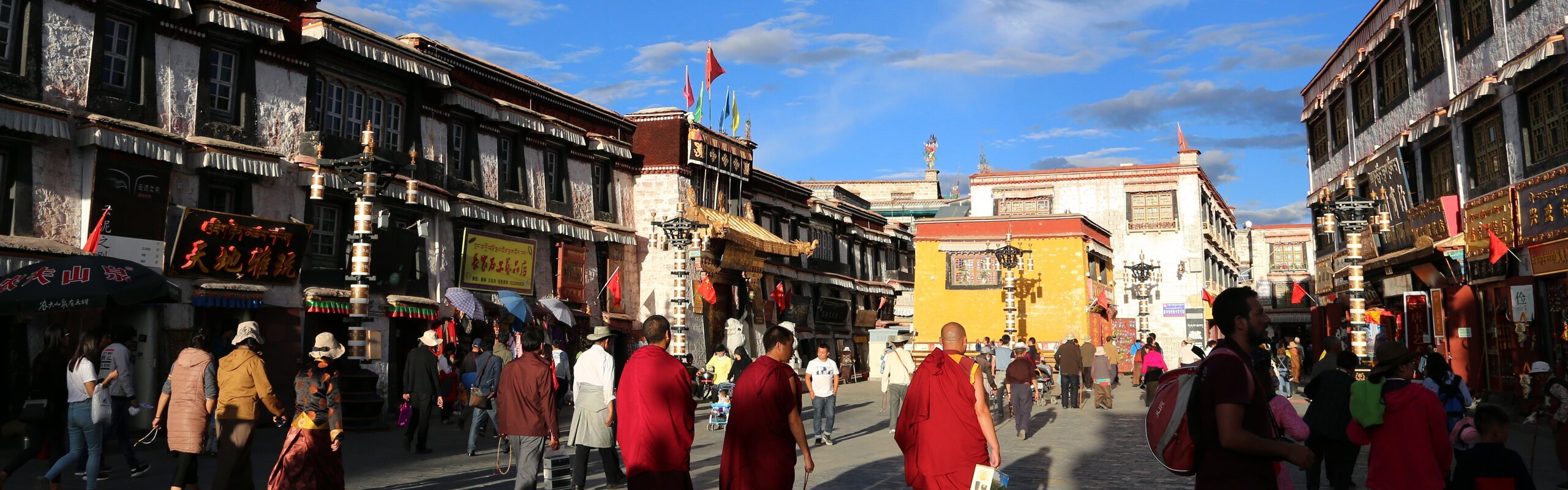

Barkhor Street (八廓街 Bākuò Jiē, or 八角街 Bājiǎo Jiē) in Lhasa is a must-visit for first-time visitors. It's a living pilgrimage route where centuries-old traditions and modern shops coexist side by side, unfolding before your eyes. This guide will show you how to walk the route like locals, what to see and do, and how to shop smart in the bustling bazaar.
What to See and Do
Barkhor Street holds a dual identity: it is both a historic pilgrimage route and Lhasa's most bustling commercial street. On Barkhor Street, you can experience profound spiritual moments while strolling through modern shops.
 Barkhor Street
 What exactly is there to see and do on Barkhor Street that's worth stopping for? Here are the key events:
Watch Pilgrims Walk the Sacred Kora
Barkhor Street is a circular pilgrimage route (kora) that encircles the Jokhang Temple. For over a thousand years, Tibetan Buddhists have come here on pilgrimage, kneeling and prostrating all the way. Some pilgrims prostrate themselves every few steps, pressing their foreheads to the ground in devotion.
The street retains ancient Lhasa's character with Tibetan houses lining the route and flagstones paving the ground. You'll notice a white line painted on the street—this marks the pilgrimage path where devoted pilgrims do prostrations.
When walking on Barkhor Street, remember to always walk clockwise (the direction pilgrims take). Spin any prayer wheels you encounter clockwise as well.
The circuit consists of East Street, West Street, North Street, and South Street, covering about 1 kilometer in total. A complete walk takes about 15–20 minutes at a relaxed pace.
Barkhor StreetThe best time to witness the spiritual side of Barkhor is early morning (7:00–9:00 am) when the street is less crowded with tourists and filled with locals performing their morning koras.
If you're hoping to photograph pilgrims, this is one of the best spots, but always ask permission before taking close-up photos of individuals engaged in prayer or prostrations. See our 5-Day Lhasa Classics and Lake Yamdrok Tour.
Explore Historic Sites and Architecture
Along the Barkhor circuit, several historic buildings and spots offer a deeper look into Tibetan and Qing-era history. These sites provide a quieter escape from the bustling street.
One of the most worthwhile stops is the Former Qing Ambans' Residence, if you are interested in the history and building of Tibet, this place is definitely worth a visit. You can walk through traditional Tibetan-style corridors adorned with murals and wooden carvings, then climb to the upper floors for views over the surrounding neighborhood.
The exhibits inside explain the role of the Qing ambans in governing Tibet and include historical documents and artifacts. For photography enthusiasts, the painted corridors, carved beams, and interior courtyards provide excellent shots of traditional Tibetan architecture.
If you're interested in understanding the complexities of Tibetan history beyond its spiritual side, Langzixia Exhibition Hall is another worthwhile stop. This free museum occupies a historic building that once belonged to a wealthy Tibetan aristocrat. Today, it serves as a sobering reminder of Tibet's feudal past, with exhibits depicting the harsh realities of life under the old serf system.
The most striking feature is the underground prison, where you can see the cells and instruments of punishment used in pre-1950s Tibet. The tone is politically charged, but it offers a perspective on Tibet's past that contrasts sharply with the romanticized images many visitors hold. See our 4-Day Lhasa Highlights Private Tour.
Shop and Eat Along the Street
Barkhor Street is Lhasa's most vibrant pedestrian area. It is packed with small shops and local restaurants. If you want to shop and eat like locals, these are the places we recommend most.
Minzholin Tibetan Incense Shop: one of the best places to buy authentic Tibetan incense. The incense sold here is genuinely handcrafted by monks from Minzholin Monastery using traditional methods. Quality is noticeably better than most souvenir shops along the street, making it a meaningful gift to take home.
Makye Ame Restaurant: a popular stop for both food and views. Its third-floor terrace looks directly over Barkhor Street, making it a great place to rest, eat Tibetan dishes, and watch pilgrims and shoppers passing below.
Makye AmeGushu Yogurt: known for its fresh Tibetan yogurt made from yak milk. The flavor is rich and distinctly sour, very different from the sweet yogurt you may be used to.
Tip: While Barkhor Street offers some shopping options, if you're looking for better value, a wider selection, and more authentic Tibetan specialties, we recommend visiting Barkhor Hall instead. It's only a 15–20 minute walk away and is also where locals often shop. If you're tired of walking, we can also arrange a private car for you after your visit to the Barkhor Street.
Travel Tips
Respect the pilgrimage route
Always walk clockwise around Barkhor Street. This is the direction of the kora, and walking against the flow is considered disrespectful. Spin prayer wheels clockwise as well, and avoid touching or stopping the wheels that pilgrims are using.
Bargain
If you want to buy souvenirs on Barkhor Street, do remember to bargain. It's reasonable to take a discount of 50%! Tibet produces many rare stones, such as turquoise. The real thing is very expensive, but more so elsewhere. When the shopkeeper doesn't sell you an item at your price, pretend to turn and go away. You will probably be called back with a better offer.
But if you're shopping at Barkhor Mall, you generally don't need to haggle over prices, as the items here are already quite reasonable.
Tibetan souvenirsPhotography etiquette
While you're welcome to photograph the street scenes and architecture, always ask permission before taking close-up photos of individuals, especially pilgrims engaged in prayer or prostrations. Some people may decline, and that should be respected.
Inside temples and museums, check whether photography is allowed. Many sites prohibit it.
Combine Barkhor Street with a Lhasa City Walk
If you have a full day and want to see more of Lhasa on foot, Barkhor Street fits perfectly into a classic city walking route. This is one of the most popular walking tours in Lhasa, covering the city's must-see highlights in about 9 kilometers (roughly 3 hours of walking).
Suggested Route: Norbulingka → Qianfoya Cliff → Yaowang Mountain → Potala Palace Square → Zongjiao Lukang Park → Jokhang Temple → Barkhor Street → Ramoche Temple
Start your walk at Norbulingka, the summer palace of the Dalai Lamas, and make your way toward the heart of Lhasa. One of the highlights is reaching Potala Palace Square, where you can take iconic photos with the palace's white-and-red walls rising behind you.
Continue to the nearby Zongjiao Lukang Park, where you'll see the palace beautifully reflected in the tranquil Dragon King Pond. It's one of the best photo spots in Lhasa, especially in the early morning or late afternoon when the light is soft.
As you approach Barkhor Street and Jokhang Temple, you'll see many pilgrims circling the temple, spinning prayer wheels and praying with deep devotion. It's one of the best places in Tibet to feel the heartbeat of Tibetan faith and daily life.
You can wander through the streets, browse stalls for Tibetan incense or prayer beads, and try some delicious Tibetan food for relaxation. If you still have energy, you can extend to the Ramoche Temple nearby.
You can adjust the start and finish points depending on your pace, strength, and interest. Most travelers take around 4–5 hours to complete the route with stops for photos, meals, drinks, and rest.
Tour Barkhor Street with China Highlights
Ready to explore Barkhor Street with expert guidance? Our private Lhasa tours include knowledgeable local guides who can help you navigate the cultural sites, explain the significance of what you're seeing, and ensure you experience the street respectfully and comfortably.
Contact us to start your trip, or see our popular Tibet tours for inspiration: