
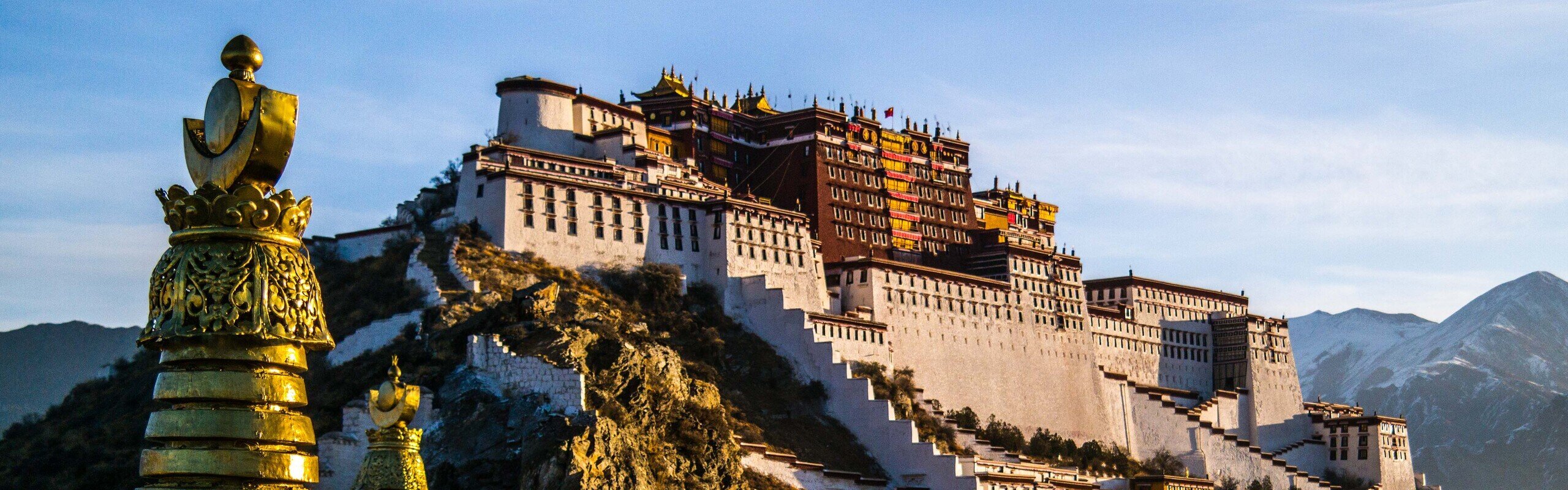

Standing at 3,700 meters above sea level and rising another 117 meters above the city, the Potala Palace is the top site of Tibet. It's a living religious monument, a treasury of Tibetan history, and a place that is unlike any building you have ever seen.
For over 1,300 years, this fortress-palace has watched over Lhasa. It's once the winter residence of the Dalai Lamas, now one of the most awe-inspiring sites in the world. In this guide, we'll walk you through everything you need to know to plan a smooth and memorable visit, from choosing the right tour route to the best spots to photograph the palace.
Facts
- Chinese name: 布达拉宫 Bùdálā Gōng
- Location: Beijing Middle Road, Chengguan District, Lhasa, Tibet
- Open: 09:00–15:00 (last entry); closed on Mondays
- Ticket: RMB 200 / USD 28 (May–Oct); RMB 100 / USD 14 (Nov–Apr)
- Duration: 3–4 hours
- Suitable For: History and culture lovers, first-time visitors
Content Preview
- How to Visit and What to Expect at the Potala Palace
- Best Spots to Photograph the Potala Palace
- Combine the Potala Palace with Nearby Attractions
- Practical Notes
How to Visit and What to Expect at the Potala Palace
There are two routes for you to choose: Line 1 is better
There are two visiting routes at Potala Palace. Both routes include the White Palace and the Red Palace, but they visit different halls in the Red Palace. Line 1 (RMB 200 / USD 28) covers 16 halls, while Line 2 (RMB 100 / USD 14) visits 6 halls, and is centred on the Mausoleum of the 5th Dalai Lama. The halls included in the two routes do not overlap.
We recommend Line 1, which takes you deeper into the palace's history and includes the Phakpa Lhakhang (Sacred Avalokitesvara Chapel), the most sacred and ancient space in the entire complex. Line 1 offers a more comprehensive and in-depth visiting experience, and it's best for first-time visitors.
The tour of Line 2 is shorter than that of Line 1, yet it offers a greater number of jewels and larger stupa shrines. Line 2 is not open year-round; it operates only during the peak season (May to October) as a diversion route.
 Potala Palace
What is the experience for Line 1?
Outside Layout of Potala PalaceThe visit begins at the base of the hill, where you pass through Shol Village, a free treasure gallery with many precious artifacts. From there, you'll climb about 360 steps to reach the palace entrance.
Inside, you first enter the White Palace, where the Dalai Lamas once lived and worked. Here, you can see their living quarters and ceremonial halls while learning about their stories.
White Wall of Potala PalaceNext, you move into the Red Palace, the spiritual heart of the Potala Palace. This is where you'll see many of the palace's most precious Buddhist statues and relics, so it's worth spending a little more time here.
One highlight you shouldn't miss is Phakpa Lhakhang, the most remarkable chapel in the palace. Here you'll see a rare gilded Guanyin statue made from natural sandalwood, regarded by many Tibetans as a spiritual symbol. See our 8-Day Lhasa to Everest Base Camp Tour.
Red Palace of PotalaDuring peak season, if Line 1 tickets are unavailable, you may only be able to purchase Line 2. The main highlight of Line 2 is the mausoleum stupa of the 5th Dalai Lama, the largest and most magnificent stupa in the entire Potala Palace.
StupasYou'll finish at the top of the palace, then descend via a separate staircase. After your visit, your guide will take you to the best spots around the palace for photographs, including a few that most tourists never find.
Visiting tips
1. Plan your visit in the morning. The palace is open from 09:00 to 15:00, but arriving early gives you more time for a comfortable pace. A full visit — including the climb, one hour inside, and some time at affiliated palaces and attractions — takes around 3 to 4 hours in total.
2. Don't visit on your first or second day in Lhasa. The Potala Palace involves a steep 360-step climb to the entrance, followed by 5 floors of stairs inside. That's manageable at sea level, but at 3,700 metres, it's a different story. Give your body at least 2 full days to acclimatize before attempting it, and you'll enjoy the experience considerably more.
Steps to the top of Potala Palace3. If you want to experience both routes, you'll need a longer itinerary, at least 8 days. Each visitor can purchase Potala Palace tickets only once within 7 days.
Best Spots to Photograph the Potala Palace
The palace itself is magnificent, but knowing where to stand makes all the difference in your photos. Here are four locations that each give you a perfect spot for stunning shots.
Potala Palace Square — the classic
The wide plaza directly in front of the palace is the most straightforward place to photograph it: a clean, full-frontal view of the entire structure. You can take photos with the Potala Palace here, taking it as the backdrop for your pictures. Come in the early morning for soft light and fewer crowds, or return after dark when the palace is lit up against the night sky. See our 4-Day Lhasa Highlights Private Tour.
Visitors taking picture at Potala Palace SquareChakpori Hill Viewpoint — the iconic angle
This is the spot featured on the back of the RMB 50 note, and for good reason. It sits directly across the road from the right side of the Potala Palace, and it's one of the best locations for sunrise and sunset photography.
From the elevated position on Chakpori Hill, you get a wide, unobstructed view of the palace rising against the open sky. The road in the foreground adds depth and scale to your photo. It's a popular spot, so expect a short queue when visiting.
The Potala Palace photographed from Chakpori Hill ViewpointZongjiao Lukang Park — the reflection
A short walk behind the palace, this peaceful public park sits alongside a lake that mirrors the Potala Palace. It's quieter than the square, with a softer and more relaxing feel.
Here, you can capture a more complete view of the back of the Potala Palace with the reflection on the lake while avoiding the crowds. If you are visiting Lhasa in autumn or winter, you may spot a lot of migratory birds on the lake.
The Potala Palace is reflected on the water's surfaceBarkhor Times Square Pedestrian Bridge — the unexpected one
Popular Photo Spots for the Potala at Barkhor Times Square Pedestrian BridgeMost visitors never make it here, but photographers who do are rarely disappointed. From this pedestrian bridge at the intersection of Lingkhor East Road and Beijing East Road, you get a side profile of the Potala framed alongside a sweeping S-bend road busy with traffic. This shot feels entirely different from every other angle. The best time is 8:00 pm when the city lights are coming on, and the sky is in the blue hour.
Combine the Potala Palace with Nearby Attractions
Potala Palace tickets are in high demand and not always available on your preferred time. In this case, we'll build your itinerary around your confirmed visit slot, then arrange the surrounding day to match your pace and interests.
Two combinations work particularly well:
Potala Palace + Jokhang Temple + Barkhor Street
For a fuller immersion into Lhasa's spiritual and everyday life, this combination is hard to beat.
Jokhang Temple is the most sacred temple in Tibetan Buddhism, which is a living place of worship where pilgrims from across the Tibetan plateau come to pray.
Surrounding it, Barkhor Street is the ancient pilgrimage circuit that has existed for centuries, now lined with market stalls, teahouses, and local life. Together, they give you a side of Lhasa that feels entirely different from the palace on the hill. Check our 5-Day Lhasa Classics and Lake Yamdrok Tour.
People come to Potala Palace for PilgrimagePotala Palace + Norbulingka Palace
If you'd prefer a quieter, more relaxed day, Norbulingka makes a natural pairing. Known as the "Summer Palace" of the Dalai Lamas, it's a sprawling garden complex of pavilions, temples, and ornamental grounds — a deliberate contrast to the grandeur of the Potala. It's less visited than most Lhasa landmarks, which means more space and a slower pace.
Practical Notes
1. Photography is prohibited inside the palace (from the moment you enter the White Palace gates)
2. Dress modestly — no shorts, skirts, or flip-flops
3. Remove hats and sunglasses before entering the chapels
4. Liquids, lighters, and cigarettes are not permitted inside — leave them at the ticket office
Visit the Potala Palace with Us
Our private Lhasa tours include a professional local guide who knows the palace inside out — someone who will help you make the most of your one hour inside, bring the history to life in every room. We also provide comfortable private transport throughout the day, with oxygen and altitude medication always on hand.
For a hassle-free and comfortable Tibet trip, contact us to tell us your travel dates and interests. Or you can check our popular Tibet tours: