

Shenzhen does not have one ancient cuisine that defines the city. That is exactly what makes eating here interesting.
Built into a major city in just a few decades, Shenzhen has absorbed food traditions from across Guangdong and China, then added its own layer of experimentation.
Cantonese dim sum sits alongside Chaoshan beef hot pot, Hakka dishes, coastal seafood and the coconut chicken that has become closely associated with Shenzhen.
In the newer parts of the city, you will also find restaurants mixing Chinese regional flavors with influences from Hong Kong and overseas.
The point is not to find the one food that represents all of Shenzhen. The variety is the story.
Shenzhen food is young, diverse and constantly evolving - much like the city itself.
So instead of looking for one "signature Shenzhen dish," use your meals to experience different sides of the city:
Cantonese dim sum for its local Guangdong roots, coconut chicken or Chaoshan beef hot pot for Shenzhen's modern food culture, and a dish such as Guangming pigeon or Shajing oyster for a stronger connection to the city itself.
There is one other rule worth knowing: eat according to your route. Shenzhen is a huge city. A restaurant that looks close on a map may still mean a long Metro ride or road transfer. Unless the restaurant itself is a major priority, choosing somewhere near your sightseeing is usually the smarter decision.
Three Sides of Shenzhen Food to Try
If you want a simple way to navigate that variety, build your meals around three different experiences.
1. Cantonese Dim Sum: Taste Shenzhen's Guangdong Roots

Best for: breakfast or brunch
Allow: 1.5–2 hours
Budget: roughly RMB 80–200 per person
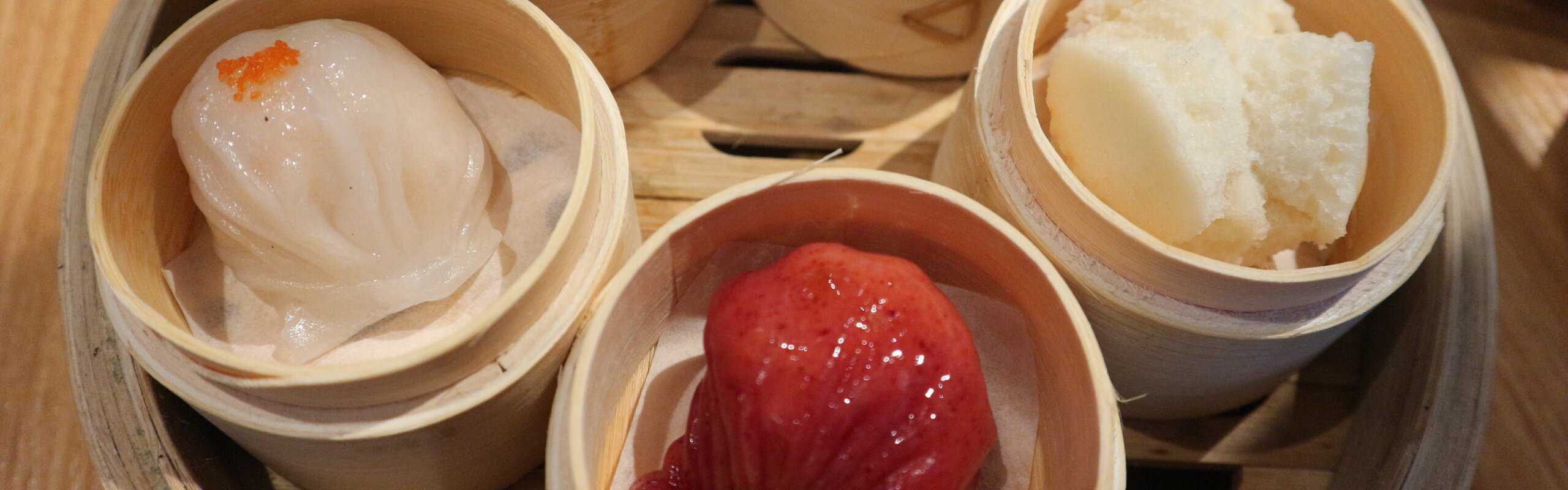
Dim sum is an easy introduction to Cantonese food and a good way to experience the social side of eating in southern China.
Instead of ordering one large dish, you share several smaller dishes over tea.
Start with:
- Har gow — shrimp dumplings with thin, translucent wrappers
- Siu mai — open-topped pork and shrimp dumplings
- Char siu bao — steamed buns filled with barbecue pork
- Cheung fun — silky rice noodle rolls, often filled with shrimp or beef
For two people, start with three or four dishes and add more as needed. Dim sum portions are designed for sharing, so there is no reason to order the entire table at once.
If you want the traditional tea-house experience, give yourself time to sit, talk and order another basket or two rather than treating dim sum as a quick breakfast.
But don't mistake dim sum for the whole Shenzhen food story.
It connects Shenzhen to the wider Cantonese food tradition. The dishes below show you what makes Shenzhen's own food scene more distinctive.
2. Coconut Chicken: Try Shenzhen's Mild Side of Hot Pot
Best for: travelers who prefer mild flavors
Allow: 1–1.5 hours
Budget: roughly RMB 100–200 per person
Coconut chicken is one of the most recognizable modern food experiences associated with Shenzhen.
The broth is made with coconut water and chicken, creating a light, naturally sweet flavor rather than the heavy spice of Sichuan or Chongqing hot pot.
That makes it particularly approachable if you are new to Chinese hot pot or simply do not enjoy spicy food.
There is also a simple way to get the most out of it:
Eat the chicken and drink some of the broth before adding too many other ingredients.
Once vegetables, mushrooms and other ingredients go into the pot, the delicate coconut flavor becomes less obvious.
For two people, a set meal is often easier than ordering every ingredient separately. Larger groups can add more ingredients and share the pot.
More importantly, coconut chicken tells you something about Shenzhen itself: this is a city comfortable with taking an idea from elsewhere and turning it into something that belongs in its own food culture.
3. Chaoshan Beef Hot Pot: Taste the Migrant Side of Shenzhen
Best for: meat lovers
Allow: 1–1.5 hours
Budget: roughly RMB 100–250 per person
If coconut chicken is too mild for your taste, choose Chaoshan beef hot pot instead.
Chaoshan food has a strong presence in Shenzhen, reflecting the large Chaoshan community that helped shape the city's modern food culture.
The experience is very different from heavily seasoned hot pots.
Thin slices of fresh beef are cooked briefly in a relatively simple broth. Different cuts have different textures, so the focus is on the quality and freshness of the beef rather than a powerful soup base.
For your first order, choose a mixed beef platter so you can compare several cuts.
You may also notice that staff or menus recommend different cooking times for different cuts. Follow their instructions rather than leaving the beef in the pot until it looks completely cooked through.
The dipping sauce is usually part of the experience too, particularly shacha sauce, a savory, slightly nutty sauce widely associated with Chaoshan cuisine.
This is one of the best meals for understanding Shenzhen as a migrant city: a regional food tradition that has become an everyday part of life far beyond its original home.
Foods with a Stronger Connection to Shenzhen
The three choices above give you different sides of the city's food culture. If you want something more geographically tied to Shenzhen, look for Guangming pigeon or Shajing oysters.
Guangming Pigeon
Guangming pigeon is one of the specialties most closely associated with Shenzhen.
The classic preparation gives the pigeon crisp skin and tender, juicy meat.
Shajing Oysters
If you prefer seafood, look for Shajing oysters.
Shajing, in Bao'an District, has a long oyster-farming tradition and is one of the places most strongly associated with Shenzhen's coastal food heritage.
You will find oysters prepared in different ways, including grilled and cooked versions.
If you're unfamiliar with local seafood, cooked oysters are usually the easiest starting point.
Where to Eat in Shenzhen: Follow Your Route
There is no single "best food area" in Shenzhen.
The city is too large for that.
Instead, match the neighborhood to what you are already doing that day.
Futian — Best for Central Convenience
Choose Futian if your hotel or sightseeing is already around central Shenzhen.
You will find a wide range of Cantonese restaurants, dim sum, hot pot, modern Chinese restaurants and international dining around the CBD and major shopping areas.
It is also convenient for combining dinner with an evening walk through the city's modern central districts.
Best if you want variety without making food a separate excursion.
Dongmen — Best for Snacks and Street Atmosphere
Choose Dongmen when you want a more energetic, walk-and-eat experience.
The area around Dongmen Old Street has restaurants, snacks, drinks and shops packed relatively close together, making it easier to sample several smaller foods instead of committing to one formal meal.
It is particularly convenient if you are already sightseeing around Luohu.
Best for: street food, casual meals and a busier local atmosphere.
If you prefer to avoid the busiest evening crowds, arriving around 5:00–6:00 pm gives you more breathing room before dinner gets fully underway.
OCT — Best for Food + Culture + Evening Strolls
OCT works best when you are already planning to spend time there.
The area is suited to a slower combination of cafés, casual restaurants, desserts, creative spaces and evening walks.
I would not cross Shenzhen solely for a meal here.
If OCT is already part of your itinerary, eat there.
If not, choose somewhere closer to your next stop.
That principle will save you much more time than trying to identify the "best" restaurant in the city.
How Much Does Food Cost in Shenzhen?
For a comfortable mid-range trip, RMB 100–200 per person per meal is a useful planning range, although prices vary considerably by restaurant and ingredients.
As a rough guide:
- Street snacks: RMB 20–50
- Casual local restaurant: RMB 50–150
- Dim sum: RMB 80–200
- Hot pot: RMB 100–250
- Seafood or upscale Cantonese: RMB 200+
For two people, a practical starting budget is around RMB 200–400 for a comfortable mid-range meal.
Seafood, premium beef and higher-end Cantonese restaurants can push the bill considerably higher, so check prices before ordering expensive ingredients.
Can You Pay by Credit Card in Shenzhen?
Yes — but it is still worth having a backup payment method.
Payment acceptance for international visitors has improved significantly in Shenzhen. By the end of June 2026, around 41,000 merchants across the city accepted overseas-issued bank cards through about 51,000 POS terminals, covering airports, major commercial areas, hotels and tourism sites.
However, you should not assume that every small restaurant or street-food stall will accept your foreign card directly.
The safest setup is to have WeChat Pay or Alipay linked to an international bank card before you arrive.
It is also sensible to carry a small amount of RMB as a backup, particularly when visiting smaller local restaurants or food stalls.
Do You Need to Book Restaurants in Advance?
Not for every meal.
For ordinary local restaurants, casual food and street food, deciding on the day is usually the easiest approach.
Book ahead when:
- you have a specific high-end Cantonese restaurant in mind;
- you are traveling during a weekend or public holiday;
- you are dining with a large group;
- you are traveling with young children and want to avoid a long wait;
- the restaurant itself is an important part of your day's plan.
For everything else, choose a restaurant close to your sightseeing route and keep one nearby alternative in mind.
That gives you flexibility without sacrificing much.
Plan Your Shenzhen Food Experience
Shenzhen is large. A good meal near where you are already exploring is usually a better travel experience than a supposedly "must-eat" restaurant that requires an hour-long detour.
If you are planning a private trip, we can also match your meals to your hotel, sightseeing route and food preferences - so you experience the parts of Shenzhen's food culture that genuinely fit your journey, rather than simply checking dishes off a list.