
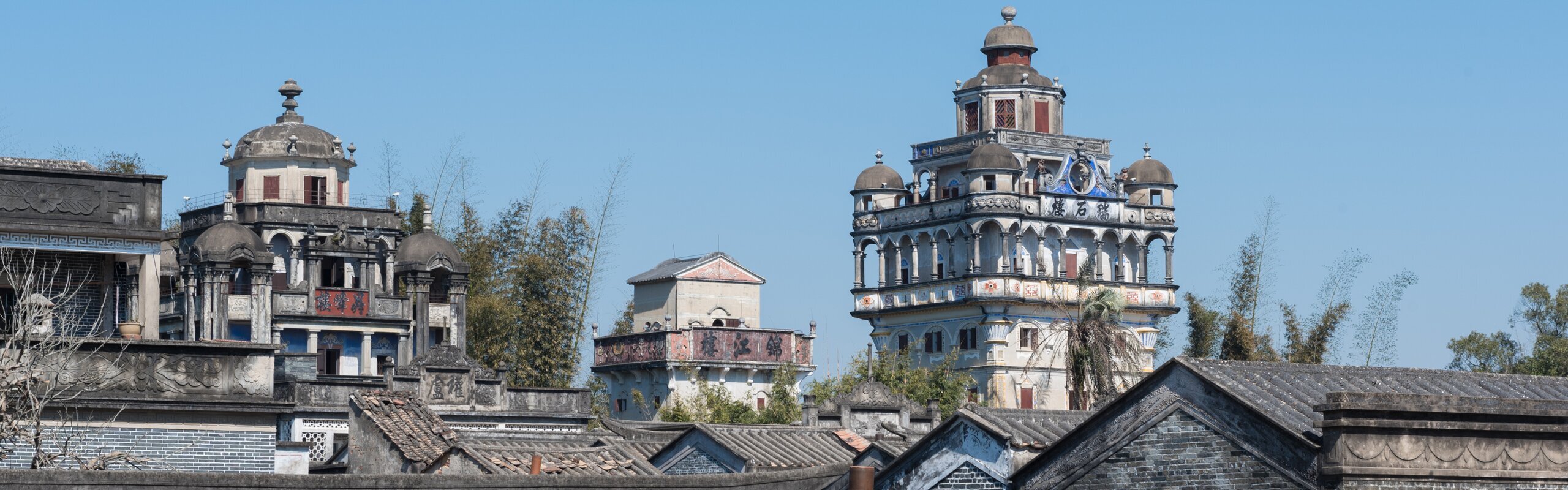

You've heard your parents speak of the old village, the one with the tall watchtowers in the rice fields. But finding it feels like a puzzle. You worry about language, about transportation, about whether your aging parents can walk far, or whether your kids will get bored.
We understand. This guide is written for families like yours, overseas Chinese returning to Kaiping with hopes of reconnecting with the past, without the stress.
Even if your own roots lie elsewhere, these watchtowers remain one of China's most surprising UNESCO sites – a rural landscape you won't find anywhere else.
I would recommend reserving a full day, and let a private car and guide handle the logistics. You'll visit the most meaningful watchtower villages, hear family stories that aren't in any guidebook, and keep everyone comfortable, from grandparents to teenagers.
Which Village Matches Your Family Story?
There are over 1,800 diaolou scattered across Kaiping. Most families trace their roots to one of the villages below. Use this table to find your ancestral home, or simply choose the experience that appeals most.
| Village | Location | Main Family Names | Number of Diaolou | Unique Feature |
|---|---|---|---|---|
| Zili Village (自力村) | Tangkou Town | Fang (方) | 15 | Most iconic, best preserved, movie location ("Let the Bullets Fly") |
| Maxianglong (马降龙) | Baihe Town | Huang (黄), Guan (关) | 13 | Watchtowers hidden in dense bamboo groves; still a living village |
| Jinjiangli (锦江里) | Xiangang Town | Huang (黄) | 3 | Home to Kaiping's tallest diaolou (Ruishi Lou), still managed by descendants |
| Liyuan Garden (立园) | Tangkou Town | Xie (谢) | 1 | A private garden combining a villa, watchtower, and peaceful ponds |
| Zuzhai Village (祖宅村) | Tangkou Town | Fang (方) | 2 | Rowhouse diaolou with beautiful pond reflection |
If you know your family's village name but don't see it here, don't worry. Our guides can help you locate it based on old letters or oral history. Just contact us before your trip.
No family ties? No problem. Zili Village and Liyuan Garden alone make for a fantastic day trip. They're the highlights even for travelers without a personal connection.
Zili Village – The Postcard View (Best for first time visitors)
 Zili Village
When you arrive, you'll see a cluster of watchtowers rising out of golden rice fields. Let your parents take the lead on the flat, paved path – there are stone benches every few minutes if they need a rest. Your kids can run ahead and count how many towers they spot (there are 15).
Climb Mingshi Lou, the most famous tower. The stone steps are a bit narrow, but there's a handrail. At the top, stand together on the terrace and look out over the whole valley. In spring (March–April), you'll see yellow rape flowers. In autumn (November–December), the rice turns golden.
Inside, you can touch a century-old gramophone, see a bathtub that was shipped from overseas, and imagine your great grandfather sending money home to build this very room.
Insider tip: Weekdays are quiet. If you come on a weekend, arrive before 9:00 AM – that's when tour groups start pouring in.
Even if you have no family history here, this is the postcard shot you came for and the movie connection ("Let the Bullets Fly") is a fun bonus.
Maxianglong – Watchtowers Hidden in Bamboo (Best for quiet reflection)
Maxianglong villageThis village feels like a secret. Walk slowly along the bamboo lined paths – the light filters through green leaves, and the air smells of earth and moss. Fewer visitors come here, so you can listen to the birds and the rustle of bamboo.
Only two towers (Lin Lou and Jun Lou) are open to climb. They're more modest than those in Zili, but your parents will appreciate the shaded benches scattered around. Kids can pretend they're explorers discovering a hidden fortress.
If you prefer quiet over crowds, choose Maxianglong over Zili – it's less photographed but equally atmospheric.
Jinjiangli – Meet the Descendants (Best for a personal connection)
Jinjiangli villageThis tiny village has only three towers – but one of them, Ruishi Lou, is the tallest in Kaiping (nine stories). What makes it special: it's still cared for by the Huang family descendants. If the old caretaker is there, you can sit on a wooden chair and listen to him tell stories of his ancestors: how they went overseas, saved money, and built this tower. He may even show you old photographs.
The caretaker isn't there every day. But our guide knows how to find him or can take you to another tower open for climbing. You won't miss out.
This is the place where history feels most alive – even without family ties, hearing a descendant's voice makes the diaolou real.
Liyuan Garden – A Gentle Stroll Through a Returned Overseas Chinese Dream
Liyuan GardenFurniture of Liyuan GardenThis is not a defensive tower – it's a home. A wealthy overseas Chinese built this garden, villa, and watchtower as a gift for his family.
Push open the wooden door of Panli Lou – the main villa. The teacups are still on the table, the gramophone sits in the corner. It feels as if the owner just stepped away for a moment.
After exploring indoors, take your family on a slow walk around the garden. There are pavilions, flowerbeds, and a pond with koi fish. Your kids can buy a small bag of fish food (¥5) and watch the fish swarm. Your parents can rest on a shaded bench while you sit at a stone table and share a pot of tea (there's a small teahouse nearby).
This garden is a hit with all visitors – kids love feeding the koi, adults love the architecture, and everyone enjoys a peaceful break from walking.
Zuzhai Village – A Quick Photo Stop (Only if you have time)
Zuzhai villageJust 10 minutes from Zili Village, this rowhouse diaolou looks stunning reflected in a lotus pond. You can stop for 15 minutes to take pictures – no need to get out of the car if you're tired. It's a nice add on, not a must see.
How to Plan A Realistic One Day Itinerary (With Private Car)
Since the diaolou are scattered across rural Kaiping (about 2 hours from Guangzhou), we don't recommend self driving or relying on public buses – there are no taxis between villages. The stress free way is to book a private car with an English speaking guide. We'll pick you up from your hotel and handle everything.
Here's a relaxed one day schedule that works well for families with seniors and children – and just as well for any traveler wanting a hassle free experience.
- 8:00 AM – Depart from your Guangzhou hotel (Beat the traffic; arrive before tour groups)
- 10:00 – 11:30 AM – Zili Village (or your ancestral village) (Morning light is best for photos; less crowded)
- 11:30 AM – 12:30 PM – Lunch at a countryside eatery (Our guide can recommend a place with clean facilities and local dishes: stuffed tofu, claypot rice)
- 12:30 – 1:30 PM – Liyuan Garden (Afternoon shade; gentle walking; tea and fish feeding)
- 1:45 – 2:45 PM – Maxianglong (or Jinjiangli, if you prefer the family story) (Quieter in the afternoon; bamboo groves provide cooling shade)
- 3:00 – 4:00 PM – Chikan Ancient Town (optional quick walk) (A 10 minute stop to see a century old trading port – or skip if everyone is tired)
- 4:00 – 6:00 PM – Drive back to Guangzhou (Arrive before evening rush hour)
If you have a specific ancestral village not listed, our guide can adjust the route. Just let us know the village name – or any clues – in advance.
No ancestral village to visit? The above itinerary works perfectly for you too – Zili + Liyuan + Maxianglong is the classic UNESCO experience.
When to Go – Best Seasons and Times
- March–April: Rape flowers (yellow) around Zili Village. Pleasant temperatures (18–25°C); occasional rain, bring umbrellas.
- May–September: Lush green rice fields, lotus blooms. Hot and humid (30–35°C). Good for early morning visits only. Air conditioned car essential.
- October–November: Golden rice harvest fields, cool breezes. Best time overall – dry, comfortable (20–28°C), and beautiful light for photos.
- December–February: Bare fields, misty landscapes. Can be chilly (10–18°C). Fewer crowds, but some gardens less colorful.
Best time of day for families: Arrive at Zili Village by 9:00 AM on weekdays – you'll have the place almost to yourselves. Avoid public holidays (May Day, National Day) if possible – queues for climbing towers can be 30+ minutes.
Practical Information – What You Need to Know Before You Go
Getting There (Without Driving Yourself)
- Public bus/train from Guangzhou to Kaiping city: Cheap (¥50-80) but no taxis to villages; you'd need to negotiate with local drivers (language barrier) – Not recommended for families.
- Rent a car and drive: Flexibility but stress of navigation, parking, tolls; no local knowledge – Not recommended.
- Private car + guide (our service): Door to door; no waiting; English speaking assistance; help with ancestor village search – Best choice.
Our one day tour includes: Hotel pickup and drop off, air conditioned private vehicle, English speaking guide (who can also speak Cantonese or Taishan dialect if needed), help locating your ancestral village and communicating with locals, all tickets arranged (no queuing).
Ticket Prices and Opening Hours
| Site | Ticket Price (RMB) | Opening Hours |
|---|---|---|
| Zili Village | 78 (≈$11) | 8:30 – 17:30 |
| Liyuan Garden | 100 (≈$14) | 8:00 – 17:30 |
| Maxianglong | 60 (≈$9) | 8:30 – 17:30 |
| Jinjiangli (Ruishi Lou) | 20 extra (cash only) | 9:00 – 17:00 |
| Chikan Ancient Town | Free | Open all day |
Payment: Most ticket booths accept cash or WeChat/Alipay (you can link an international card). Foreign credit cards are not accepted. Bring some RMB.
Language: There is minimal English signage. Your guide will translate signs, explain history, and help you talk to local villagers.
Accessibility: Zili Village and Liyuan Garden have paved paths suitable for wheelchairs or walkers. Some towers have narrow stairs – grandparents can stay at the garden while others climb.
What to bring: Sunscreen, hat, comfortable walking shoes, water (though there are small shops at each village), and cash for snacks or the Ruishi Lou fee.
Travel to Kaiping with China Highlights
We've helped many overseas Chinese families return to Kaiping – sometimes finding a village that had faded from memory, sometimes meeting distant relatives for the first time. Our guides know how to ask the right questions, how to translate not just words but emotions.
For every other traveler: You don't need a family story to be moved by Kaiping. These towers rising from rice fields are a UNESCO wonder that surprises even seasoned travelers. The architecture, the rural peace, and the glimpse into a unique chapter of Chinese diaspora history are reason enough to come.
Ready to plan your journey? Contact us with your travel dates (and any family clues, if you have them). We'll send you a draft itinerary within 24 hours – and help create a day you'll remember.