
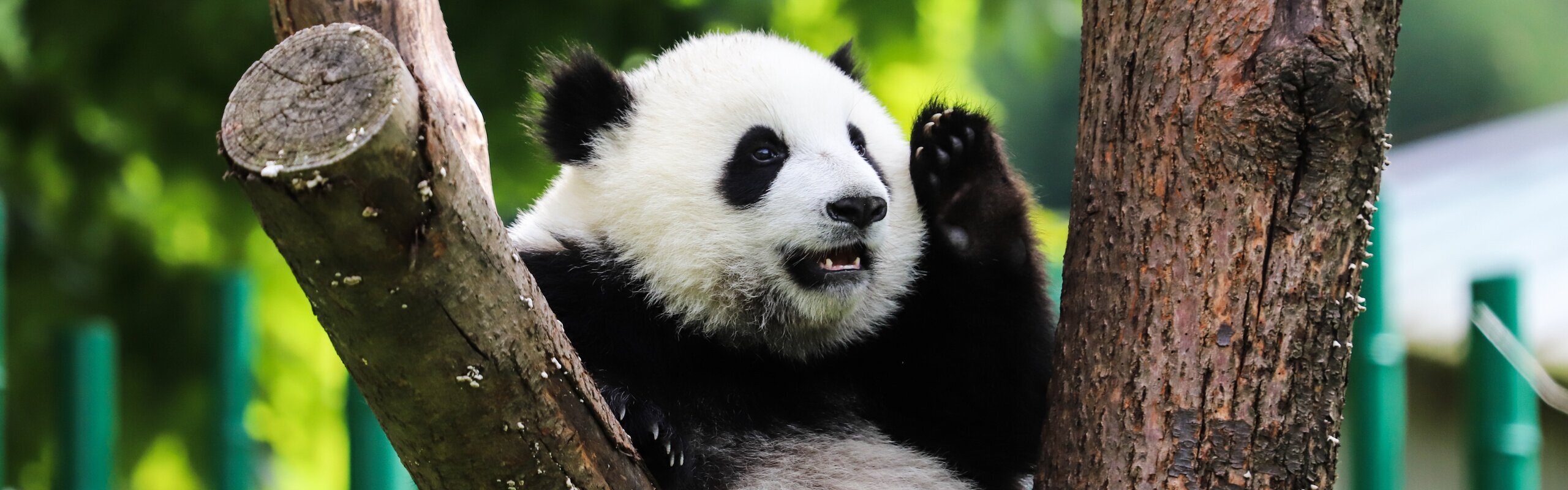

Giant pandas are some of the most adorable animals in the world, not to mention baby pandas (i.e. panda cubs).
Below are 10 interesting facts about baby pandas, some of which you definitely won't have heard before.
Content Preview
- 1. Newborn Panda's Size
- 2. Why They're So Tiny
- 3. Newborn Color
- 4. Panda's Pregnancy
- 5. Birth Season
- 6. Growth Stages
- 7. Leaving Their Moms
- 8. Do Mothers Kill Babies?
- 9. Survival in the Wild
- 10. Wild Training
- 11. Where to See Baby Pandas
- 12. Can I Hold a Panda?
1. What is a Newborn Panda's Size?
 A newborn panda in the incubator
All pandas are born very small. An adult panda weighs around 100 kg, but a newborn is only about 70-180 grams. That's almost a 900-fold difference.
The lightest one on record was only 36 grams (0.1 pounds), and the heaviest one was 210 grams (0.5 pounds). So a newborn panda looks more like a tiny pink mouse than an actual bear.
2. Why Are Baby Pandas So Tiny?
Panda cubs in Chengdu Panda Base1. Pandas are actually "premature babies".
The fertilized egg floats in the mother's body for 3 months before developing. So pandas only grow for 1–2 months in the womb, making them tiny at birth.
2. Mother Panda has limited energy during pregnancy
A longer pregnancy would overstrain the mother. That's because pandas eat mostly bamboo, but it has low energy and nutrition. So, evolution favors early birth and raising the cub on milk.
3. Their birth canals are very narrow.
Cubs must be small to pass through. Birth is painful, and occasionally mothers stop pushing due to the pain, which can trap the cub. It's rare, but still happens.
3. What Color is a Newborn Panda?
baby panda with new fluffNewborn giant pandas are pink and furless. The iconic black and white coloring comes later, after about 3 weeks.
After their fur grows, some baby pandas may look pink or yellow.
This happens because when the mother licks her cub, her saliva contains enzymes that react with the air, slightly changing the fur color. The pinker the cub, the more love from mom!
Of course, some cheeky little ones just love rolling around in grass or mud. Then, they will turn themselves into "charcoal" or "caramel" pandas.
4. How Long is a Panda Pregnant for?
A baby panda at 3 monthsThe mating season is in spring between March and May. Males and females usually associate for no more than 2 to 4 days. Pregnancy lasts from 95 to 160 days.
At panda bases or zoos, keepers even arrange "blind dates" for pandas that are ready to breed.
And guess what? Female pandas can even go through false pregnancies. They may eat less, start nesting, ignore others, and you really can't tell them apart from a real pregnancy.
Want to meet the lovely giant pandas? Chengdu, the panda hometown, is waiting for you! Just follow our panda tours:
5. When Are Baby Pandas Born?
Baby pandas are mostly born between June and August. So if you visit during this period, you'll see more tiny cubs that are just a few months old, not the older 1–2-year-old ones.
You won't see the pink, hairless newborns at any panda base or zoo. They're all kept in the nursery for intensive care. But you can still meet them online through official livestreams and blogs.
6. How Do Baby Pandas Grow up?
A baby panda's growing process is interesting, but very difficult, because they are extremely fragile and can easily get sick and die. At breeding centers 90% of baby pandas survive nowadays, compared to no more than 30% in the 1960s. Read on to see how baby pandas grow up:
- After 1 week: Blackish hairs start to grow on their ears and around their eyes and shoulders.
- After 1 month: Black hairs grow all over the neck and chest, and they have bigger dark circles around their eyes. At the same time, white hairs also begin to grow, which give the panda its distinctive black and white look. A month-old panda is around 2 kilograms (4 lb).
- At 6-8 weeks: They start to open their eyes and grow baby teeth.
- At 3 months: Their limbs become stronger. They can walk as far as a meter (3 feet), but staggering, and sometimes falling over. They weigh about 5–6 kilograms (11–13 lb) by this time.
- 6 months: They begin to eat bamboo. Before this, they've been drinking only milk.
- At 1 year: Panda cubs are weaned by the time they are one year old, and continue to live with their mothers. A one-year cub is up to 40 kg (88 lb).
- At 1 and a half year: They live alone without their mother (if the mother mates again).
- At 5–18 years: They are fertile adults.
- Over 18 years: Pandas enter old age. Few pandas live over 20 years in the wild.
7. How Do Baby Pandas Leave Their Moms?
Baby panda and its motherMost separations happen when the mother enters her mating season and naturally pushes the youngster away. Some cubs are also quite independent and will leave on their own.
Young pandas usually stay with their mothers until they're about 1–2 years old. By then, they've basically learned how to climb trees, find food, and munch on bamboo and shoots, so they're ready to live on their own.
But there are also clingy ones who stay with their mothers until they're over 3 years old. In panda bases, though, keepers eventually step in and separate them when the time comes.
8. Do Panda Mothers Kill Their Babies?
A Baby Panda with Panda MotherNo, a panda mother won't kill her baby directly. But if she has twins in the wild, she will leave the weaker one to perish and choose to raise the stronger cub. The reason for this is that they don't have sufficient milk or energy to care for two cubs.
In a panda breeding center, the staff will rotate the two babies between their mother and the incubator every few hours so that both can be raised.
Keepers will sometimes let another panda mum with stronger maternal instincts take over. If no mother is willing to adopt the cub, the staff will step in and raise it by hand.
In panda bases, you can see that some mother pandas will take care of two baby pandas. Why not start your panda tour to see these lovely animals in person!
9. The Survival Rate of Baby Pandas is 60% in the Wild.
Baby PandasWhy are the survival rates of infant pandas so low? Here are some reasons:
1. Cubs are very needy and vulnerable at birth. They are born furless and blind. The limbs of newborn pandas are so weak that they are not able to stand for 3 months.
For 6 months after birth, baby pandas rely entirely on the mother's warmth, milk, and protection.
2. Cubs can be accidentally crushed by their mothers.
3. Decrease in habitat can mean the mother panda has insufficient food to gestate and nurse her cub.
4. In the wild, half of all panda births are twins; however, it is very rare for both cubs to survive, as panda mothers are usually only able to raise one at a time and abandon the other twin.
10. How Are Baby Pandas Trained for the Wild?
Panda in the wildTo support the survival and reproduction of wild pandas, some baby pandas are selected for wild training even before they are born.
Their mothers are usually pandas with wild experience or strong wild genes. Once the cub is born, it follows its mother through three stages of rewilding training in a special outdoor base.
During this process, the mother will teach the baby key survival skills, such as climbing trees, avoiding danger, and finding food and water. Keepers may step in when needed, but they never show up in a human form. They will wear panda costumes and even pretend to threaten the baby.
When the cub reaches release age (around two years old), keepers will decide if it's ready to go wild. Usually, the mother heads back to human care, and the cub is released. If not, the baby will also come back to be raised by keepers.
11. Where to See Baby Pandas?
Panda cubsYou can see mother pandas with their cubs at Chengdu Panda Base (Panda Breeding Center), Wolong Panda Base, and Dujiangyan Panda Base.
But at Chengdu Panda Base and Wolong, you'll find more and younger panda babies.
Chengdu Panda Base has 3 panda nursery houses, while Wolong has a panda kindergarten. Sometimes baby pandas will gather to play together, drink from their milk bowls, and soak up the sun. That's because the keepers need to give their moms a little break.
12. Can I Hold a Baby Panda?
Panda Volunteer ProgramNo. Out of concern for panda protection, it's no longer allowed to hold pandas. You can only see baby pandas in the distance.
Or if you want a deeper panda experience, you can take part in one of our Giant Panda volunteer programs.
Although you still won't be able to touch the giant pandas directly, you can make steamed buns for them, clean their enclosures, chop bamboo, getting a hands-on taste of a panda keeper's daily work.
All our tours can be customized. Just contact us. We will create a trip for your summer vacation according to your group size, time, budget, interests, and other requirements.