

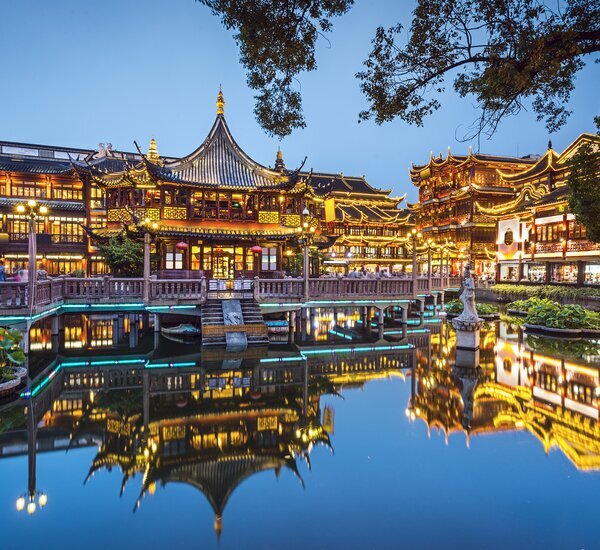

If you have one free day in Shanghai and want to spend it outside the city, based on our experiences, we have three trip suggestions worth planning around: Zhujiajiao, Suzhou, and Hangzhou.
- Zhujiajiao is the one you can decide on a sudden whim, and it needs no tickets, no reservations, and nothing to book.
- Suzhou packs a classical garden, a museum, and a living canal street into a 15-minute walk of each other.
- Hangzhou is a single lake, and the day could be stressful the moment you try to add a second thing to it.
Personally, I would like to recommend Chongming Island for its refreshing forests, migratory birds, and sunsets over the sea, if you prefer to get closer to nature without traveling far.
For day trips within the city, such as the Bund, the Former French Concession, Yu Garden, or Disneyland, you can check out How Many Days to Spend in Shanghai.
Which Day Trip Guarantees the Same-day Return Journey: Zhujiajiao is Your Safest Choice
The table below ranks by door-to-door time in each direction. Find the row that fits your day before you read any further.
Outside these choices, we suggest setting two hours each way as the practical ceiling. Past that, the day turns into a commute with a view.
| Destination | Why pick it | Skip it if | Door-to-door, one way |
|---|---|---|---|
| Zhujiajiao Water Town | Nothing to book and easy to reach | You want gardens or a lake rather than a canal town | About 1 hour by car; approximately 2 hours by metro |
| Suzhou | Classical gardens and a working Jiangnan canal street | You have no interest in viewing the gardens | About 2 hours (train + car) |
| Hangzhou | West Lake, and the tea hills if you have the time | You don't like to only see a part of the city and call it done | About 2 hours (train + car) |
| Chongming Island | Forests, wetlands and migratory birds | You already have another nature stop | About 1.5 hours by car |
It should be noted that if your travel falls during public holidays, tickets, including trains and attractions, will be in very high demand. So if you can’t secure the tickets, Zhujiajiao Water Town could be your only choice.
One Day in Zhujiajiao Water Town: Highly Commercialized but Worth Your Day
Zhujiajiao Water Town is the only option here that needs nothing booked. You can look at the weather over breakfast, decide it's a water-town kind of day, and arrive by mid-morning.
It is also highly commercialized, and it's worth saying so up front.
The town is swarmed by tourists. Its main street has been restored, and the souvenir shops sell what they sell everywhere. I visited this “Venice of Shanghai” in 2024 and came away with exactly that impression.
However, for a general taste, one day in Zhujiajiao is definitely worth it.
You will get a classic Jiangnan water town as promised. The canals, the Ming-era Fangsheng Bridge, the small gardens, and the old post office are the real thing, and within two hours of Shanghai, there is no second canal town this complete.
- 8:00–9:00: Leave your hotel for the water town (allow one more hour if by metro).
- 9:00–11:30: Explore West Well Street, Kezhi Garden, and Hexin Garden. Then walk to Fangsheng Bridge for lunch or a tea break.
- 13:00–15:00: Continue to explore Lang Bridge, City God Temple, and Daqing Post Office. You can also take a boat tour if you like, which lasts 15 to 20 minutes on the water.
- 15:00–17:00: Feel free to wander around when most day-trippers are leaving. You can go back to your hotel by now, or stay later for the night view after 7 PM.
I consider Zhujiajiao small enough to walk through within an hour, if you skip all the inner attractions, which leaves most of the day free.
Thanks to my guide’s stories, I was amazed by the collections of Kezhi Garden and Hexin Garden dating back to the Qing dynasty, and the way they are carefully maintained and placed.
For a leisurely stay, you can sit by the canal with a pot of green tea and simply let the afternoon go by. Suzhou and Hangzhou don't run at that pace.
If you only have half a day, cut it at lunch. You'll have seen the bridges, the gardens, and the lanes by 11 AM.
Pick up a Zhujiajiao zongzi on your way out (the glutinous rice one even Shanghai residents make the trip for) as a quick bite without disrupting the pace of your itinerary.
Practical Tips
- Entry to the town is free. The ticketed sights inside are Kezhi Garden, Hexin Garden, and the Shanghai Helong Art Gallery: 60 yuan for the joint ticket, or 20–30 yuan each.
- An official hand-rowed boat is 200–300 yuan per boat, up to 6 people, about 15–20 minutes. If you're a couple, ask about joining a shared boat, which could bring the cost down to around 40 yuan each.
- Carry a few hundred yuan in cash. Mobile signal could be patchy in the lanes, and some small stalls take cash only.
- Metro Line 17 stops at Zhujiajiao Station, not exactly in the town. From Exit 1, you still need a 1.5 km walk to the gate, about 15–20 minutes, or a short taxi ride.
Head to Suzhou or Hangzhou If You Secure High-Speed Train Tickets
It is possible to travel by car from Shanghai (a 2-hour drive to Suzhou or 3 hours to Hangzhou) on a regular weekday. However, you could easily run into traffic jams—both on the expressways and within the cities—during weekends or public holidays.
Therefore, it is best to book your high-speed train tickets first before finalizing any plans to visit Suzhou or Hangzhou, especially when you want to ensure a same-day return.
| Suzhou | Hangzhou | |
|---|---|---|
| Physical requirements | Attractions are more compact and relaxing | Walking makes up the day |
| Reservation | Bookings are common | Only Lingyin Temple |
| Freshness | The Humble Administrator’s Garden serves as a "ceiling" within the same category | Offering an expansive vista that Shanghai cannot provide |
| Weather tolerance | Most are indoor attractions, and rainy weather is actually a plus | Though the scenery is still great, it is an open-air space that requires you to find shelter or wear a rain jacket |
Choose Suzhou: If You Want A Relaxing Garden Day
Suzhou works as a one-day trip because the pieces sit almost on top of each other.
We find this fascinating by seeing three layers of Suzhou, all within a 15-minute walk of each other: a Ming-dynasty Jiangnan garden, a museum that is itself a piece of architecture, and a canal street where people still live and work.
Aim for Suzhou Railway Station as your terminal, since the garden, the museum, and the canal street are all a few metro stops away, and you won't need a taxi once you're in the city.
- 7:00–9:00: Leave your hotel and take a high-speed train to Suzhou.
- 9:00–12:30: Explore Humble Administrator's Garden and Suzhou Museum. Both need to be booked 7 days in advance.
- 12:30–14:00: Take a rickshaw ride through the alleys, then have lunch on Pingjiang Road (I’d like you to try the crab roe noodles at Li Bai Xie; they taste great, and the quality holds up trip after trip).
- 15:00–17:00: Hop on a 30-minute drive to Tongli Water Town, then take a sculling boat through the old lanes. Feel free to skip it if you want to spend a leisurely afternoon.
- 17:00–19:00: Back to your Shanghai hotel by train, or stay for sunset on the canal.
The pleasure of Suzhou is that the day doesn't happen in transit.
If you aren't set on visiting the water town, you could also spend a leisurely afternoon in the Pingjiang district. Just listen to Pingtan storytelling, sip tea, and watch the sculling boats drift by.
Practical Tips
- Book the garden and the museum 7 days in advance; the museum is closed on Mondays. If both sell out, there's no fixing it at the gate. And remember, once you're in, the ticket doesn't allow re-entry.
- Suzhou Museum takes reservations through the "苏州博物馆全预约" WeChat mini-program. The Humble Administrator's Garden and the other Suzhou gardens go through the "君到苏州" WeChat account. Tickets are released at midnight.
- Our team visited the Suzhou Museum in August 2026. If you wear glasses with a strong prescription and plan to focus on the artifacts, we suggest skipping the AR commentary glasses. The videos are long, the glasses are heavy, and we don’t think it’s worth the money.
- The Humble Administrator's Garden is 80 yuan in peak season (Mar. to Oct.) and 70 yuan in low season (Nov. to Feb.), or half the price for students and visitors aged 60–69.
If you'd rather not run the reservation yourself, we lock in your garden and museum slots before you land and pair them with a guide who knows which entrance to use. Travel with China Highlights by reaching out.
Choose Hangzhou: If You Are Okay to Stick to West Lake
Hangzhou only works as a day trip if you accept that you're seeing West Lake and nothing else. The lake itself offers such a wealth of experiences and sights that a full day is needed to explore it thoroughly.
Though I personally don’t recommend this, you can add Lingyin Temple or Longjing Village, if you're fine with seeing the lake for 15 minutes and spending two more hours in transit.
To get to Hangzhou, we suggest choosing Hangzhou East Railway Station as your terminal. It isn't the station closest to the lake, which is Hangzhou Railway Station (only two metro stops away), but you get a much wider choice of departures and the best chance of getting a seat home.
Follow our West Lake walking route:
1. Start at the East Gate of West Lake and walk through Orioles Singing in the Willows, a calm and beautiful stretch before the crowds build.
2. Take a boat from Qianwang Temple Marina to the island to see Three Pools Mirroring the Moon (70 yuan/pp).
3. Disembark at Huagang Park from the island, walk to Leifeng Pagoda, and go up (40 yuan/pp).
4. Take the sightseeing bus to the stop near Yue Fei Temple (10–20 yuan/pp for the bus).
5. Walk to Xiling Bridge, then Bai Causeway, and catch the sunset at Broken Bridge.
6. Leave the scenic area through the northwest gate.
This is a walking day to enjoy the pleasure of West Lake along the shore. Expect 2–3 hours of walking, about 13 km in total, and 9:00 to 17:30 for the day.
It’s such a pleasure to blend in and feel the gentle breeze, see retired couples with radios, and take a tea break. Then take the train back, or stay for the night view. Older visitors and children can cover most of the lake by sightseeing bus instead.
Though visiting West Lake itself is free, we think the ticket for Leifeng Pagoda and the boat tour are the two tickets worth paying: one puts the whole lake in front of you, the other puts you inside it.
For lunch, Jingci Temple (10 yuan entry) near Leifeng Pagoda serves a vegetarian set menu, or find a local restaurant nearby.
Hangzhou gets jokingly called a "culinary desert" in China. The fair version is this: Longjing tea shrimp and Dongpo pork are worth ordering, and West Lake fish in vinegar sauce divides people, so order it only if you're curious.
Practical Tips
If Lingyin Temple is a must for you, reserve at least 7 days ahead through the "杭州灵隐飞来峰" WeChat mini-program. Although the scenic area itself is free, free doesn't mean walk-in, and you still need a reservation to get through the gate.
Getting Out of Shanghai: Which Station to Use?
Shanghai has three main high-speed stations and several smaller ones. We suggest choosing the one that is closest to you and offers a schedule matching your itinerary.
- Shanghai Railway Station is closest to the city center and the first choice when it comes to the Suzhou and Hangzhou platforms.
- Shanghai Hongqiao is the bigger national hub overall, but for these two routes it mainly comes into play when Shanghai Railway Station is sold out.
- Shanghai South Railway Station serves as a backup option when tickets are hard to secure during peak travel seasons.
Your time is tight for a one-day tour. If you’d like to strictly follow our itinerary, we recommend prioritizing taxis or private cars for your travel to take all of it off your plate.
We, China Highlights, want to maximize your flexibility and experiences, simultaneously offer personal local guides and rides wherever your destination is. Start your stress-free journey by contacting us now.
Chongming Island Can be Great If Nature is What You Want
Only pick Chongming if forests and birds are genuinely what you want. It's the one option here that isn't a Jiangnan town or a lake, but rather the forest and the sea.
By car, it's about 1.5 hours each way. On a weekday, you can leave around 9 AM; on the weekend, aim to be out of the hotel by 7:30 AM to stay ahead of the tunnel traffic, or get stuck there for your whole morning. I, unfortunately, have experienced a morning with jamming, and I don't want that to happen to you.
Your first stop is at Dongping National Forest Park, where you can rent a bike and ride on the dawn redwood avenue, enjoy the fresh air, and get up close to sika deer and peacocks. Have lunch at one of the farmhouse restaurants nearby.
When I’m writing here, I still think about the stir-fried eggs with silverfish and the poached chicken I had out there, which were fresh with a light hand in seasoning.
For the sunset, go to Xisha Pearl Lake around 4 PM. Entry is free, there's a boardwalk through the reeds, and the Xisha Wetland is right there while you observe the birds and wait for the light.
It was a magical day for me to get so close to nature and away from crowds, and you can't imagine it happened within a metropolitan area's reach.
Practical Tips
- Entry for Dongping National Forest Park is 70 yuan (about 60 if you buy ahead online, free over 65), and renting runs 20 yuan an hour for a single bike, 80 for a tandem, and 160 for a four-person electric cart. The peacock release is at 10:30 and 14:00 and is cancelled in rain.
- If you want to visit Dongtan Wetland Park and the bird reserve, remember to take bookings in advance, and they are closed on Mondays. They are both at their best from November to March, when you have a better guarantee to see the migratory birds.
- On the weekend, either head back downtown before 2 PM or stay for the sunset and dinner. Return traffic peaks between 3 and 4 PM, and that's when a 1.5-hour drive turns into 3 hours or longer.
FAQs: Booking, Trains and the Practical Stuff
Do I need to buy train tickets in advance?
For these routes, usually not. The Shanghai–Suzhou and Shanghai–Hangzhou corridors run trains every few minutes, and same-day or next-day tickets are normally available.
The exception is Chinese public holidays, such as Spring Festival, Labour Day, and National Day week, when even locals struggle.
High-speed tickets in China go on sale 15 days ahead. If you're travelling in one of those windows, book the moment they open, or pick other dates.
How do I buy a train ticket with a foreign passport?
Register on the 12306 app or through its official website, which has an English version, using your passport, or buy at the station's ticket office.
China uses e-tickets now, so your passport is your ticket, and there's nothing else to collect. At the gate, an ordinary foreign passport usually won't scan, so don’t panic and just go through the staffed channel.
What about rain or fog?
Both happen, and for Suzhou and Hangzhou they're usually an upgrade.
The March–April drizzle is the best weather the gardens and the lake get. It is like the "negative space" in traditional Chinese ink-wash paintings, rendering the scenery before your eyes unreal.
Remember to bring a light rain jacket with you, though.
What if I miss the last train back?
This happens less often than you'd think. Both corridors run late:
- Hangzhou East → Hongqiao/ Shanghai South: the last departures are usually around 22:30, and on many nights there are still services after 23:00.
- Suzhou North → Shanghai: last departures run until roughly 23:00–23:40.
The real risk is often the tickets, which easily sell out on weekends and holidays.
However, if you do miss it, we suggest staying the night for your comfort, instead of getting a car back to Shanghai. You can find plenty of mid-range hotels near West Lake or Pingjiang Road; prices range between 60–100 USD, which is certainly pleasant for an extra night.
But if you insist, you should know that Hangzhou is about 175 km away and Suzhou about 100 km, which means two hours or so on the expressway.
If you'd rather not work out a late-night transfer on your own, this is something we arrange as a private car; it costs more than a train ticket, but you leave when you like, and you're dropped at your hotel door.